
Climate Change Weather Anomalies Are Testing US Infrastructure Now
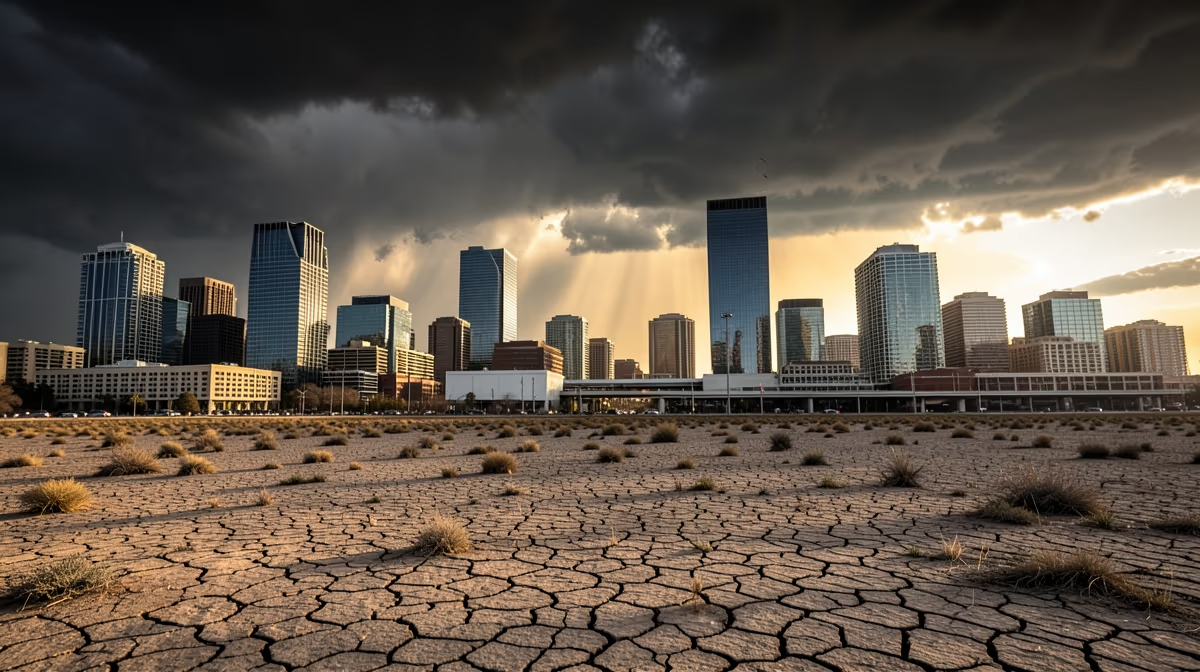
Federal climate agencies reported Tuesday that the contiguous United States experienced its warmest winter on record, driven by persistent high-pressure systems and global greenhouse gas emissions that scientists say are rapidly altering historical weather baselines. Communities across the country are facing these unexpected weather anomalies, which continue to test the resilience of local infrastructure and emergency response systems.
A Shifting Landscape
According to the National Oceanic and Atmospheric Administration, the nationwide average temperature from December through February was 4.2 degrees Fahrenheit above the 20th-century average, shattering previous records set in 2016. The unusual warmth disrupted traditional winter economies, particularly in the Northeast and Upper Midwest, where ski resorts faced severe snow shortages and municipal budgets strained under reduced snow-removal expenditures. Agricultural experts warn that the unseasonably warm conditions have also triggered premature budding in perennial fruit crops, leaving orchards highly vulnerable to potential late-spring frosts. Energy demand shifted dramatically, with residential heating consumption dropping significantly across the northern tier of the country, though early-season cooling demands began to emerge in southern states.
Right now, communities across the United States are experiencing unusual and extreme weather events, from severe heatwaves and prolonged droughts to unexpectedly heavy storms and flooding. Scientists and meteorologists are closely monitoring these shifts, which are happening faster and with more intensity than in the past. These changes are driven by an overall warming of the planet, primarily caused by human activities like burning fossil fuels that trap heat in our atmosphere. For everyday Americans, this means our seasonal weather patterns are becoming less predictable and more dangerous. Places that usually get plenty of rain are drying up, while other areas are facing sudden, destructive floods. Emergency responders and local governments are having to adapt quickly to protect neighborhoods that are increasingly at risk from these powerful environmental shifts.
Analyst View
The root cause of these systemic pressures lies in the lock-in of fossil fuel infrastructure and capital accumulation models that externalize ecological costs, compounded by regulatory capture and the temporal mismatch between electoral cycles and planetary tipping points. Intense polarization driven by regional economic dependencies has turned global climate policy into a proxy war over cultural identity, federal overreach, and the future distribution of energy subsidies. At the same time, a high-stakes transition phase is characterized by the mispricing of climate risk in asset portfolios, stranded asset liabilities for legacy energy firms, and fierce competition for critical mineral supply chains necessary for green tech manufacturing. Furthermore, the United States faces a potential loss of soft power and technological hegemony if domestic paralysis prevents leadership in the clean energy transition, while competitors dominate global solar, battery, and electric vehicle supply chains.
Near-Term Weather Outlook
Meteorological agencies are issuing high-wind and severe thunderstorm watches across the Midwest and Southern Plains as a strong cold front collides with warm, moist Gulf air. Forecasters anticipate rapid intensification of the weather system due to unusually high surface temperatures, leading to a heightened risk of severe convective activity. Within the next 72 hours, the storm system is forecast to track northeast, bringing heavy rainfall, potential flash flooding, and localized power outages to the Ohio Valley and parts of the Northeast. State Emergency Management Offices, the Federal Emergency Management Agency, and the National Weather Service are monitoring the progression closely. In the best-case scenario, storm systems dissipate slightly before hitting major metropolitan areas, resulting in beneficial rainfall and minimal infrastructure damage. In the worst-case scenario, a series of severe, fast-moving tornadoes develops overnight, causing widespread structural damage, prolonged power outages, and life-threatening flash floods.
Why This Matters
What we are observing is not merely statistical noise, but a clear continuation of a long-term warming trend that is fundamentally redefining winter as we know it, said Dr. Aris Thorne, a senior climatologist at the National Centers for Environmental Information. The compounding impacts on ecosystems and water resources demand immediate adaptation strategies from both state and federal planners. Changes in the climate directly threaten our safety, homes, and wallets. Extreme weather destroys property, disrupts food production by hurting farmers, and drives up the cost of insurance and everyday goods. Dealing with these constant weather emergencies puts a massive strain on our economy and local communities. Everyone in the US is affected, but low-income neighborhoods, coastal residents, farmers, and elderly populations often face the highest risks because they may lack the resources to recover quickly from natural disasters.
Frequently Asked Questions
What is the difference between weather and climate?
Weather refers to short-term atmospheric conditions in a specific area, such as a rainy afternoon or a hot week. Climate, on the other hand, describes the long-term pattern of weather conditions in a region over thirty years or more. Understanding this distinction helps scientists track global warming trends versus daily temperature changes.
How does climate change affect the United States?
Climate change causes various impacts across the US, including more frequent and severe heatwaves, droughts, and wildfires in the West. It also leads to rising sea levels threatening coastal communities and heavier rainfall events causing inland flooding. These shifts pose significant risks to infrastructure, agriculture, and public health.
What are the main causes of global climate change?
The primary driver of modern climate change is human activity, specifically the burning of fossil fuels like coal, oil, and natural gas. This releases large amounts of greenhouse gases, such as carbon dioxide and methane, into the atmosphere. These gases trap heat from the sun, causing the Earth's average temperature to rise.
What is a carbon footprint and how can I reduce mine?
A carbon footprint is the total amount of greenhouse gases produced directly and indirectly by your daily activities. You can reduce your footprint by conserving energy at home, driving less or using public transit, eating a more plant-based diet, and minimizing waste. Small lifestyle changes collectively make a significant positive impact on the environment.
Why is the 1.5-degree climate target important?
The 1.5-degree Celsius threshold is a critical global goal set to avoid the most catastrophic impacts of climate change. Exceeding this temperature increase compared to pre-industrial levels could trigger irreversible tipping points, such as the collapse of major ice sheets. Staying below this limit gives ecosystems and human societies a better chance to adapt.
How do scientists study prehistoric climates?
Scientists use various natural recorders known as proxy data to reconstruct ancient climates spanning millions of years. These proxies include ice cores drilled from glaciers, tree rings, ocean sediment layers, and ancient coral reefs. Analyzing these elements reveals past temperatures, atmospheric composition, and solar activity.
Conclusion
Official meteorological data confirms record-high average temperatures and record-low snowfall across significant portions of the northern United States for the winter period, averaging 4.2 degrees above the 20th-century baseline. State agricultural agencies are continuing to assess the full economic damage to fruit orchards and winter tourism industries, while federal hydrologists monitor impending spring snowpack melt rates for potential drought implications. As severe weather watches remain active across the Midwest and Southern Plains, state and federal emergency management authorities coordinate responses to address ongoing meteorological hazards and safeguard vulnerable communities.


.webp)

