
Disney ABC FCC lawsuit ignites high-stakes free speech battle
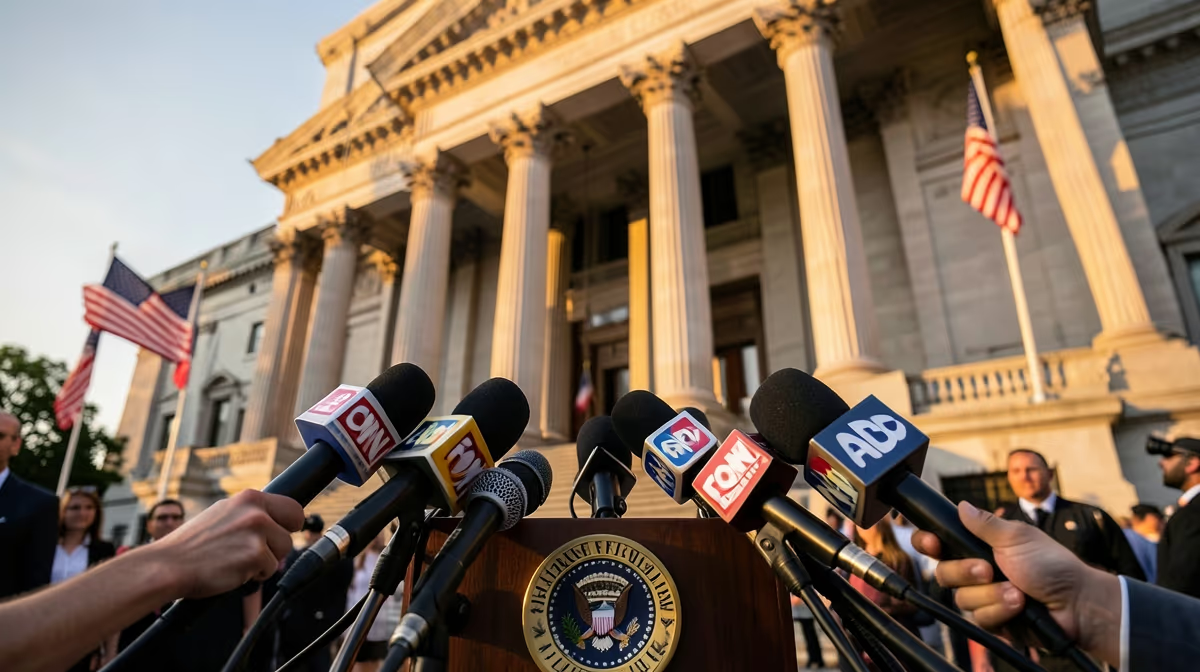
The recent Disney ABC FCC lawsuit has sent shockwaves through the American media landscape, raising critical questions about constitutional protections and regulatory overreach. Disney and ABC have officially filed a First Amendment lawsuit against the Federal Communications Commission, alleging political interference and a retaliatory campaign by the Trump administration involving threats to broadcast licenses.
Why Disney and ABC Are Challenging the FCC in Court
The legal action comes amid growing tensions between media networks and federal regulators. According to reports from CNBC, Variety, Reuters, Media Play News, and TheWrap, the lawsuit targets actions and statements from the administration that the network argues infringe upon constitutionally protected free speech.
The complaint centers on alleged regulatory pressure and threats directed at broadcast licenses held by the network. Media organizations and legal analysts are closely monitoring the case as a significant test of First Amendment protections against government retaliation for news coverage and editorial stances.
Further details regarding the specific legal arguments and the FCC's formal response are expected to emerge as the litigation proceeds through the federal court system. The dispute sits at the core of the relationship between the government and the media, testing whether federal regulators can use their power over broadcast licenses to pressure news organizations.
Core Facts of the Legal Dispute
- Disney-owned ABC filed a First Amendment lawsuit against the FCC.
- The lawsuit alleges political interference and a retaliatory campaign by the administration.
- The legal challenge claims threats were made against their broadcast licenses.
- Reports on the lawsuit emerged on Tuesday, August 18, 2026.
- News outlets including CNBC, Variety, Reuters, TheWrap, and Media Play News covered the filing.
The Federal Communications Commission is an independent U.S. government agency regulated by Congress, responsible for interstate and international communications by radio, television, wire, satellite, and cable. Broadcast networks rely on licenses granted by the FCC to operate public airwaves, creating a long-standing balance between regulatory oversight and First Amendment protections for news and entertainment content.
Political and Economic Angles
The root cause of this conflict lies in escalating tensions between major corporate media conglomerates and regulatory bodies over content moderation, perceived political bias, and government pressure on broadcast licensing. This highlights the volatile intersection of state power and corporate media, with allegations that regulatory oversight is being weaponized for partisan retaliation against independent journalism.
The legal challenge may serve as a preemptive industry-wide shield, encouraging other media networks facing similar political pressures to collectively push back against administrative coercion.
Economically, broadcast licenses are foundational to traditional network valuation and advertising revenue. Threats to these permits introduce substantial regulatory risk and valuation uncertainty for parent companies like Disney.
While primarily a domestic constitutional dispute, the erosion of perceived regulatory independence in the United States undermines international perceptions of press freedom and the stability of American media institutions. This dynamic mirrors historical parallels, such as the Nixon administration's confrontations with network television and challenges to broadcast license renewals in the early 1970s.
Timeline of Regulatory Pressures and Litigation
| Phase | Description |
|---|---|
| Phase One | Federal regulatory pressure and threats regarding broadcast licenses mount against major networks |
| Phase Two | Disney and ABC formally file a First Amendment lawsuit against the FCC alleging a retaliatory campaign |
| Phase Three | Legal proceedings commence, testing the boundaries of government oversight and protected speech under the First Amendment |
Future Outlook and Industry Implications
Legal analysts and media outlets will closely examine the initial filings of the lawsuit filed by Disney and ABC against the FCC over the next 24 hours, anticipating formal responses or statements from federal regulators. Over the next 72 hours, the broader media industry and legal experts are expected to weigh in on the implications of the lawsuit concerning broadcast licenses, regulatory oversight, and allegations of political interference.
Experts suggest that prolonged legal scrutiny is likely over the constitutional boundaries of regulatory enforcement and alleged retaliatory campaigns against major broadcast networks. In a best-case scenario, the litigation provides a clear legal precedent safeguarding First Amendment protections for broadcasters against potential political pressure and licensing threats. Conversely, a worst-case scenario involves heightened tensions between media conglomerates and federal regulators leading to prolonged uncertainty surrounding broadcast license renewals and regulatory compliance.
The outcome of this case could set a major legal precedent for the limits of government influence over the press and protect the independence of broadcast journalism in the United States.
Frequently Asked Questions
Why did Disney and ABC file a lawsuit against the FCC?
Disney and ABC filed a First Amendment lawsuit against the Federal Communications Commission alleging a retaliatory campaign and political interference. The legal action claims that the regulator made threats against their broadcast licenses.
What does the First Amendment lawsuit allege regarding the Trump administration?
The lawsuit alleges that the administration engaged in political interference and targeted the network over its coverage and operations. Disney and ABC argue these actions violate their constitutional protections for free speech.
Who is affected by the Disney and ABC lawsuit against the FCC?
The primary parties involved are media conglomerate Disney, its network ABC, and the federal broadcast regulator, the FCC. However, the outcome could have broader implications for how major media networks and government regulators interact concerning First Amendment rights.
What are the potential consequences of the ABC and Disney lawsuit?
While the immediate next steps involve legal arguments in federal court, the case could set a significant precedent for media freedom and government oversight of broadcast licenses. Broadcasters and legal experts will be watching closely to see how the court balances federal authority with constitutional free speech protections.
What is the background of the dispute between ABC and the FCC?
The dispute centers on regulatory pressure and threats directed at broadcast licenses held by major networks. Disney and ABC decided to take legal action in response to what they characterize as an ongoing retaliatory campaign by authorities.
When was the First Amendment lawsuit filed against the FCC?
The lawsuit was officially filed in August 2026 by Disney-owned ABC. Major news outlets like CNBC, Variety, and Reuters quickly reported on the legal filing as it unfolded.
Conclusion
Disney and ABC have officially initiated legal proceedings against the Federal Communications Commission, challenging regulatory authority under the First Amendment. As the litigation advances through the federal court system, media professionals, legal scholars, and citizens await formal responses from federal regulators and initial judicial evaluations of the constitutional boundaries governing broadcast licensing.
Sources
- Disney-owned ABC files First Amendment lawsuit against FCC — CNBC
- ABC Files First Amendment Lawsuit Against FCC — Variety
- Disney, ABC sue US regulator over threats to broadcast licenses — Reuters
- Disney/ABC File First Amendment Lawsuit Against FCC Alleging Political Interference From Trump Administration — Media Play News
- ABC Files First Amendment Lawsuit Against FCC Over ‘Retaliatory Campaign’ — TheWrap


.webp)