
Flock License Plate Search Exposes Vast US Surveillance Networks
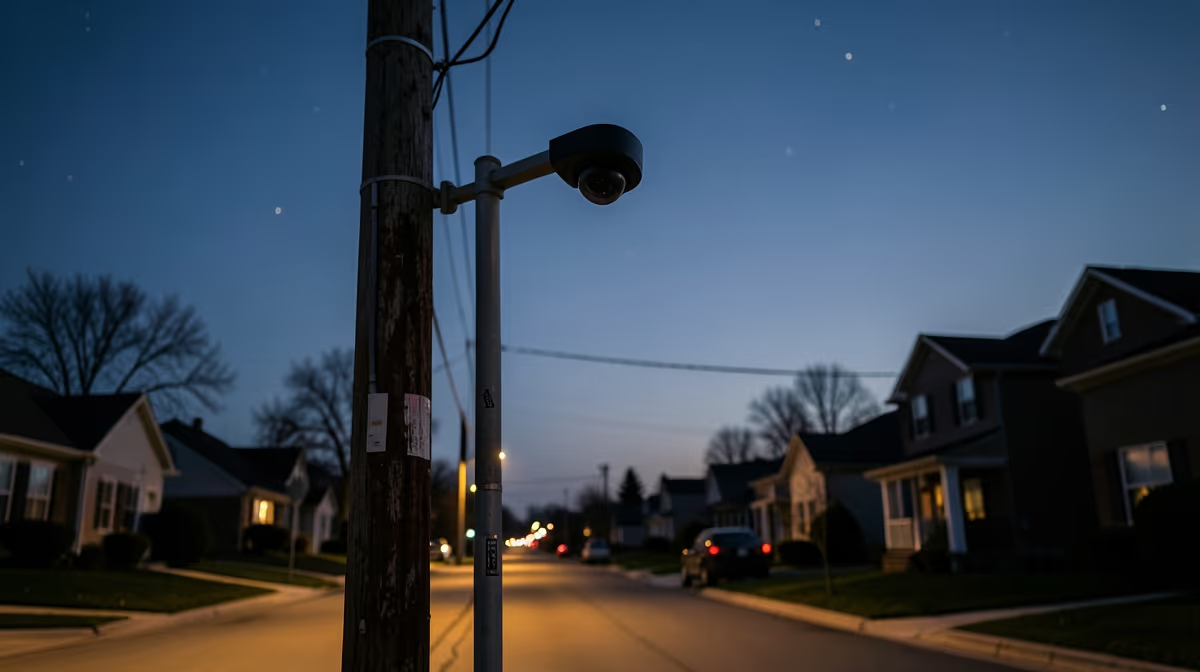
As automated license plate reader surveillance expands across American neighborhoods, many citizens are asking how to run a Flock license plate search to see if their vehicle's movements are being logged into a massive digital vehicle tracking database. A growing surveillance network powered by automated license plate readers is drawing increased scrutiny across the United States, prompting concerns about digital tracking and vehicle data collection.
Background on Automated Vehicle Tracking
If you drive a car in the United States, your daily travels might be tracked more than you realize. A growing surveillance network powered by automated license plate readers—often made by a company called Flock—is capturing the movements of millions of vehicles across the country. These cameras scan and log license plates, building a digital trail of where drivers go. Automated license plate reader networks, such as those deployed by Flock Safety and utilized by various law enforcement agencies, are capturing and recording the movements of vehicles nationwide.
Automated license plate readers have been used by law enforcement years to help locate stolen vehicles, track suspects, and enforce parking laws. However, as camera technology has become cheaper and more interconnected, private companies and local police departments have built vast regional databases that store historical driving locations for extended periods. Security and privacy researchers have developed tools like 'Have I Been Flocked' to help individuals search whether their license plates have been recorded by surveillance networks.
Recent Developments and Regional Scope
Recent reports from across multiple states—including Illinois and Florida—reveal that hundreds of local and regional agencies now have access to these extensive surveillance networks. This expansive infrastructure leaves a digital trail of everyday travel, sparking widespread interest among motorists wanting to check if their vehicle information has been logged. Over 400 law enforcement and public agencies in Illinois alone have been identified as having access to specific automated license plate reader surveillance networks. Similar tracking capabilities and camera networks are active across multiple states, including Florida, capturing vehicle travel data.
The ability to search and track license plates through these expansive databases has raised fresh questions regarding privacy, data retention, and transparency. Civil liberties advocates and concerned citizens are increasingly examining how long this data is stored, who has access to it, and the extent to which private networks intersect with public law enforcement databases. Automated license plate reader systems continuously log details about passing vehicles, creating a comprehensive digital trail of everyday travel.
Why This Matters
The rapid expansion of automated license plate reader networks means that ordinary citizens' daily movements are increasingly monitored and stored in searchable databases. This creates significant tension between modern policing capabilities and individual privacy rights, as massive amounts of location data are accumulated without clear public consent. The growing use of private-public database sharing has sparked ongoing public discussions regarding driver privacy and government surveillance limits.
Drivers and vehicle owners across the United States, particularly those living in regions with high concentrations of automated license plate reader cameras utilized by local or state agencies, are directly impacted by this technology. Public interest has surged regarding how to search license plate surveillance records, with individuals seeking tools and methods to determine whether their vehicles have been recorded by these surveillance cameras. The phenomenon highlights a broader conversation about the balance between public safety initiatives and individual privacy rights in modern transportation infrastructure.
Analyst Perspective and Historical Context
The root cause of this trend stems from the rapid expansion of automated license plate reader surveillance networks by private companies like Flock Safety, granting widespread access to law enforcement without uniform federal privacy regulations. This development introduces notable political tensions between state and local law enforcement seeking enhanced crime-fighting capabilities and civil liberties advocates concerned about mass, warrantless surveillance and transparency.
From an economic angle, the commercialization of public safety data allows private tech firms to profit by building expansive tracking infrastructure deployed in partnership with local municipalities and agencies. This domestic erosion of privacy norms mirrors broader global trends toward ubiquitous digital tracking, normalising state-private surveillance architectures. A hidden angle in this expansion is the potential integration of private neighborhood and commercial camera feeds into centralized law enforcement databases, creating a seamless public-private panopticon that bypasses traditional procurement and oversight channels. Historically, this mirrors the expansion of municipal closed-circuit television networks in the early 2000s, which similarly grew under the banner of public safety before raising significant civil liberties concerns.
Future Outlook
Public interest and search queries regarding the 'Have I Been Flocked' license plate surveillance network checker will continue to surge across affected regions over the next 24 hours. Media coverage will likely expand regarding the extent of automated license plate reader database access by law enforcement agencies across various states like Illinois and Florida over the next 72 hours. Key players involved in this unfolding situation include privacy researchers, law enforcement agencies, and motorists, with primary impact areas centred on data privacy, surveillance transparency, and public awareness.
Analysts expect heightened public scrutiny over the collection and retention practices of automated license plate reader networks. In a best-case scenario, increased transparency leads to clearer guidelines and public understanding regarding how vehicle tracking data is stored and accessed. Conversely, the worst-case scenario involves growing concerns over mass surveillance resulting in legal challenges and widespread public distrust toward automated municipal tracking systems.
Frequently Asked Questions
What is the 'Have I Been Flocked' search tool?
The 'Have I Been Flocked' tool allows vehicle owners to check if their license plate has been captured and recorded by automated surveillance networks. It brings public awareness to the expansive digital trail left by automated license plate reader cameras.
How do automated license plate reader networks work?
These surveillance networks utilize specialized cameras mounted on public infrastructure or police vehicles to capture images of passing license plates. The collected data is then aggregated into massive, searchable databases used to track vehicle movements over time.
Why are privacy advocates concerned about Flock surveillance systems?
Privacy advocates worry that the rapid expansion of automated license plate reader databases creates a persistent digital trail of everyday citizens without their consent. The growing scale of these surveillance networks raises significant questions regarding government overreach and data security.
Who is affected by the expansion of license plate reader databases?
Drivers across multiple states are increasingly impacted as local law enforcement and private agencies adopt automated surveillance technology. For instance, reports indicate that hundreds of agencies in states like Illinois and Florida now have access to these extensive tracking networks.
What happens to the vehicle data collected by these cameras?
The data gathered by automated readers, including exact timestamps and location coordinates, is stored in centralized databases for varying retention periods. This historical information can often be queried by law enforcement agencies to retrace a vehicle's past routes.
What steps can motorists take after checking if they have been flocked?
Motorists who discover their vehicles are logged in these databases can stay informed about local privacy legislation and advocate for stricter data regulation. Public pressure on lawmakers continues to grow as citizens demand greater transparency and oversight regarding automated tracking.
Conclusion
The rapid proliferation of automated license plate reader networks across regions like Illinois and Florida underscores a fundamental shift in how vehicle movements are tracked and stored in the United States. As security researchers and the public increasingly utilize lookup tools to check their digital footprints, questions regarding data retention, agency access, and privacy transparency remain central to the ongoing discourse. Motorists and privacy-conscious citizens continue to monitor these developments as municipal and law enforcement database integration expands.
Sources
- Have I Been Flocked? How to search your license plate — Mashable
- 'Have I Been Flocked' Researcher Says Over 400 Illinois Agencies Have Surveillance Network Access — Yahoo News Canada
- Have you been ‘Flocked’? Here’s how to find out — KRON4
- Have you been ‘Flocked’ in Florida? See if your license plate was recorded — The News-Press
- What a growing database may reveal about your vehicle’s digital trail — Lehighvalleylive.com


.webp)
