
Heathrow Airport Flooding Triggers Major Travel Disruption for Passengers
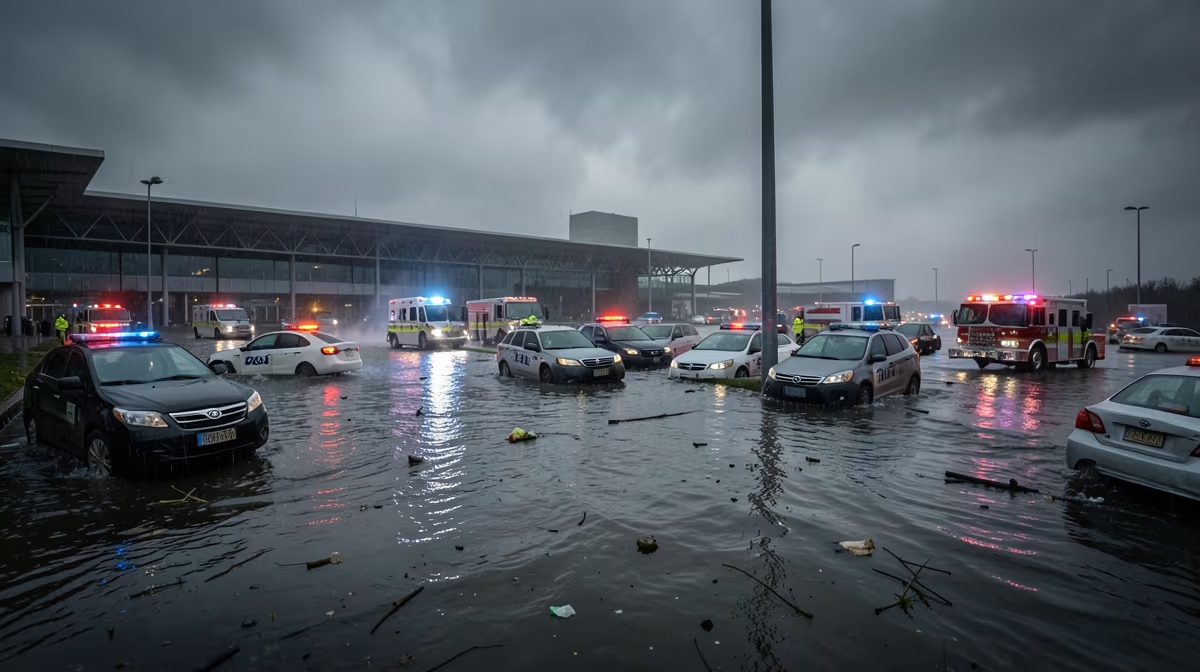
Travelers using Heathrow Airport flooding updates to plan their journeys are facing major delays today following a significant burst water main that restricted critical road access around the terminals. The unexpected emergency response highlights sudden vulnerabilities in municipal transport networks and municipal service infrastructure supporting one of the world's busiest international aviation hubs.
What Unfolded
The travel disruption at Heathrow Airport stems from flooding that restricted access to parts of the facility, prompting warnings from airport authorities. Reports indicate that the severe water accumulation has impacted travel routes leading to two terminals. In response to the unfolding situation, Heathrow Airport has explicitly warned passengers to avoid traveling to the airport by road. Further investigations into the incident revealed that the flooding responsible for disrupting travel was triggered by a burst water main. Transport networks and travelers have had to adjust as authorities work to manage the situation and mitigate delays around the affected areas.
Major airports like Heathrow rely heavily on complex local infrastructure, including water mains and extensive road networks, to support hundreds of thousands of daily passengers. When critical municipal infrastructure such as a water main fails unexpectedly, it can rapidly flood surrounding areas, paralyzing surface access and forcing airports to issue emergency travel warnings.
Key Facts and Verified Developments
- Flooding has restricted road access to Heathrow Airport
- Heathrow warned of disruption at two terminals
- Passengers were advised not to travel to the airport by road
- The disruption was caused by a burst water main
- Reports regarding the incident emerged on Saturday, August 15, 2026
- Burst water main causes severe flooding restricting road access to Heathrow Airport
- Heathrow issues formal warnings advising passengers against traveling by road
- Authorities and operators manage terminal disruptions while working to restore access
Why This Matters
Heathrow is one of the world's busiest international transport hubs, and unexpected road blockages or terminal issues can cause massive ripple effects, leading to missed flights, severe scheduling delays, and logistical nightmares for thousands of travelers relying on smooth connections. Airline passengers traveling through Heathrow Airport, particularly those attempting to access the facility via road transport, as well as friends, family members, and transport workers meeting or dropping off travelers, bear the immediate brunt of these access limitations.
Infrastructure Vulnerability and Analyst View
The root cause of the incident traces back to aging civil infrastructure vulnerabilities, specifically a burst water main impacting vital road access to major transport hubs. This event brings an immediate economic disruption to travel schedules leading to potential compensation claims, logistical bottlenecks, and productivity losses for businesses relying on Heathrow's connectivity.
From a broader institutional perspective, the incident introduces increased public scrutiny on local authorities and private utility providers regarding infrastructure maintenance and emergency resilience planning. Observers note that the sudden failure represents a brief interruption of a primary international gateway, highlighting the vulnerability of critical national infrastructure nodes to domestic environmental and engineering failures. Underlying questions persist regarding the allocation of capital expenditures by private utility monopolies versus essential public infrastructure reinforcement in the UK, drawing historical parallels to past transport disruptions caused by localized utility failures or severe weather events surrounding major London transit hubs.
Future Outlook and Next 24 to 72 Hours
Passenger disruption will continue around impacted terminals as authorities work to address the burst water main and flood damage restricting road access. Analysts would likely expect travel advisories to remain in place until the road network surrounding the terminals is completely cleared and verified safe for normal traffic flow.
In the best-case scenario, repairs to the burst main are completed rapidly, allowing road access to reopen ahead of schedule with minimal long-term delays for travelers. Conversely, in a worst-case scenario, persistent structural or infrastructural damage from the flooding could prolong road closures, causing extended travel delays and ongoing congestion near the terminals. Road access is ultimately expected to be fully restored as floodwaters recede and repairs to the burst main conclude, allowing normal travel patterns to resume for Heathrow passengers.
Frequently Asked Questions
What caused the travel disruption at Heathrow Airport?
The disruption was caused by a burst water main that led to severe flooding, restricting road access to two of the airport's terminals.
How have airport authorities advised passengers to respond?
Heathrow Airport has explicitly warned passengers not to travel to the airport by road due to the high water levels and resulting access restrictions.
Which parts of the airport are primarily affected?
Operations and surface access around two of the airport's terminals have been heavily impacted by the water accumulation and road closures.
Conclusion
Passengers traveling through Heathrow Airport continue to face significant logistical challenges and surface travel restrictions following the severe flooding triggered by a burst water main. While airport authorities, local utility teams, and emergency response services coordinate repair efforts to clear the surrounding road network, travelers are advised to monitor official guidance closely. Normal travel patterns and full road access are anticipated to resume once floodwaters recede and safety verifications are completed by the responsible agencies.
Sources
- Heathrow passengers face disruption after flood restricts access — The Guardian
- Heathrow warns of disruption at two terminals after flooding — Sky News
- Heathrow Airport warned of disruptions due to flooding — Українські Національні News (УНН)
- Flood disrupting travel to Heathrow Airport was caused by burst main — Herts Advertiser
- Heathrow Airport warns passengers not to travel by road after flooding — Southend Echo


.webp)

