
Lettuce Linked Parasitic Outbreak Spreads Across US Markets
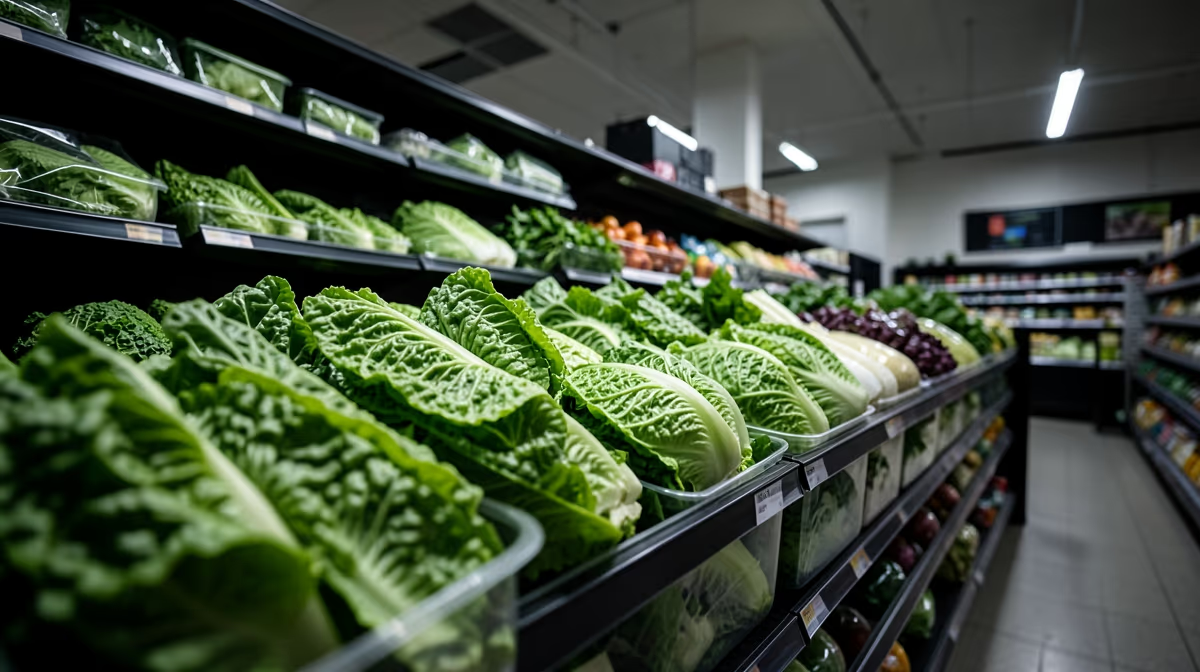
A major lettuce linked parasitic outbreak is currently spreading across the United States, prompting urgent investigations and food safety warnings. Public health agencies are racing to trace complex international supply chains as an unusual gastrointestinal illness tied to contaminated salad greens continues to affect consumers nationwide.
Timeline of the Cyclosporiasis Outbreak and Findings
Health agencies including the Centers for Disease Control and Prevention (CDC) have tracked cases of cyclosporiasis tied to iceberg lettuce. The outbreak has led to operational inspections, such as the FDA's inspection of a Taylor Farms lettuce operation in Mexico. Vulnerabilities in cross-border fresh produce supply chains and irrigation water safety standards have facilitated the widespread transmission of the parasitic infection Cyclospora through contaminated lettuce imports. Past multi-state Cyclospora outbreaks have been linked to imported fresh produce, such as previous incidents involving contaminated cilantro or salad mixes from Central America and Mexico.
While some regional outbreaks, such as one in Ohio, have begun to slow following targeted product recalls, the distribution web has raised concerns across the supply chain. Reports indicate that recalled lettuce reached various commercial outlets, including a small percentage distributed to Taco Bells. Public health officials and regulatory bodies continue to monitor the situation closely to determine the full scope of contamination. Consumers have also been provided with broader guidance regarding the safety and health profiles of various salad greens amid the ongoing investigation.
Affected Products and Safe Handling Guidelines
A parasitic outbreak linked to salad greens is spreading across parts of the United States, drawing attention from public health officials. The illness is associated with Cyclospora, a microscopic parasite that can contaminate fresh produce like iceberg lettuce, romaine, and kale. Health agencies are actively tracking the spread, mapping cases, and investigating the source of the contamination.
Investigations have led officials to inspect operations such as Taylor Farms' lettuce facilities in Mexico. While recalls have been issued and specific food chains like Taco Bells received a small fraction of the affected lettuce, local outbreaks—such as one previously reported in Ohio—are beginning to slow down as recalled products are pulled from shelves.
- A parasitic outbreak linked to lettuce has been spreading across the US, prompting updates and tracking maps from news outlets.
- The Centers for Disease Control and Prevention (CDC) has linked the current outbreak specifically to Cyclospora and iceberg lettuce.
- Federal health regulators have begun inspections of Taylor Farms' lettuce operations located in Mexico.
- Reports indicate that less than 2.5% of the recalled lettuce from Taylor Farms was distributed to Taco Bells.
- In places like Ohio, local cyclosporiasis outbreaks have started to slow down following swift product recalls.
Supply Chain Vulnerabilities and Economic Impact
Rapid product recalls and public health warnings impose immediate financial losses on large agricultural operators, fast-food chains, and distributors, while altering consumer purchasing habits regarding raw salad greens. Domestic health agencies face intense political scrutiny over the speed of traceability and recall enforcement, particularly concerning major agricultural suppliers operating across international borders like Mexico. Food safety issues tied to international operations highlight regulatory challenges in transnational agricultural supply chains, potentially prompting calls for stricter inspection protocols on cross-border produce trade. Beyond the immediate recall metrics, the outbreak highlights structural gaps in domestic surveillance systems for foodborne parasites, which are often harder to detect and trace than bacterial pathogens like E. coli or Salmonella.
Cyclospora cayetanensis is a single-celled parasite that infects the small intestine and typically causes an intestinal illness called cyclosporiasis. It is usually spread when people consume food or water contaminated with feces. Fresh produce, including imported berries, basil, and salad greens like lettuce, has historically been implicated in outbreaks because these items are often eaten raw and can be difficult to sanitize completely. Foodborne outbreaks highlight the vulnerabilities in complex agricultural supply chains that span multiple countries. When fresh produce like lettuce becomes contaminated with parasites, it can rapidly affect consumers across numerous states, creating public health risks and requiring coordinated emergency responses from federal and local agencies to pull items from shelves and protect consumers.
Authorities and health agencies will continue providing updates on the spreading Cyclospora outbreak while inspection reports and recalled lettuce distribution are closely monitored.
Future Outlook and Expert Predictions
Analysts would likely expect heightened scrutiny on imported salad greens and broader supply chain tracing until the source of the parasite is fully contained and case numbers decline nationally. As recall measures take effect and localized outbreaks begin to slow, regulatory bodies may release further findings on the salad greens supply chain and additional safety advisories. In the best-case scenario, recalls and rapid inspections successfully halt the spread of the parasite, leading to a swift stabilization of regional outbreak rates and minimal ongoing consumer exposure. In the worst-case scenario, the parasitic outbreak continues to widen across additional regions despite existing recalls, causing prolonged public health concerns and extended disruptions for salad green suppliers.
Frequently Asked Questions
What caused the recent parasitic outbreak linked to salad greens?
The outbreak has been linked to Cyclospora infections associated with certain types of iceberg lettuce and salad greens. Public health agencies have been tracking the spread and investigating the source of the contamination.
Why is this Cyclospora outbreak a major concern for public health?
Parasitic outbreaks like cyclosporiasis cause gastrointestinal illness that can spread quickly through contaminated fresh produce supply chains. Timely tracking and recalls are critical to mitigating widespread illness among consumers.
Who is most affected by the lettuce-linked parasitic outbreak?
Consumers in various regions across the United States, particularly those who purchased recalled salad products, have been affected. Local health departments have reported cases, prompting investigations into specific distributors and restaurants.
What is happening next with the inspections and food safety measures?
Federal agencies such as the FDA have begun inspections of specific farming and processing operations, like Taylor Farms facilities in Mexico. Authorities are working to ensure safety protocols are reinforced across the supply chain.
What background context is known about this lettuce-associated illness?
Cyclosporiasis outbreaks in the US are frequently tied to imported fresh produce, including salad greens like lettuce, romaine, and kale. Traceback investigations help officials pinpoint the exact point of contamination during agricultural production or processing.
What specific detail has emerged regarding the recalled lettuce distribution?
Reports indicate that a relatively small percentage of the recalled lettuce from specific suppliers actually reached popular fast-food chains like Taco Bells. Distribution tracking helps narrow down potential exposure windows for the public.
Conclusion
The multi-state cyclosporiasis outbreak linked to iceberg lettuce has triggered widespread product recalls, federal inspections of cross-border agricultural facilities, and targeted public health advisories across the United States. While localized case counts in regions like Ohio have begun to slow following coordinated removal of contaminated greens from retail and commercial supply chains, regulatory monitoring remains active. Authorities continue to trace distribution networks, including shipments to commercial outlets and fast-food providers, while assessing compliance within international farming operations. Public health agencies and food safety officials will maintain heightened scrutiny on imported salad greens until containment is verified and case numbers stabilize nationally.
Sources
- Lettuce-linked parasitic outbreak spreads. See map, more updates — USA Today
- Iceberg, romaine, kale: which salad greens are healthiest? — The Guardian
- Cyclospora Outbreak Linked to Iceberg Lettuce | Cyclosporiasis — Centers for Disease Control and Prevention | CDC (.gov)
- FDA begins inspection of Taylor Farms lettuce operation in Mexico — foodsafetynews.com
- Less than 2.5% of Taylor Farms’ recalled lettuce went to Taco Bells — Ars Technica
- Ohio cyclosporiasis outbreak slows after lettuce recall — Cleveland.com


.webp)

