
North Korea Russia Military Cooperation Escalates with Secret Pacts
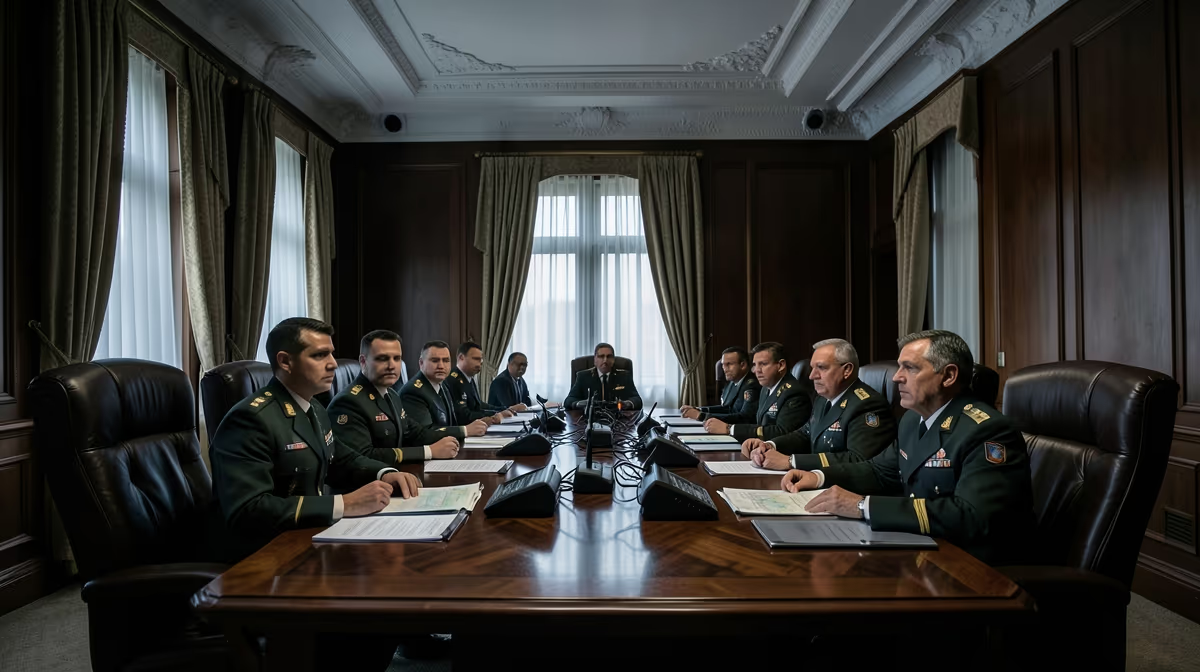
Moscow and Pyongyang have significantly deepened their military cooperation through a comprehensive strategic partnership pact signed in 2024, involving mutual defense pledges and reported transfers of North Korean munitions to support Russia's war in Ukraine. Recent developments in north korea russia military cooperation have raised international alarm as intelligence agencies monitor potential arrivals of technical personnel and military hardware transfers near the Russian border. This evolving bilateral alignment represents the most robust tie between Moscow and Pyongyang since the end of the Cold War, effectively dismantling decades of North Korea's relative international isolation while reshaping security architectures across Europe and the Indo-Pacific.
Historical Context And Root Causes
During the Cold War, North Korea and the Soviet Union were close allies, but their relationship cooled after the Soviet Union collapsed. However, as Russia became globally isolated following its invasion of Ukraine in 2022, Moscow revived its friendship with Pyongyang to secure much-needed wartime supplies. This dynamic is rooted in severe international isolation and overlapping existential needs for regime survival and military replenishment, driven by the protracted war in Ukraine and prolonged Western sanctions. The timeline of this resurgence includes September 2023, when Kim Jong Un traveled to Russia's Far East by armored train to meet Vladimir Putin at the Vostochny Cosmodrome, followed by Vladimir Putin visiting Pyongyang in June 2024 to sign a comprehensive strategic partnership treaty that includes a mutual defense clause. By October 2024, United States and South Korean intelligence confirmed the deployment of thousands of North Korean combat troops to Russia's Kursk region.
What Unfolded On The Ground
The deepening military alignment between Russia and North Korea has alarmed Western capitals and regional neighbors alike. Intelligence agencies from the United States, South Korea, and Ukraine have reported the deployment of thousands of North Korean troops to Russia's western Kursk region to assist in combat operations against Ukrainian forces. In exchange for conventional artillery shells, ballistic missiles, and troop deployments, Pyongyang is widely believed to be seeking advanced Russian military technology, including space-based reconnaissance capabilities and nuclear submarine assistance. Both nations have formally ratified the Treaty on Comprehensive Strategic Partnership, which commits each country to providing immediate military assistance using all available means in the event of armed aggression against either party. Neighboring countries have responded swiftly to the evolving alliance, with Seoul indicating it may reconsider its long-standing policy against providing lethal aid directly to Ukraine, while Washington and its allies have imposed multiple rounds of coordinated sanctions targeting financial networks and shipping entities facilitating the arms trade. Despite these deterrents, military exchanges between Russian and North Korean defense officials have continued at a high frequency.
Geopolitical And Economic Dimensions
This partnership operates as a calculated transactional autocracy pact that bypasses Western-led multilateral institutions, enhancing Kim Jong Un's domestic legitimacy and providing Vladimir Putin with unencumbered veto power and diplomatic cover at the United Nations Security Council. Economically, the relationship relies on sanctions evasion networks, direct infusion of hard currency and energy resources into Pyongyang's fragile economy, and North Korea functioning as an industrial-scale munitions factory for Russia's defense sector. Geopolitically, this accelerates a bipolar global architecture, solidifying an anti-Western axis that links European security crises directly to East Asian flashpoints and emboldening revisionist powers globally. A critical element of this cooperation involves the reciprocal transfer of sensitive aerospace, nuclear submarine, and missile-guidance technology from Moscow to Pyongyang, which significantly upgrades North Korea's conventional and strategic threat posture beyond standard artillery exchanges. As South Korean Ambassador to the United Nations Hwang Joon-kook stated, we are witnessing a dangerous expansion of the conflict through the direct involvement of North Korean military personnel alongside Russian forces, which profoundly threatens security in both Europe and the Indo-Pacific.
Global Security Implications
This alliance prolongs the devastating war in Ukraine by providing Russia with a fresh supply of weapons and soldiers. At the same time, it makes North Korea a more dangerous and technologically advanced threat, which destabilizes security in Asia and worries global powers like the United States, South Korea, and Japan. The primary impact is felt by people living in Ukraine facing intensified attacks, residents of South Korea and Japan who face a more emboldened nuclear-armed North Korea, and global taxpayers funding international defense responses. Diplomatic statements from Western allies condemn deepening bilateral ties, while regional actors increase monitoring of maritime and rail supply routes. Intelligence agencies continue to monitor potential arrivals of North Korean technical personnel and military hardware transfers near the Russian border, while experts predict that Moscow and Pyongyang will continue institutionalizing their comprehensive strategic partnership through bilateral visits and standardized logistics corridors, stopping short of deploying large combat formations.
Frequently Asked Questions
Why are North Korea and Russia cooperating militarily?
North Korea and Russia are expanding their military cooperation primarily due to their shared isolation from the West and the ongoing war in Ukraine. Moscow seeks additional munitions and artillery shells, while Pyongyang desires advanced Russian military technology, economic aid, and diplomatic backing. This partnership has strengthened significantly through high-level summits and mutual strategic agreements.
What kind of weapons is North Korea supplying to Russia?
Intelligence reports indicate that North Korea has supplied Russia with millions of artillery shells, ballistic missiles, and rocket launchers. These munitions are reportedly being used by Russian forces in Ukraine to sustain their heavy artillery barrages. In return, experts believe Russia is providing technical assistance for North Korea's satellite and missile programs.
Did North Korea send troops to fight in Russia?
Yes, reports from South Korean, Ukrainian, and Western intelligence agencies confirm that North Korea has deployed thousands of troops to Russia. These soldiers have been sent to the Kursk region to support Russian forces fighting against Ukrainian incursions. This deployment marks a significant escalation from mere arms trade to direct troop involvement in the conflict.
What is the mutual defense pact between Russia and North Korea?
In June 2024, Russian President Vladimir Putin and North Korean leader Kim Jong Un signed a comprehensive strategic partnership treaty. The agreement includes a mutual defense clause pledging immediate military assistance if either nation is attacked. This pact effectively revives Cold War-era alliance structures between the two nuclear-armed states.
How does North Korea-Russia military cooperation affect global security?
The deepening military alliance between Pyongyang and Moscow alarms the United States, South Korea, Japan, and European allies. It undermines international sanctions against North Korea and potentially accelerates the advancement of Pyongyang's nuclear and ballistic capabilities. Furthermore, it introduces a dangerous new dynamic to European security by integrating East Asian military power into the Ukraine war.
What is South Korea's response to Russia-North Korea ties?
In response to deepening military cooperation between its northern neighbor and Moscow, South Korea has strongly condemned the partnership and summoned Russian diplomats. Seoul is considering shifting its policy to potentially provide direct lethal aid to Ukraine, which it previously avoided due to domestic restrictions. Additionally, South Korea is reinforcing its security alliances with the US and Japan to counter the growing regional threat.
Conclusion
The formal ratification of the strategic partnership treaty between Moscow and Pyongyang, alongside verified transfers of conventional weaponry and the deployment of personnel to Russian territory, marks a permanent shift in post-Cold War security dynamics. Western allies, South Korea, and international intelligence agencies continue to monitor maritime and rail supply routes as diplomatic condemnations and sanctions remain active. While the best-case scenario involves cooperation remaining limited to conventional defense trade without triggering formal nuclear technology transfers, regional actors and defense strategists remain on high alert regarding advanced aerospace and missile technology exchanges that continue to alter power balances across Europe and the Indo-Pacific.


.webp)


