
North Korea Russia Military Cooperation Enters Dangerous New Phase
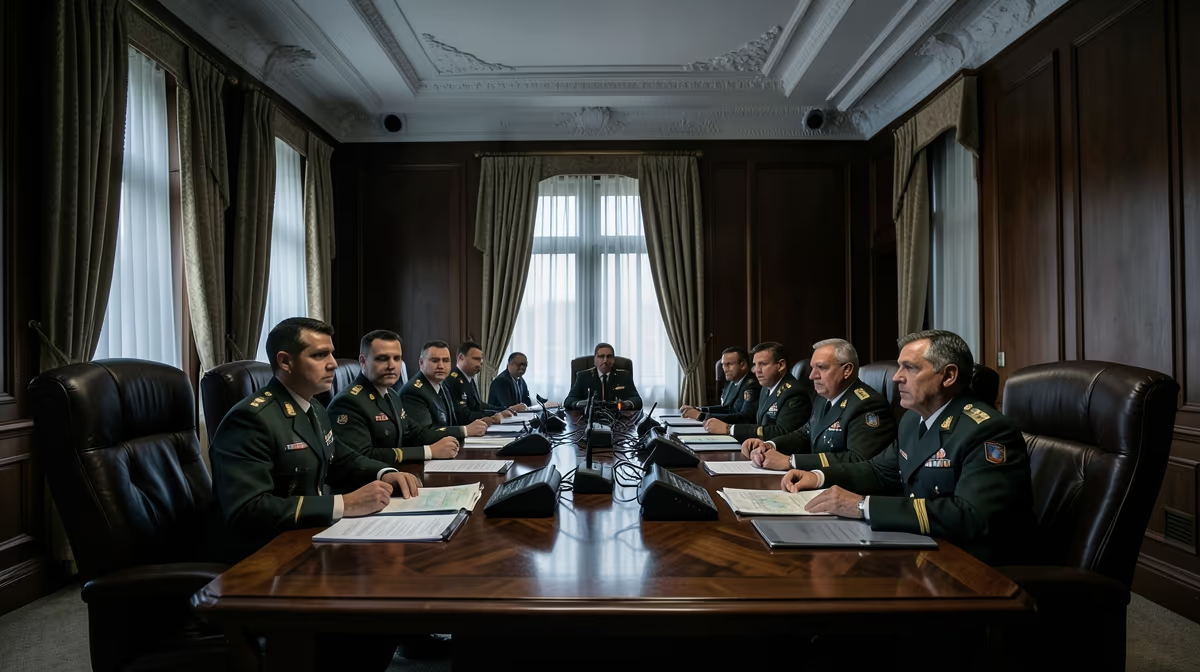
Washington has tracked a profound shift in international defense dynamics as north korea russia military cooperation enters a dangerous new phase, raising urgent alarms across Western capitals and Indo-Pacific security circles. Intelligence reports highlight how north korea russia military cooperation is reshaping geopolitical alliances across the globe, as Pyongyang and Moscow cement an axis driven by shared opposition to the United States. This deepening partnership has moved far beyond diplomatic posturing into active battlefield synchronization and technological exchanges that challenge decades of non-proliferation norms and international sanctions.
The Evolution of the Defense Pact and Arms Trade
The foundation of this renewed axis stems from severe international isolation and overlapping existential needs driven by Western sanctions and the protracted conflict in Ukraine. These conditions compel both Pyongyang and Moscow to seek asymmetric mutual reliance. Historically, North Korea maintained ties with the Soviet Union during the Cold War, but relations cooled significantly after the Soviet collapse. However, following Russia's 2022 invasion of Ukraine and its subsequent diplomatic isolation by the West, Moscow and Pyongyang revived and dramatically deepened their alliance.
This diplomatic pivot culminated in high-level summits, beginning with Kim Jong Un traveling to Russia's Vostochny Cosmodrome to meet Vladimir Putin in September 2023, signaling a turn toward deep military-industrial cooperation. By June 2024, Vladimir Putin visited Pyongyang to sign a comprehensive strategic partnership treaty that includes a mutual defense clause promising immediate military assistance if either nation is attacked. This defense pact represents a structural break from past diplomatic norms, providing the framework for institutionalized long-term arms pipelines and technological sharing operating parallel to formal United Nations Security Council resolutions.
How Expanding Arms Trade Threatens Regional Stability
The practical manifestation of this defense pact involves massive physical transfers of conventional munitions. North Korea has shipped thousands of containers of munitions and ballistic missiles to Russia. Pentagon and international intelligence assessments confirm that Pyongyang has transferred millions of artillery shells and ballistic missiles, which have been heavily utilized by Russian forces on front lines in Ukraine to replenish depleted arsenals and sustain military operations.
Beyond conventional munitions, the cooperation has expanded into direct personnel deployments. Intelligence reports from South Korea, the United States, and Ukraine indicate that North Korea has deployed thousands of combat troops to Russia, particularly near the Kursk region. These soldiers are undergoing training and providing active support to Russian forces engaged in repelling Ukrainian troops. In exchange for these critical military reinforcements, Western intelligence agencies are increasingly concerned that Russia is transferring sensitive military technology to North Korea, including expertise related to intercontinental ballistic missiles, nuclear submarines, and spy satellites. Notably, after several failed attempts, North Korea successfully placed a reconnaissance satellite into orbit with suspected Russian technical assistance.
Geopolitical Fallout and Security Implications
The alliance serves immediate political goals, securing regime survival for Kim Jong Un paired with desperate military reinforcement for Vladimir Putin. This transactional impunity creates an anti-Western axis that directly challenges the US-led global order. The partnership threatens global security by prolonging the war in Ukraine and emboldening North Korea in East Asia. By receiving Russian technology, North Korea's nuclear and missile threats become more sophisticated, directly endangering U.S. allies like South Korea and Japan, as well as the U.S. mainland.
International watchdogs and Western diplomats warn that this deepening relationship undermines decades of United Nations Security Council resolutions that Russia itself previously voted to approve, which explicitly ban North Korea from exporting or importing weapons. The erosion of this non-proliferation regime, combined with the deployment of North Korean troops and advanced technological exchanges, forces a tighter trilateral security architecture among the United States, South Korea, and Japan, prompting increased joint military exercises and heightened deterrence messaging from Washington.
Immediate Outlook and Expected Developments
Diplomatic statements from Washington condemning deepened military ties are expected over the next 24 hours, alongside intelligence briefings sharing satellite imagery of suspected arms transfers. Within the next 72 hours, analysts anticipate potential announcements of new unilateral United States and allied sanctions targeting entities and individuals facilitating North Korean munitions shipments to Russia. Defense experts predict that the United States and its allies will increase intelligence sharing and maritime surveillance to interdict illicit arms shipments while reinforcing joint defense postures in the Korean Peninsula. In the best case scenario, public exposure and targeted financial sanctions could deter further escalation of conventional arms trade, pushing both regimes toward diplomatic isolation. In the worst case scenario, Russia transfers advanced ballistic missile, nuclear, or satellite technology to North Korea in exchange for artillery, significantly escalating security threats to the US mainland and regional allies.
Frequently Asked Questions
Why are North Korea and Russia cooperating militarily?
North Korea and Russia have deepened their military alliance largely due to their shared isolation from the West and the ongoing war in Ukraine. Moscow seeks additional munitions and artillery shells to sustain its military campaign, while Pyongyang desires advanced Russian aerospace, satellite, and missile technology in return. This strategic partnership helps both nations counter US-led pressure and sanctions on the global stage.
What is North Korea providing to Russia?
Intelligence and defense officials report that North Korea has supplied Russia with millions of artillery shells, ballistic missiles, and other conventional weaponry. These munitions have been heavily utilized by Russian forces on the front lines in Ukraine. In exchange, Russia is believed to be providing economic aid, food supplies, and technological assistance to upgrade North Korea's military capabilities.
Are North Korean troops fighting in Ukraine?
Recent intelligence reports from South Korea, the US, and Ukraine indicate that North Korea has deployed thousands of troops to Russia, particularly near the Kursk region. These soldiers are reportedly undergoing training and providing support to Russian forces engaged in the conflict. This marks a significant escalation in direct foreign military involvement in the war.
How does US and Western allies view this cooperation?
The United States, South Korea, and their allies view the deepening ties between Pyongyang and Moscow as a severe threat to global security and a violation of multiple UN Security Council resolutions. Western leaders argue that this partnership prolongs the war in Ukraine and destabilizes the Indo-Pacific region. Consequently, the US has imposed additional sanctions targeting individuals and entities facilitating this arms trade.
Does the North Korea-Russia partnership violate UN sanctions?
Yes, the military cooperation and arms transfers between North Korea and Russia directly violate numerous United Nations Security Council resolutions that Moscow itself previously voted to approve. These resolutions explicitly ban North Korea from exporting or importing weapons and military equipment. Russia's veto power and diplomatic stance have increasingly undermined the enforcement of these international sanctions.
What military technology is Russia giving to North Korea?
Western intelligence agencies are concerned that Russia is transferring sensitive military technology to North Korea, including expertise related to intercontinental ballistic missiles, nuclear submarines, and spy satellites. After several failed attempts, North Korea successfully placed a reconnaissance satellite into orbit with suspected Russian technical assistance. Such advancements pose a direct security threat to US allies like South Korea and Japan.
Conclusion
Verified developments confirm that North Korea and Russia have established a formal mutual defense pact alongside continuous transfers of artillery shells, ballistic missiles, and combat troop deployments to support military operations in Ukraine. In exchange, evidence points toward ongoing technological assistance directed at North Korea's aerospace and military modernization programs. As Western intelligence agencies maintain active surveillance on these illicit supply chains, the United States and its regional allies are preparing enhanced maritime interdiction efforts, intelligence sharing frameworks, and targeted financial sanctions to counter the security challenges posed by this growing bilateral axis.


.webp)


