
Strait of Hormuz Security Escalates After Unprovoked Encounters
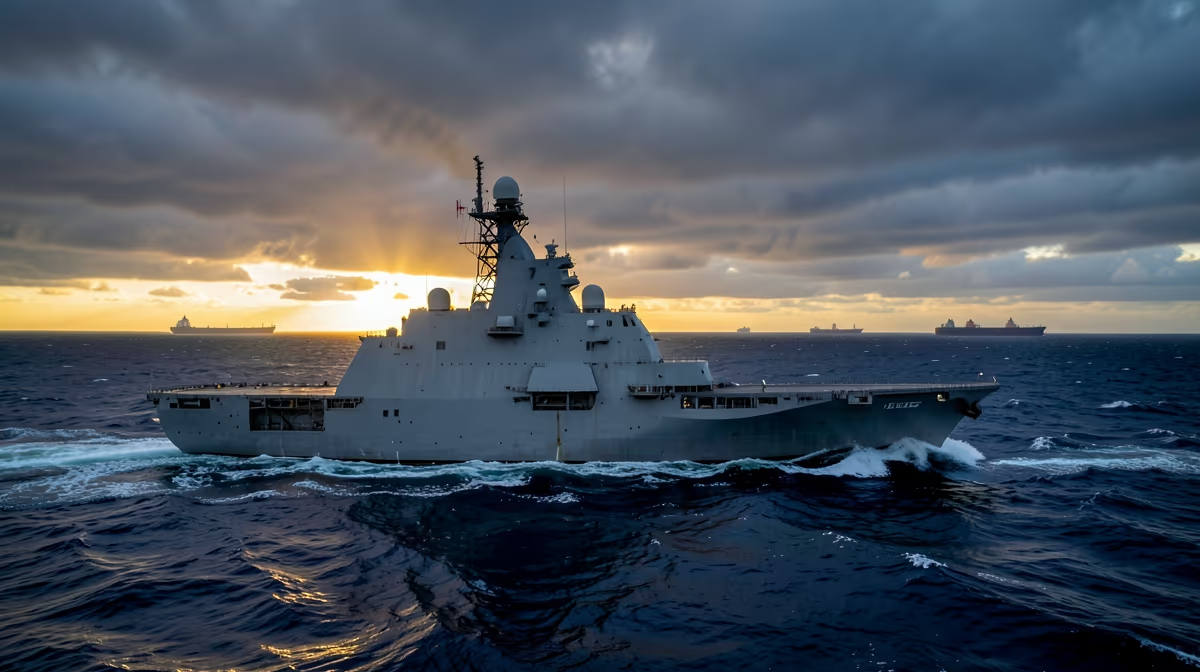
The U.S. Navy's Fifth Fleet announced on Tuesday that it has increased patrols in the strategic Strait of Hormuz following a series of unprovoked Iranian naval maneuvers that Washington characterized as harassment against international commercial shipping. Global markets and maritime analysts are closely tracking these developments to understand how the latest strait of hormuz news impacts energy security and the safe movement of vessels across critical middle east shipping lanes.
The heightened military posture comes after at least two commercial vessels reported aggressive approaches by Iranian Islamic Revolutionary Guard Corps Navy fast-attack craft within international waters over the past forty-eight hours. While no direct engagements or exchanges of fire occurred, the proximity of the vessels raised immediate security concerns for maritime traffic in one of the world's most vital energy transit chokepoints. In response to the escalating tensions, the Department of Defense has redeployed additional guided-missile assets to the region to ensure freedom of navigation and protect commercial vessels flying U.S. and allied flags. Pentagon officials stressed that the measures are purely defensive and designed to deter potential miscalculations by regional actors. Global energy markets have reacted cautiously to the developments, with crude oil futures ticking upward as traders assess the potential risks to petroleum shipments. The Strait of Hormuz carries roughly a fifth of the world's petroleum supply, making any disruption in the corridor a matter of acute international economic concern.
Anatomy of a Geopolitical Chokepoint
The Strait of Hormuz is a narrow stretch of water located between Oman and Iran that connects the Persian Gulf to the open ocean. It is one of the most important shipping lanes in the world because a massive portion of the world's oil supply travels through it on large cargo ships every single day. The strait connects the Persian Gulf with the Gulf of Oman and the Arabian Sea, serving as a geographical pivot point for international maritime trade. Roughly one-fifth of the world's petroleum passes through this crucial water passage. Recent geopolitical tensions have raised fears of shipping disruptions or blockades. Naval forces, including the U.S. Navy, routinely patrol the area to protect commercial vessels, while organizations like the Oman Maritime Security Centre monitor regional traffic. Any threat to this chokepoint causes immediate reactions in global energy and stock markets. For decades, the Strait of Hormuz has been a strategic flashpoint due to its geography and the volatile political relations between Iran and Western nations, serving as a recurring site for military standoffs and tanker security operations. This history mirrors past events such as the 1984-1988 Tanker War during the Iran-Iraq conflict, which also forced international naval escorts and spiked war-risk insurance, as well as the 1989 Operation Praying Mantis that cemented the historical hardening of U.S. naval presence in the Persian Gulf. More recently, the 2019 tanker incidents off the coast of Fujairah prompted the formation of U.S.-led maritime security task forces to counter asymmetric drone and missile threats by regional actors testing red lines without triggering total war.
Market and Economic Fallout
When security is threatened in the Strait of Hormuz, the flow of oil slows down or becomes more expensive to insure, which directly causes crude oil prices to rise globally. For everyday people in the United States and around the world, this translates into higher prices at the gas pump and increased costs for everyday goods that rely on energy for manufacturing and transportation. The economic angle involves upward pressure on insurance premiums, liquefied natural gas spot prices, and shipping logistics costs, indirectly fueling global inflation. Those affected include drivers at gas pumps, global shipping companies, airlines, manufacturing businesses, and consumers worldwide who rely on stable energy prices and imported goods. The root cause of these disruptions stems from the structural vulnerability of global energy chokepoints to asymmetric maritime warfare and state-backed proxy disruptions. On the political front, the current administration must carefully balance deterrence against Iran with the domestic political necessity of preventing fuel price spikes ahead of elections. Geopolitically, these events accelerate decoupling and the scramble for alternative overland pipelines, reducing Western leverage in the Middle East while emboldening non-Western security brokers like China. Observers also note the quiet rise of secondary maritime corridors and truck-based transit across the Arabian Peninsula to bypass the strait entirely, altering regional trade dependencies.
Immediate Operational Outlook
In the immediate term, operations across the region are expected to see increased naval patrols and reconnaissance flights by the U.S. Fifth Fleet in response to heightened Iranian rhetoric. Key players monitoring the situation include the U.S. Central Command, the Iranian Islamic Revolutionary Guard Corps Navy, and the Oman Maritime Security Centre. Over the next seventy-two hours, diplomatic backchannels are anticipated to remain active to de-escalate tensions while commercial shipping continues with minor rerouting precautions. Expert prediction indicates that posturing will likely remain contained to verbal warnings and minor naval shadowing without direct kinetic conflict. The best-case scenario envisions a quiet resumption of standard transit protocols with reduced military chatter and stable oil futures. Conversely, the worst-case scenario involves a miscalculation that leads to the temporary seizure of a commercial vessel, sparking immediate retaliatory sanctions. U.S. Central Command spokesperson stated that forces remain postured and ready to protect regional security and commerce against unlawful threats, while calling on Iranian forces to cease destabilizing and unprofessional behaviors immediately. Confirmed facts at this stage include the U.S. Navy Fifth Fleet increased patrols, two commercial vessels reporting aggressive approaches by Iranian fast-attack craft, the redeployment of Department of Defense guided-missile assets, and the transit of roughly a fifth of the world's petroleum supply through the corridor. Developing aspects involve potential diplomatic fallout and the exact nature of future U.S. naval escort protocols for commercial vessels in the area.
Frequently Asked Questions
What is happening in the Strait of Hormuz right now?
Recent news highlights heightened geopolitical tensions, with increased military patrols and occasional commercial vessel harassment. These disruptions have raised concerns about maritime security and potential threats to global energy supplies originating from the Persian Gulf.
Why is the Strait of Hormuz so important to global oil supply?
Roughly a fifth of the world's petroleum passes through this narrow waterway, making it a critical choke point for international trade. Any military conflict or blockade here can immediately trigger global oil price spikes and energy shortages.
Who controls the Strait of Hormuz?
The strait is bordered by Iran to the north and Oman and the United Arab Emirates to the south. While international waters allow for transit passage under UN maritime law, Iran frequently asserts significant naval influence over the region.
Are US military forces active in the Strait of Hormuz?
Yes, the US Navy's Fifth Fleet, based in Bahrain, routinely operates in the area to ensure freedom of navigation and protect commercial shipping. Recent operations involve escorting flagged vessels and deterring hostile actions by regional actors.
How do shipping companies avoid risks in the Strait of Hormuz?
Commercial operators often coordinate closely with naval coalitions, utilize private security teams, and transponder tracking to monitor threats. Some vessels also adjust their schedules or routes when threat levels escalate significantly.
Has Iran closed the Strait of Hormuz recently?
While Iranian officials frequently threaten to close the strait during periods of political standoff, a full closure has not occurred. However, intermittent seizures of commercial tankers and asymmetric naval maneuvers continue to keep tensions at a boiling point.
Conclusion
Verified developments indicate that the U.S. Navy Fifth Fleet has increased patrols and deployed additional guided-missile assets following close-encounter incidents between Iranian fast-attack craft and commercial shipping in the Strait of Hormuz. As military and diplomatic actors navigate these heightened maritime tensions, regional forces maintain a defensive posture to safeguard freedom of navigation and stabilize commercial transit lanes. Realistic next steps involve continued naval monitoring, active diplomatic backchannels to prevent miscalculations, and careful observation of crude oil futures and shipping insurance rates by global markets.


.webp)


