
Novorossiysk port drone strike tests Black Sea maritime security
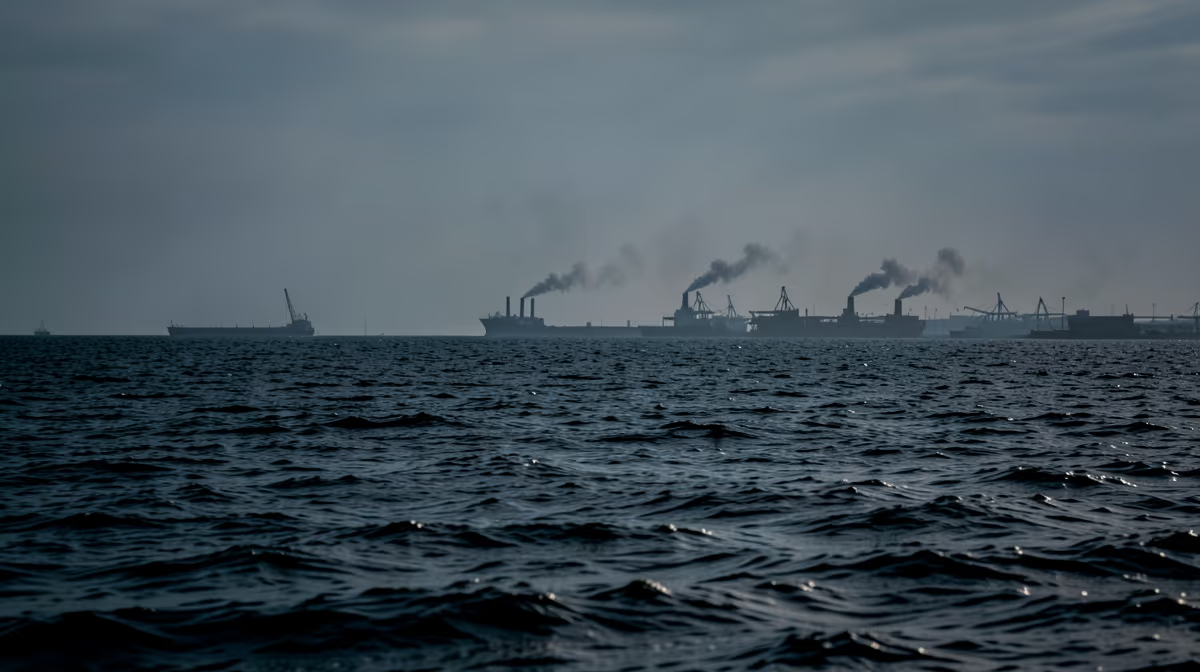
Ukrainian maritime drones launched a targeted overnight strike on Russia's vital Novorossiysk naval base and oil export terminal on the Black Sea, causing temporary operational halts and highlighting the expanding geographic reach of Kyiv's asymmetric naval warfare. This major novorossiysk port ukraine drone strike has raised new concerns over regional stability and ongoing escalations in the conflict. Novorossiysk serves as a crucial economic lifeline for Moscow, handling significant volumes of crude oil and grain shipments destined for international markets. Security analysts note that successfully targeting a facility located far from the primary zones of active engagement demonstrates Kyiv's growing capability to project power into traditionally secure Russian rear areas and disrupt vital logistics.
What Unfolded
The coordinated unmanned surface vehicle attack struck critical infrastructure near one of Russia's primary export hubs, prompting port authorities to temporarily suspend all vessel movements as air defense systems engaged incoming threats overhead. Local residents reported hearing multiple loud explosions near the harbor shortly before dawn, while Russian emergency services rushed to assess potential damage to industrial facilities.
Residents in the area reported hearing loud explosions and gunfire as air defenses activated to shoot down the incoming unmanned aircraft. The port is a heavily defended area because it serves as a crucial military and economic hub for Russia. While preliminary Russian military reports claimed that incoming drone boats were successfully intercepted and destroyed by naval patrols before reaching their intended targets, commercial satellite imagery and localized disruptions suggested secondary impacts. Insurance and shipping firms immediately began reassessing maritime risk levels in the northeastern Black Sea following the incident.
Key Facts and Verified Developments
The operation underscores a series of verified facts and operational realities on the ground in the Black Sea basin. Ukraine targeted the Russian port city of Novorossiysk with uncrewed surface vehicles and aerial drones. Residents heard explosions and air defense fire during the night while maritime drone activity occurred near the port area. Port authorities temporarily suspended vessel movements and shipping operations following the explosions.
Novorossiysk is a major Russian oil export and naval hub on the Black Sea, serving both commercial and military use. The attack highlights Ukraine's growing long-range drone capabilities, though no immediate official casualty numbers have been confirmed by local or national authorities. Both Ukrainian military sources and Russian defense spokespersons issued conflicting assessments regarding the extent of the damage, with Russian state media framing the attack as a thwarted terrorist provocation while downplaying structural damage.
Strategic Analysis and Root Causes
The root cause of this military operation stems from Ukraine's strategic imperative to degrade Russia's naval projection capabilities and disrupt critical fossil fuel export arteries in the Black Sea basin. From a political angle, the action demonstrates Kyiv's asymmetric capability to project power into Russian sovereign territory, challenging the Kremlin's narrative of invulnerability and domestic stability. Economically, the strike poses a direct threat to Russia's shadow fleet and Caspian Pipeline Consortium crude oil exports, potentially driving up global energy volatility and insurance premiums for Black Sea shipping.
Geopolitically, the event expands the theater of conflict beyond the immediate land borders, testing regional thresholds and forcing Ankara to navigate complex Montreux Convention and maritime security dynamics. A hidden angle in this campaign involves the vulnerability of dual-use port infrastructure where commercial grain terminals and military logistics nodes heavily overlap, creating complex humanitarian and legal gray zones. Historically, the pressure on heavily fortified rear bases mirrors past naval conflicts where surprise attacks shifted power balances and shattered domestic confidence.
Why This Matters
This attack matters because Novorossiysk is a vital lifeline for Russian exports, including oil and grain, as well as a fallback base for the Russian Navy's Black Sea Fleet. Hitting this target shows that no part of Russia's logistics network in the region is entirely safe, potentially driving up shipping costs and disrupting global commodity markets. Global energy and food markets, Russian military planners, local residents in Novorossiysk, and international shipping companies are directly affected by these recurring security incidents.
Since the full-scale invasion began, Ukraine has increasingly relied on domestically produced long-range drones to strike military and economic targets inside Russia, shifting the war's geography away from just the front lines in eastern and southern Ukraine. The evolution of drone warfare against critical infrastructure has transformed coastal cities into active operational zones.
Future Outlook and Projected Scenarios
In the next 24 hours, observers can expect increased aerial surveillance and localized security lockdowns around Novorossiysk port. Over the next 72 hours, assessments of maritime infrastructure damage will take place alongside the potential temporary rerouting of Caspian Pipeline Consortium oil exports and heightened readiness of Black Sea Fleet assets. Key players to watch include the Ukrainian Armed Forces, the Russian Ministry of Defense, and the Caspian Pipeline Consortium.
Expert prediction suggests that Ukraine will likely continue asymmetric long-range drone campaigns targeting Russian logistical hubs and energy infrastructure in the Black Sea to degrade military supply chains and economic leverage. In a best-case scenario, minimal damage to civilian oil export terminals leads to a swift resumption of normal port operations without significant spikes in global crude prices. In a worst-case scenario, successful strikes on critical crude oil loading facilities could cause prolonged export disruptions, environmental hazards, and subsequent Russian retaliatory missile strikes on Ukrainian port and grain infrastructure.
Frequently Asked Questions
Why did Ukraine target the Novorossiysk port with drones?
Ukraine targeted the Novorossiysk port to disrupt Russian military logistics, naval operations, and fuel supply lines. As a major Russian naval base and export hub in the Black Sea, the port serves as a strategic military asset supporting the ongoing war effort.
What damage was caused by the drone strike on Novorossiysk port?
The drone strikes have caused varying degrees of damage to Russian naval vessels, port infrastructure, and nearby oil storage facilities. While Russia often downplays the impact, satellite imagery and intelligence reports frequently confirm structural hits and operational disruptions.
Is Novorossiysk port located in Russia or Ukraine?
Novorossiysk port is located in Krasnodar Krai, Russia, situated on the eastern coast of the Black Sea. Despite being far from the immediate front lines, its military importance makes it a frequent target for long-range Ukrainian uncrewed surface vessel and aerial drone attacks.
How does Russia defend the Novorossiysk naval base from drones?
Russia defends the Novorossiysk naval base using electronic warfare systems, anti-drone guns, and floating boom barriers designed to block sea drones. Additionally, air defense systems are deployed around the perimeter to intercept incoming aerial drones launched by Ukraine.
Did the drone attacks on Novorossiysk affect global oil exports?
The attacks have occasionally caused temporary pauses in oil loading and shipping operations at the terminal. However, the overall impact on global oil markets has been relatively limited, as international buyers and operators quickly adapt to the localized security risks.
What type of drones does Ukraine use to strike Novorossiysk?
Ukraine primarily uses domestically developed long-range maritime kamikaze drones, also known as uncrewed surface vessels, packed with explosives. They also utilize long-range aerial drones capable of flying hundreds of kilometers to reach targets deep inside Russian territory.
Conclusion
The maritime drone strike on Novorossiysk highlights the ongoing evolution and expanding geographic scope of modern asymmetric warfare in the Black Sea region. With port operations temporarily suspended following nighttime explosions and air defense engagements, the incident underscores the vulnerability of dual-use infrastructure supporting Russian naval and commercial logistics. As Ukrainian forces continue to project power into rear-area hubs, regional security dynamics, maritime insurance markets, and energy export routes face persistent uncertainty. Authorities on both sides continue to assess the structural impacts while monitoring potential escalations across Black Sea maritime corridors.


.webp)

