
Gulf States Hormuz Bypass Infrastructure Sparks Massive Geopolitical Shift
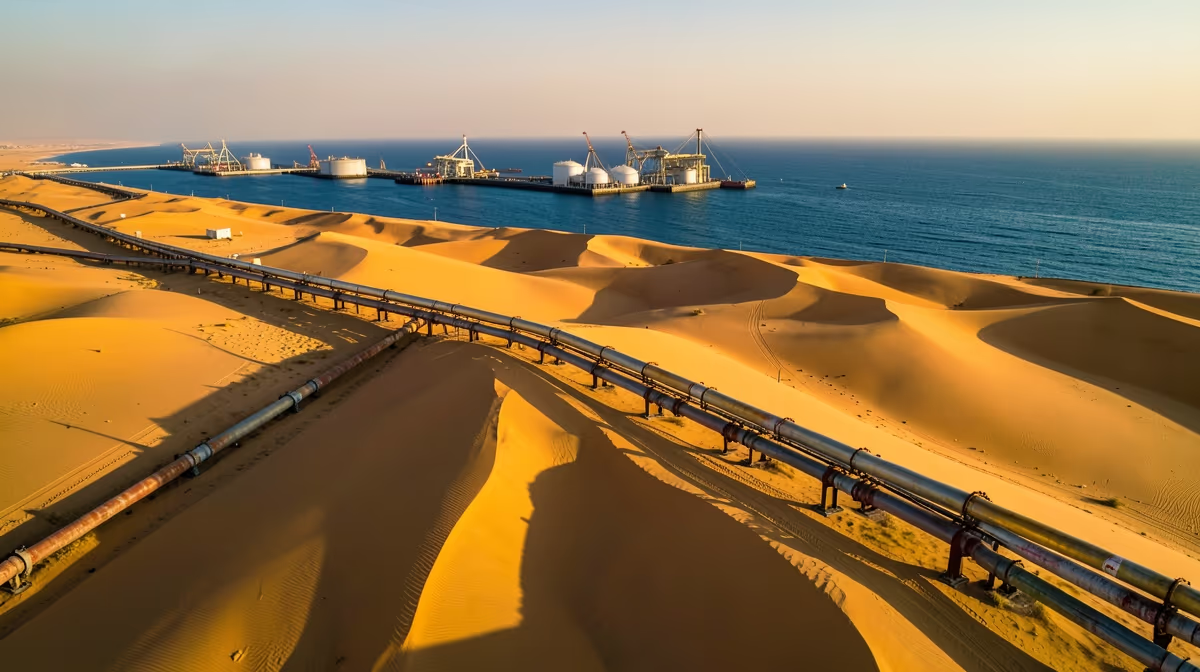
Washington—In a strategic move to secure global energy supplies against escalating geopolitical tensions, Gulf Arab states are accelerating the development of critical oil and gas bypass infrastructure designed to circumvent the vulnerable Strait of Hormuz. As geopolitical tensions rise, the development of robust gulf states hormuz bypass infrastructure has become a top priority for Middle Eastern energy exporters seeking to mitigate regional transit risks and protect their primary source of income from potential blockages or military conflicts.
The Strait of Hormuz, through which roughly a fifth of the world's petroleum passes daily, has increasingly become a focal point for maritime security concerns amid regional friction involving Iran and international shipping lanes. To mitigate these choke-point vulnerabilities, key producers including Saudi Arabia and the United Arab Emirates are heavily investing in overland pipelines that redirect crude directly to terminals on the Red Sea and the Gulf of Oman. United States energy analysts and defense officials have monitored these multibillion-dollar engineering projects closely, viewing them as vital components for stabilizing global markets during potential supply disruptions. The expansion of the East-West Pipeline in Saudi Arabia and the Habshan-Fujairah pipeline in the UAE effectively re-routes millions of barrels of oil past the contested waterway. While these infrastructure projects significantly enhance export resilience, experts note they do not entirely replace the sheer volume capacity of the maritime strait. Nonetheless, the strategic shift represents a fundamental realignment of Gulf energy logistics aimed at reassuring international markets and reducing reliance on a single, high-risk maritime corridor. Diversifying export routes is no longer just an economic preference for Gulf capitals; it is a paramount national security imperative, said Dr. Elena Vance, a senior fellow at the Center for Strategic and International Studies. The United States and its allies view these bypass pipelines as essential shock absorbers for the global economy.
Background Context and Historical Precedent
For decades, the vast majority of Middle Eastern oil exports had to travel by tanker through the narrow Strait of Hormuz, leaving them vulnerable to regional disputes, particularly involving Iran. Recognizing this single point of failure, Gulf producers began investing billions of dollars in overland pipelines and alternative export terminals starting in the late 2000s and 2010s to diversify their strategic options. This historical trajectory mirrors previous efforts during the 1980s tanker war, which highlighted the extreme vulnerability of Gulf maritime export routes and spurred early conceptualizations of strategic pipeline projects to circumvent vulnerable maritime nodes. The extreme vulnerability of the Strait of Hormuz chokepoint threatens the continuous export of hydrocarbons, which forms the fiscal bedrock of Gulf Cooperation Council monarchies. From a political and economic standpoint, these infrastructure investments ensure regime survival, provide energy security leverage, mitigate catastrophic transit disruption costs, and protect state revenues and sovereign wealth fund capitalization against maritime bottlenecks.
Key Pipeline Developments and Engineering Scope
Gulf states have successfully constructed major overland oil pipelines to ensure that energy supplies continue flowing to the rest of the world. Saudi Arabia operates the East-West Pipeline, also known as Petroline, which connects eastern oil fields to Yanbu on the Red Sea. This system boasts a substantial capacity of around 5 million to 7 million barrels of oil per day, allowing the kingdom to export a significant portion of its total petroleum directly from the Red Sea and bypass the Persian Gulf entirely. Similarly, the United Arab Emirates utilizes the Habshan-Fujairah pipeline, which transports crude from the onshore oil fields of Habshan directly to the port of Fujairah on the Gulf of Oman. This infrastructure enables the UAE to export its crude oil straight to the Arabian Sea without navigating tankers through the Strait of Hormuz, maintaining a design capacity of approximately 1.5 million barrels per day. These bypass projects aim to export oil directly to alternative marine terminals, significantly reducing the vulnerability of Gulf exporters while operating alongside traditional maritime shipping routes.
Economic Implications and Global Market Stabilization
For everyday consumers, this infrastructure acts as an insurance policy against sudden, catastrophic spikes in global oil and gas prices. When the Strait of Hormuz is threatened, energy markets panic, leading to higher fuel and utility costs worldwide. Developing bypass routes helps stabilize global energy supplies and dampens the economic shock of regional conflicts by ensuring that alternative export capacity remains available. Key players such as Saudi Aramco, ADNOC, the Oman Ministry of Energy and Minerals, and the US Department of Energy monitor and manage these critical supply chains. While these pipelines cannot completely replace the massive volume of tanker traffic moving through the strait, they provide a critical buffer against sudden price spikes, safeguarding global crude oil shipping, energy futures, and commodity pricing against regional volatility.
Strategic Outlook and Regional Security Assessment
As regional security dynamics evolve, energy ministries and international stakeholders continue to evaluate the resilience of non-Hormuz export routes. Increased diplomatic signaling by Gulf states regarding the acceleration of bypass pipeline projects highlights a concerted effort to mitigate transit risks. Security assessments and feasibility studies released by regional energy bodies focus heavily on optimizing these overland corridors. Expert prediction indicates that Gulf states will quietly fast-track alternative export infrastructure upgrades to reassure international markets, despite high capital costs, driven by persistent maritime security threats in the Strait of Hormuz. In a best-case scenario, the successful expansion of bypass capacity deters regional escalations and stabilizes global oil supply chains without major price shocks. Conversely, the worst-case scenario warns that premature announcements or cyberattacks on under-construction bypass infrastructure could trigger immediate energy market panic and regional friction, underscoring the delicate balance required as Gulf nations redraw global energy transit corridors to diminish coercive geopolitical leverage.
Frequently Asked Questions
What is the Strait of Hormuz bypass infrastructure?
The Strait of Hormuz bypass infrastructure consists of a network of oil pipelines and alternative export terminals designed to transport Gulf crude directly to open ocean waters. These strategic routes allow major producers like Saudi Arabia and the UAE to maintain petroleum exports even if the vital shipping lane is blocked. This system is crucial for global energy security and helps mitigate geopolitical supply shocks.
Why are Gulf states building pipelines to bypass Hormuz?
Gulf states are developing bypass pipelines primarily to reduce their vulnerability to geopolitical tensions and potential blockades by Iran in the Strait of Hormuz. Because nearly a fifth of the world's petroleum passes through this narrow chokepoint, alternative routes protect national revenues and ensure uninterrupted global energy supplies. These projects provide strategic leverage and operational flexibility for major OPEC exporters.
Which countries have built infrastructure to bypass the Strait of Hormuz?
Saudi Arabia and the United Arab Emirates are the primary nations that have successfully constructed major bypass infrastructure. Saudi Arabia operates the East-West Pipeline, which carries crude oil to a Red Sea terminal, while the UAE utilizes the Habshan-Fujairah oil pipeline. These systems collectively reroute millions of barrels of oil daily away from the Persian Gulf.
What is the capacity of the Saudi East-West Pipeline?
The Saudi East-West Pipeline, also known as Petroline, boasts a substantial capacity of around 5 million to 7 million barrels of oil per day. This massive throughput allows Saudi Arabia to export a significant portion of its total petroleum directly from the port of Yanbu on the Red Sea. Consequently, the kingdom can circumvent the Persian Gulf and the Strait of Hormuz entirely during a crisis.
Does the UAE have a pipeline that bypasses Hormuz?
Yes, the UAE operates the Habshan-Fujairah oil pipeline, which connects the onshore oilfields of Habshan directly to the port of Fujairah on the Gulf of Oman. This infrastructure enables the UAE to export its crude oil straight to the Arabian Sea without navigating tankers through the Strait of Hormuz. The pipeline has a design capacity of approximately 1.5 million barrels per day.
How does Hormuz bypass infrastructure impact global oil markets?
Hormuz bypass infrastructure acts as a vital safety valve for global oil markets by reducing the risk of catastrophic supply disruptions in the Middle East. While these pipelines cannot completely replace the massive volume of tanker traffic moving through the strait, they provide a critical buffer against sudden price spikes. Investors and energy analysts closely monitor these routes as key indicators of geopolitical risk mitigation in the region.
Conclusion
Gulf nations are actively expanding overland pipeline capacities and storage terminals to reduce their exclusive dependence on the Strait of Hormuz for crude oil exports. Verified developments confirm that key producers like Saudi Arabia and the United Arab Emirates continue to rely on the East-West Pipeline and the Habshan-Fujairah pipeline to safeguard international energy flows. Realistic next steps involve ongoing security assessments, infrastructure maintenance, and strategic intelligence sharing among regional energy ministries and international stakeholders to ensure these alternative export corridors remain operational against evolving geopolitical threats.


.webp)

