
S-400 Espionage Exposed As Pakistan Deploys Spies For Operation Sindoor
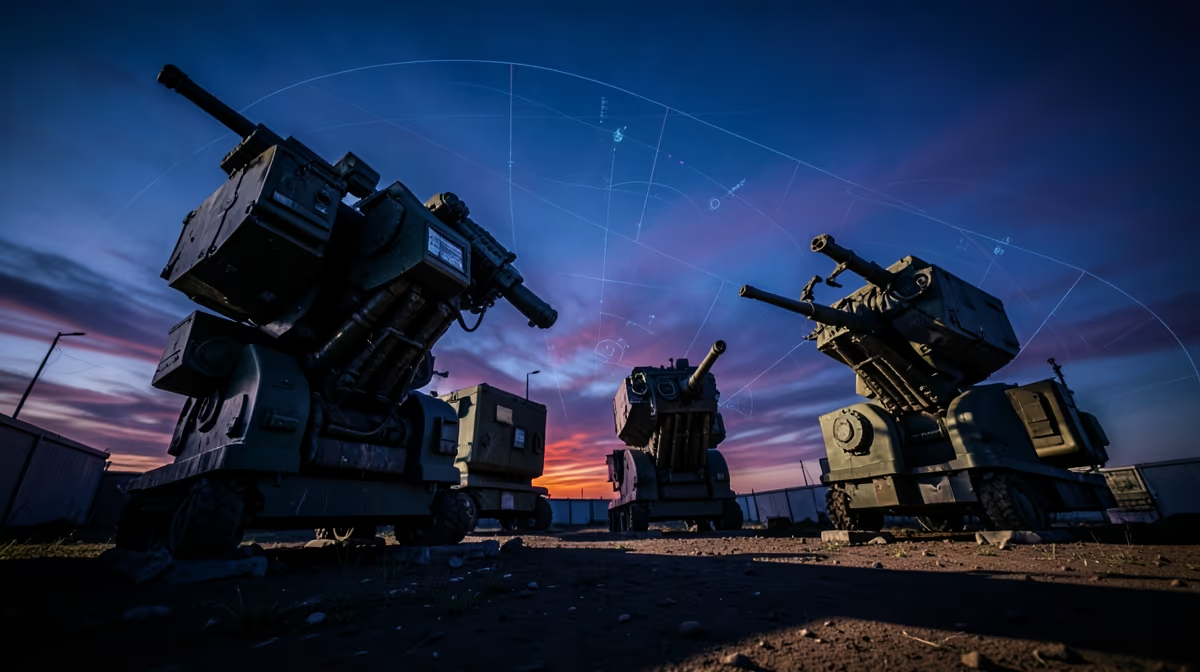
Recent intelligence reports reveal that Operation Sindoor S-400 espionage efforts were intensified by Pakistan to locate critical air defense systems. A top military official has revealed that Pakistan deployed spies and activated sleeper cells in a desperate attempt to locate S-400 missile systems during Operation Sindoor, according to multiple news reports.
The explosive claim was brought to light by a prominent Air Marshal, shedding new light on the intelligence operations and strategic maneuvers surrounding Operation Sindoor. According to the reports, the deployment of clandestine agents and sleeper cells was a concerted effort by Pakistan to pinpoint the heavily guarded air defense assets.
The S-400 systems represent a significant strategic capability, making their precise locations a high-value intelligence target during periods of heightened operational readiness. The recent revelations emphasize the intense covert reconnaissance and espionage activities that occur behind the scenes during high-stakes military standoffs.
Military analysts and defense observers have noted that uncovering the location of such advanced mobile defense systems is notoriously difficult, explaining the reliance on local human intelligence networks and sleeper cells. The disclosure provides a rare glimpse into the covert dimensions of Operation Sindoor and the ongoing intelligence shadow war between the neighboring nations.
Background And Strategic Importance
Recent revelations from a top military official have shed light on the intense intelligence-gathering efforts undertaken during Operation Sindoor. According to the disclosure, Pakistan deployed spies and activated sleeper cells in a desperate attempt to locate India's highly strategic S-400 air defense systems.
The S-400 system is a crucial component of modern aerial defense, capable of tracking and destroying incoming threats at long ranges. Because of its tactical importance, knowing its exact location provides a significant strategic advantage during military standoffs, which explains why intelligence networks were heavily mobilized to find them.
The S-400 Triumf is an advanced mobile surface-to-air missile system developed by Russia, designed to detect, track, and destroy various aerial targets. In modern military conflicts, intelligence agencies frequently utilize human intelligence, spies, and sleeper cells to track high-value mobile military assets.
- Pakistan deployed spies in a bid to find S-400 systems during Operation Sindoor
- The explosive claim was revealed by a top military official, identified in reports as an Air Marshal
- Sleeper cells were reportedly activated as part of the intelligence-gathering effort
- The operation highlighted the high strategic value placed on locating advanced air defense assets
- Major news outlets including NDTV, India Today, and The Times of India covered the military official's disclosures
What Unfolded During Op Sindoor
The timeline of events highlights the intense intelligence-gathering phases during Operation Sindoor. Military operations and heightened border tensions triggered intensive reconnaissance phases, during which Pakistan activated sleeper cells and deployed spies in a desperate bid to locate strategic S-400 systems. Top military officials subsequently revealed the scope of these espionage activities in public military briefings.
- Military operations and heightened border tensions trigger intensive intelligence-gathering phases during Operation Sindoor
- Pakistan activates sleeper cells and deploys spies in a desperate bid to locate strategic S-400 systems
- Top military officials reveal the scope of these espionage activities in public military briefings
Defense analysts and military spokespersons are expected to provide further commentary on the efficacy of counter-intelligence measures and the broader implications of these espionage attempts. An Air Marshal has made claims that Pakistan deployed spies and activated sleeper cells to locate S-400 systems during Operation Sindoor, and further details regarding how these spies were intercepted or neutralized, as well as any official government or military responses to the revelation, remain under observation.
Analyst Perspective And Geopolitical Angle
Intensified intelligence-gathering operations and activation of sleeper cells were driven by a high-stakes strategic imperative to locate advanced air defense assets like India's S-400 systems during military contingencies such as Operation Sindoor. The intense focus on locating strategic air defense systems highlights the delicate military balance in South Asia, where the introduction of high-end capabilities like the S-400 fundamentally alters regional deterrence dynamics and prompts desperate reconnaissance measures.
The public revelation by a senior military official regarding Pakistani espionage efforts serves domestic messaging purposes in India, highlighting ongoing cross-border security challenges and validating readiness postures. Meanwhile, the deployment of covert assets underscores the asymmetric nature of modern military surveillance, where intelligence operations are utilized as a cost-effective alternative to offset adversaries' multibillion-dollar investments in advanced defense shields.
Beyond traditional espionage, the reliance on activated sleeper cells during Op Sindoor may reflect broader concerns about the vulnerability of critical military hardware logistics and the increasing integration of human intelligence networks with electronic warfare surveillance. This parallels Cold War-era intelligence operations involving deep-cover reconnaissance and sleeper cells tasked with locating and monitoring newly deployed strategic missile defense installations.
This revelation highlights the high-stakes world of modern military intelligence and electronic warfare, where knowing the precise positioning of advanced defensive assets like the S-400 can significantly alter tactical planning and regional security dynamics.
Future Outlook And Security Assessment
Continued analysis and media reporting are expected regarding the revelations made by the Air Marshal concerning Operation Sindoor and intelligence gathering activities over the next 24 hours. Over the next 72 hours, potential official diplomatic or military commentary may respond to the disclosures about Pakistani intelligence operations targeting strategic defense systems.
Analysts would likely expect heightened security protocols around critical defense assets like the S-400 systems following public acknowledgments of past espionage attempts. Increased transparency and defensive hardening could lead to improved deterrence against foreign espionage and infiltration attempts under best-case scenarios, whereas worst-case outcomes involve heightened regional tensions and intensified intelligence warfare regarding the positioning and operational status of strategic air defense assets.
Frequently Asked Questions
What did Pakistan do during Operation Sindoor regarding India's S-400 systems?
According to a top military official's revelation, Pakistan deployed spies and activated sleeper cells in a desperate attempt to locate India's S-400 air defense systems. The operation shed light on intense intelligence-gathering efforts made during the military engagement.
Who made the explosive claim about Pakistan deploying spies during Op Sindoor?
The disclosure was made by a senior military official, specifically Air Marshal Mishra, who detailed the covert efforts undertaken by Pakistan. Such high-level official reveals provide rare insight into cross-border espionage activities during active operations.
Why did Pakistan desperately try to locate the S-400 systems?
Locating India's advanced S-400 air defense systems is a high-priority intelligence objective due to their strategic deterrence and long-range tracking capabilities. Pinpointing these assets is critical for any opposing force looking to understand or counter regional air dominance.
What methods were used by Pakistan to find the S-400 units?
Reports indicate that Pakistan relied heavily on deployed human intelligence, including active spies and dormant sleeper cells, to search for the hidden defense batteries. This ground-level network was activated in a frantic bid to gather actionable targeting coordinates.
How does this revelation impact bilateral security perceptions?
This disclosure highlights the persistent shadow war and heavy espionage operations that occur alongside conventional military standoffs in the region. It underscores the constant vulnerability of high-value strategic assets to localized intelligence-gathering networks.
What happens next following these disclosures about Operation Sindoor?
Revelations of this nature typically prompt defense analysts and military authorities to further harden counter-intelligence protocols around sensitive strategic installations. Security agencies are expected to review sleeper cell vulnerabilities in light of these high-level acknowledgments.
Conclusion
The confirmed revelations from senior military officials establish that Pakistan deployed spies and activated sleeper cells in a desperate bid to locate advanced S-400 air defense systems during Operation Sindoor. This high-level disclosure underscores the persistent threat of cross-border intelligence-gathering operations targeting strategic military assets. As defense analysts and security agencies review these developments, further commentary and security evaluations are expected to shape counter-intelligence protocols across the region.
Sources
- Pakistan Deployed Spies In "Desperate" Bid To Find S-400s, Says Air Marshal — NDTV
- Pakistan deployed spies to find S-400 systems: Air Marshal's big Op Sindoor reveal — India Today
- 'Pak deployed spies to find S-400s': Top military official's explosive claim on Op Sindoor — The Times of India
- Pakistan deployed spies in 'desperate' bid to locate S-400s during Op Sindoor: Air Marshal Mishra — Firstpost
- 'Pakistan activated spies, sleeper cells to find S-400s': Ex-Air Marshal makes explosive claim on Operation S — India.com
- Pakistan deployed spies, activated sleeper cells to find S-400 systems: Air Marshal's big reveal on Op Sindoor — India TV News


.webp)