
Strait of Hormuz News Reveals Urgent Oil Tanker Security Crisis
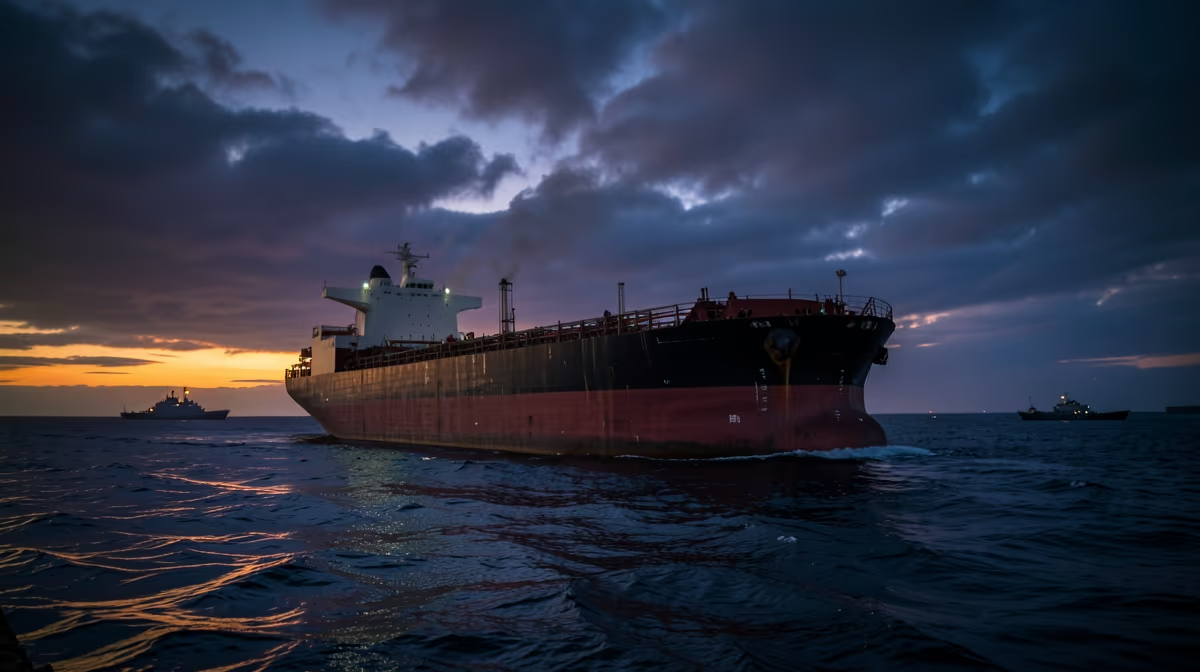
Tensions escalated significantly in the Strait of Hormuz on Tuesday after naval forces intercepted a commercial oil tanker, prompting renewed concerns over global energy supply security in one of the world's most critical maritime chokepoints. This vital waterway serves as the main exit point from the Persian Gulf, and recent military and political escalations in the region have threatened the safe movement of cargo and oil tankers traveling through it, ensuring that strait of hormuz news dominates global headlines as international authorities respond to rising tensions.
What Unfolded
The incident occurred in international waters just off the coast of Oman, where regional military vessels reportedly approached and boarded the Panama-flagged vessel. Maritime security agencies confirmed that communication with the tanker was temporarily lost before the crew regained limited control and steered away from territorial waters toward open sea. Shipping companies operating in the Persian Gulf have since heightened their threat levels, rerouting select vessels or increasing armed security details onboard. International coalition forces stationed in the region have increased air and naval patrols to deter further hostile actions. Officials from multiple maritime nations have condemned the interference, emphasizing the necessity of maintaining unhindered freedom of navigation through the vital trade corridor. Confirmed developments include the interception of a commercial vessel in international waters, the temporary loss of communication, and the subsequent increase in naval patrols by regional coalition forces. Meanwhile, developing aspects of the situation involve identifying the exact affiliation of the boarding party, determining the full extent of potential damages or injuries onboard the tanker, and tracking the long-term impact on regional commercial shipping insurance rates.
Background Context
The Strait of Hormuz connects the Persian Gulf with the Gulf of Oman and the Arabian Sea, functioning as one of the most critical energy transit chokepoints in the world. Roughly twenty percent of the world's petroleum passes through this narrow channel every single day. For decades, the Strait of Hormuz has been a strategic geopolitical flashpoint due to its narrow geography and its location bordering Iran, leading to numerous historical standoffs between regional and international powers over freedom of navigation. Naval forces from multiple countries routinely patrol the area to keep trade lanes open, while insurance costs for cargo ships traveling through the region have spiked significantly.
Analytic Perspective
The root cause of these recurring vulnerabilities lies in the structural dependency of global energy markets on a single geographic bottleneck combined with asymmetric warfare capabilities of regional actors. This dynamic intersects with leverage and deterrence strategies utilized by Iran and regional proxies to counter Western sanctions and security architectures. The geopolitical angle reveals shifting security paradigms as traditional US naval hegemony is tested by multi-polar diplomacy and alternative security frameworks. Furthermore, a hidden angle involves the accelerating transition toward covert sub-surface and cyber warfare targeting critical maritime infrastructure rather than open kinetic conflict, mirroring historical parallels such as the 1980s Tanker War during the Iran-Iraq conflict, which similarly internationalized maritime security concerns in the Persian Gulf. The broader timeline includes the implementation of maximum pressure sanctions against Iran, a series of ambiguous maritime sabotage incidents and vessel seizures, and the ongoing integration of regional defense pacts alongside heightened naval coalition patrols.
Economic Fallout
The immediate economic fallout involves the vulnerability of global supply chains, crude oil price volatility, and escalating maritime insurance and shipping costs. Because a massive portion of the world's petroleum and liquefied natural gas passes through this narrow channel every single day, any threat to its security can immediately trigger global energy shortages and spike fuel prices for everyday consumers everywhere. The Strait of Hormuz handles roughly a fifth of the world's petroleum consumption, making any disruption in the passage an immediate catalyst for volatility in global crude oil markets. Those affected include global energy consumers, international shipping companies, airlines, motorists, and economies heavily reliant on imported oil and gas, all facing the immediate pressure of rising geopolitical risk premiums.
Security Assessment
Key players operating within this theater include the US Navy Fifth Fleet, the Iranian Islamic Revolutionary Guard Corps Navy, Oman and UAE maritime authorities, and global oil shipping conglomerates. Maritime security experts emphasize the fragility of the route, with a senior analyst noting that any localized escalation in the Strait of Hormuz instantly translates to systemic risk for international trade and energy pricing. Meanwhile, naval spokespersons confirmed that coalition forces are monitoring the situation closely to ensure the safety of all commercial shipping. Enhanced oil tanker security measures in the region remain active as maritime authorities adapt to ongoing threats.
Outlook And Future Scenarios
Over the next 24 hours, expectations point toward increased naval patrols and heightened readiness among international maritime coalition forces following recent intelligence warnings regarding potential disruptions. Within the next 72 hours, diplomatic back-channel communications are anticipated to de-escalate tensions, alongside minor rerouting of commercial tankers as a precautionary measure. Expert prediction suggests that while rhetoric and posturing will likely remain elevated, direct military confrontation is improbable in the very near term due to mutual deterrence and the severe global economic fallout it would cause. The best-case scenario envisions all parties exercising restraint, naval drills concluding without incident, and shipping traffic continuing uninterrupted with stable energy prices. Conversely, the worst-case scenario warns that a miscalculation could lead to the seizure of a commercial vessel or a localized skirmish, causing an immediate spike in global oil prices and severe insurance rate hikes for regional shipping.
Frequently Asked Questions
What is the Strait of Hormuz?
It is a critical narrow water passage located between Oman and Iran that connects the Persian Gulf with the Gulf of Oman and the Arabian Sea, serving as one of the most vital energy transit chokepoints in the world.
Why is oil tanker security in the region currently heightened?
Security has been heightened following an incident where a commercial oil tanker was approached and boarded in international waters, compounding ongoing military and political tensions that threaten maritime trade routes.
Who is affected by disruptions in this waterway?
Global energy consumers, international shipping companies, airlines, motorists, and economies heavily reliant on imported oil and gas are directly affected by potential disruptions and subsequent price volatility.
Conclusion
The interception of a commercial oil tanker in the Strait of Hormuz has underscored the persistent vulnerability of global energy supply chains passing through the Persian Gulf. While international coalition forces have heightened naval patrols and security measures, diplomatic channels and mutual deterrence continue to shape the regional landscape. Realistic next steps involve ongoing monitoring by maritime authorities, potential diplomatic back-channel communications to de-escalate tensions, and continued precautionary rerouting by commercial shipping operators as stakeholders navigate the immediate economic and geopolitical fallout.


.webp)
