
Supreme Court Industry Definition Shift Changes Indian Labor Law Forever
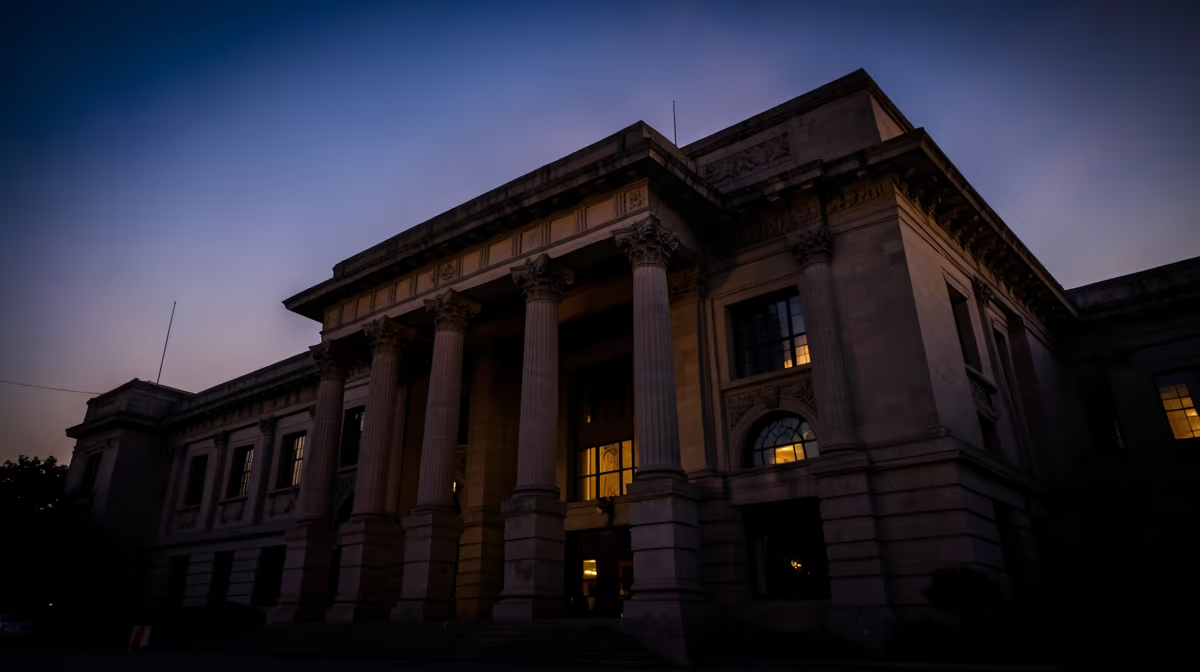
A nine-judge Bench of the Supreme Court has modified the longstanding 'Industry' definition originally established in the 1978 Bangalore Water Supply case, updating the framework used to determine the scope of labor laws. The Supreme Court industry definition has recently undergone a massive shift, altering how legal frameworks view commercial and non-commercial entities in India.
Understanding the Bangalore Water Supply Case Ruling
The Supreme Court industry definition has been reshaped following a special 9-judge bench review of the historical Bangalore Water Supply and Sewerage Board (BWSSB) v. A. Rajappa judgment. The historical 1978 ruling by a 7-judge bench was a foundational ruling in Indian labor law that broadly interpreted the term industry using a triple test, significantly expanding the scope of labor protections for workers.
- A Supreme Court 9-judge bench modified the definition of industry
- The ruling revisits the 1978 Bangalore Water Supply case BWSSB verdict
- The famous triple test used to determine an industry was altered
- The judgment addresses the legal classification of various entities and workplaces
- The decision comes from a special bench review of long-standing labor law principles
The definition of an industry dictates which organizations must comply with specific labor laws, dispute resolution mechanisms, and employee rights in India. Modifying this framework impacts how millions of workers and employers interact legally. Employers, employees, legal professionals, corporate entities, and various institutional organizations across India are affected by this redefined scope.
Implications of the New Supreme Court Industry Definition
The judicial necessity to recalibrate the expansive 1978 Bangalore Water Supply and Sewerage Board ruling arose because it had created broad legal ambiguity regarding employer-employee relations and the scope of industry across diverse modern economic sectors. Redefining the triple test provides greater legal certainty for businesses, startups, and public utilities, potentially lowering compliance and litigation costs by clarifying which institutions fall under labor dispute frameworks.
- 1978: Bangalore Water Supply and Sewerage Board judgment establishes the expansive triple test for defining an industry.
- August 2026: Supreme Court 9-judge bench hears and deliberates on the correctness of the historical definition.
- August 2026: 9-judge Bench officially modifies the triple test and pronounces the updated definition of industry.
Legal analysts and institutions are actively reviewing the Supreme Court 9-judge bench judgment modifying the industry definition and the triple test established in the 1978 Bangalore Water Supply case. Extensive legal commentary and institutional assessments will emerge regarding the practical implications of the modified definition across various sectors.
Analysis of the Judicial Shift
This significant assertion of judicial review by a 9-judge Constitution Bench balances the pushback from organized labor and state-run enterprises against the regulatory demands of a liberalized, contemporary Indian economy. Indirectly, this enhances India ease-of-doing-business narrative for foreign investors by streamlining domestic labor jurisprudence and reducing long-term judicial friction in industrial and service sectors.
The modified definition brings greater clarity and modern relevance to labor jurisprudence, streamlining dispute resolution for organizations while reshaping compliance frameworks nationwide.
At the same time, the ruling may prompt a legislative scramble as labor unions and welfare organizations lobby parliament to codify protections lost under the narrowed judicial definition of industry. Analysts note that a significant re-evaluation of employment disputes and organizational classifications is likely to follow the modification of this long-standing precedent.
Frequently Asked Questions
What did the Supreme Court do regarding the 1978 Bangalore Water Supply case?
A 9-judge bench of the Supreme Court modified the landmark industry definition and the associated triple test established in the 1978 Bangalore Water Supply and Sewerage Board verdict. This ruling re-evaluates the criteria used to determine what qualifies as an industry under Indian law.
Why is the modification of the industry definition significant?
The ruling is a major legal development because the 1978 Bangalore Water Supply judgment has long served as the foundational precedent for defining employment and industrial disputes in India. Modifying the triple test potentially alters the scope of labor laws and protections applicable across various sectors.
Who is affected by the Supreme Court's 9-judge bench ruling?
Employers, employees, educational institutions, charitable organizations, and government bodies across India are impacted by this redefined scope. The changes could alter how different entities and establishments are classified legally in terms of labor regulations.
What happens next following the Supreme Court's judgment?
Following this pronouncement by the 9-judge bench, lower courts, tribunals, and legal practitioners will apply the newly modified interpretation of an industry to ongoing and future labor disputes. Establishments will need to reassess their legal status under the updated framework.
What was the background of the 1978 Bangalore Water Supply case?
The 1978 BWSSB verdict by a 7-judge bench broadly interpreted the definition of industry under the Industrial Disputes Act using a triple test, which brought many non-traditional entities under labor laws. For decades, this ruling governed which institutions were subject to industrial legislation.
What specific aspect of the 1978 verdict did the 9-judge bench modify?
The Supreme Court's 9-judge bench specifically modified the triple test that was originally laid down in the 1978 Bangalore Water Supply case. This test previously determined whether an activity qualified as an industry based on systematic activity, cooperation between employers and employees, and the production of goods or services.
Conclusion
The Supreme Court nine-judge Bench has officially delivered its landmark judgment modifying the industry definition and the triple test originating from the 1978 Bangalore Water Supply and Sewerage Board case. As legal professionals, policy analysts, corporate leaders, and students of Indian constitutional law examine the confirmed rulings reported across verified legal news platforms, institutions nationwide must prepare to navigate evolving labor law compliance and employment dispute frameworks.
Sources
- Supreme Court 9-judge Bench Modifies Definition Of Industry Laid Down in 1978 Bangalore Water Supply Case — LawBeat
- Supreme Court 9-Judge Bench To Pronounce Judgment Tomorrow On Correctness Of 'Industry' Definition — Live Law
- 'Industry' definition: Supreme Court 9-judge Bench modifies triple test of 1978 BWSSB verdict — Bar and Bench


.webp)
