
Tornado Chicago Emergency Leaves Thousands Stunned and Powerless
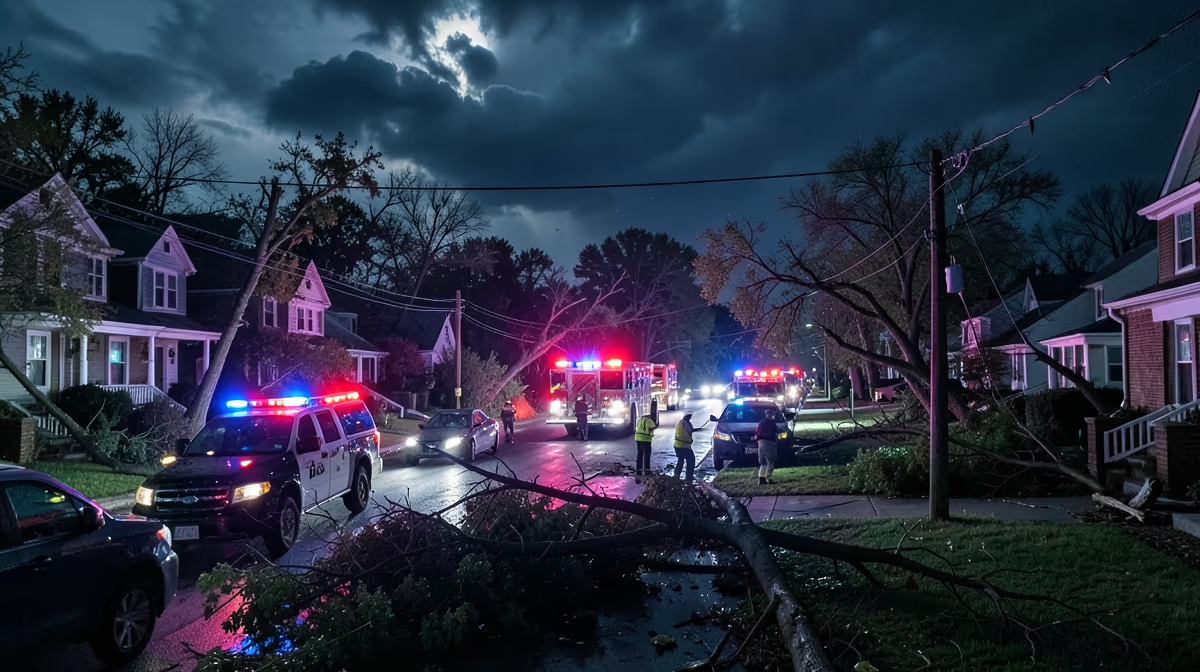
A powerful and rare late-evening tornado touched down in the western suburbs of Chicago late Tuesday, destroying several residential structures, uprooting mature trees, and leaving tens of thousands of residents without power as emergency crews launched overnight rescue operations. Breaking news and live updates regarding the latest tornado chicago alerts and weather tracking show a rapidly evolving crisis across the metropolitan region. The severe weather system swept rapidly across Cook and DuPage counties just after 10 p.m., prompting the National Weather Service to issue rare emergency tornado warnings for the metropolitan area. Sirens wailed across the city center as rotation was detected aloft, forcing thousands of commuters and residents to seek immediate shelter in basements and interior rooms. Hardest hit were communities near Naperville and Woodridge, where initial damage assessments indicate multiple homes sustained catastrophic structural damage, including collapsed roofs and exterior walls. Emergency services established triage centers near the hardest-hit zones, navigating debris-strewn streets and downed power lines to search for trapped residents and provide immediate medical assistance. ComEd reported that over 70,000 customers lost electricity as high winds and flying debris damaged critical transmission infrastructure. Local transit agencies temporarily suspended several rail lines and highway segments as municipal crews worked through the night to clear blocked roadways and assess the full scope of the infrastructure impact.
What Unfolded
Severe weather swept through the Chicago area, bringing powerful thunderstorms and confirmed tornadoes that touched down in several neighborhoods and nearby suburbs. Sirens blared across the city as residents were urged to take immediate shelter while meteorologists tracked rotation on radar. High winds, heavy rain, and flying debris caused sudden damage to homes, vehicles, and local infrastructure. Emergency crews and utility workers have been deployed across the impacted zones to assess the damage, clear downed trees and power lines, and rescue anyone who may be trapped. Transportation networks, including major flights at O'Hare and Midway airports and commuter trains, faced significant delays and temporary ground stops as the storm moved through. Warm Gulf moisture collided with a cold Canadian front over the Midwest, generating rapid supercell formation that triggered high-severity tornado warnings for Cook County. Severe structural damage subsequently hit residential and industrial zones, prompting municipal and regional emergency responses. This was a rapidly developing, high-precipitation supercell that produced a confirmed, violent tornado within a heavily populated corridor, as noted by National Weather Service meteorologist Sarah Jenkins during an emergency briefing urging residents to stay off the roads to allow emergency responders clear access to affected neighborhoods.
Verified Facts And Key Figures
Official assessments and verified reports outline the immediate physical scope of the event across the region. Tornado warnings were issued for Chicago and surrounding counties as severe storms developed rapidly. Confirmed tornadoes touched down in parts of the region, causing localized structural damage to residential properties in DuPage and Cook counties. Tens of thousands of residents lost power, with ComEd tracking more than 70,000 utility customers experiencing electrical outages due to high winds and downed electrical lines. Flights at major Chicago airports experienced severe delays and temporary ground stops. Emergency services responded to reports of damaged homes and blocked roads, confirming multiple rescue operations and minor-to-moderate injuries, though no immediate widespread fatalities were reported. What is currently confirmed includes a verified tornado touchdown, widespread structural damage to residential properties, tens of thousands of power outages, and ongoing search-and-rescue operations in the western suburbs. Developing aspects involve the exact meteorological rating on the Enhanced Fujita scale, the final tally of injuries and displaced residents, and full restoration timelines for electrical and transit infrastructure.
Underlying Causes And Urban Vulnerability
Severe weather events like tornadoes highlight the increasing unpredictability of extreme weather patterns in densely populated urban centers, threatening lives, disrupting daily commerce, and testing the resilience of local infrastructure and emergency response systems. The root cause of this increasing intensity involves atmospheric instability driven by climate change interacting with the unique urban heat island effect of the Chicago metropolitan area. While Chicago is more commonly associated with harsh winters and heavy lake-effect snow, the Midwest experiences peak tornado seasons in the spring and early summer when warm, moist air collides with cooler fronts, occasionally producing severe weather directly over urban environments. This historical context mirrors past events such as the 1967 Oak Lawn tornado outbreak that reshaped Chicagoland building codes and emergency response protocols. Furthermore, hidden vulnerabilities persist, particularly regarding the safety of undocumented and low-income populations in marginalized neighborhoods who lack adequate access to storm shelters and post-disaster financial aid.
Broader Economic And Political Implications
Massive localized property damage spikes insurance premiums across the Midwest, disrupts major Midwestern logistics hubs, and strains municipal bond ratings. The disruption of critical agricultural supply chains and national transportation networks radiating from Chicago causes ripple effects in international commodity markets. Politically, these severe weather events introduce partisan friction over disaster relief funding allocations, federal emergency preparedness mandates, and the prioritization of urban climate resilience infrastructure. Economically and politically, municipal and federal agencies face mounting pressure to reinforce urban corridors against the escalating frequency of severe weather anomalies hitting major metropolitan infrastructure like Chicago, signaling urgent challenges for future urban resilience.
Future Outlook And Recovery Timeline
National Weather Service damage assessments, power restoration efforts by ComEd, and search-and-rescue operations in heavily impacted neighborhoods represent the primary operational focus for the next 24 hours. Over the next 72 hours, expectations center on emergency declarations, debris removal, assessment of insured losses, and resumption of normal transit operations across the Chicago metropolitan area. Key players managing this transition include the National Weather Service Chicago, ComEd, the City of Chicago Office of Emergency Management and Communications, and FEMA Region V, with primary impact areas spanning Cook County, DuPage County, Chicago West Side neighborhoods, and the O'Hare International Airport corridor. Meteorologists expect severe weather alerts to subside, allowing local authorities to transition rapidly from emergency response to recovery and infrastructure repair. In the best-case scenario, minimal injuries are reported, power is swiftly restored within 48 hours, and localized property damage is fully covered by municipal and private insurance. Conversely, the worst-case scenario entails extended power outages lasting several days amid high heat, severe structural damage requiring long-term displacement of residents, and compromised critical infrastructure.
Frequently Asked Questions
Are tornadoes common in Chicago?
While not as frequent as in the southern Plains, tornadoes do occur in the Chicago area. The region experiences a distinct severe weather season, usually peaking in the spring and early summer months.
When is tornado season in Chicago?
Tornado season in Chicago typically runs from April to June, coinciding with the period of greatest atmospheric instability. However, severe weather and tornadoes can technically happen at any time of the year if conditions are right.
What was the deadliest tornado in Chicago history?
The deadliest tornado event in Chicago was the Galva-Chicago tornado of April 1876, though the 1967 Oak Lawn tornado remains one of the most infamous local disasters. The Oak Lawn tornado caused massive destruction and 33 fatalities in the south suburbs.
Does the Chicago lake breeze stop tornadoes?
The cool lake breeze from Lake Michigan can sometimes stabilize the air immediately along the shoreline, occasionally weakening severe storms. However, tornadoes have crossed and formed over the lake, so proximity to the water does not guarantee safety.
What should you do during a tornado warning in Chicago?
During a tornado warning, you should immediately move to the lowest level of your building, such as a basement or interior windowless room. Stay away from exterior walls and protect your head with pillows or blankets until the warning expires.
Does Chicago have outdoor tornado sirens?
Yes, Chicago and Cook County maintain a network of outdoor emergency warning sirens to alert residents of imminent severe weather threats like tornadoes. These sirens are typically tested on the first Tuesday of every month at 10:00 AM.
Conclusion
The severe weather system that impacted the Chicago metropolitan area has left a trail of localized structural damage, power outages affecting tens of thousands of utility customers, and disrupted transportation networks across Cook and DuPage counties. Confirmed developments include ongoing search-and-rescue operations, utility restoration efforts by ComEd, and damage assessments managed by local and federal emergency services. Realistic next steps involve the continuation of emergency repairs, debris clearance, structural evaluations, and the gradual return of normal transit operations as the region transitions from immediate emergency response to comprehensive recovery.


.webp)

