
Trump Lake Ontario Order Sparks Immediate Cross-Border Backlash
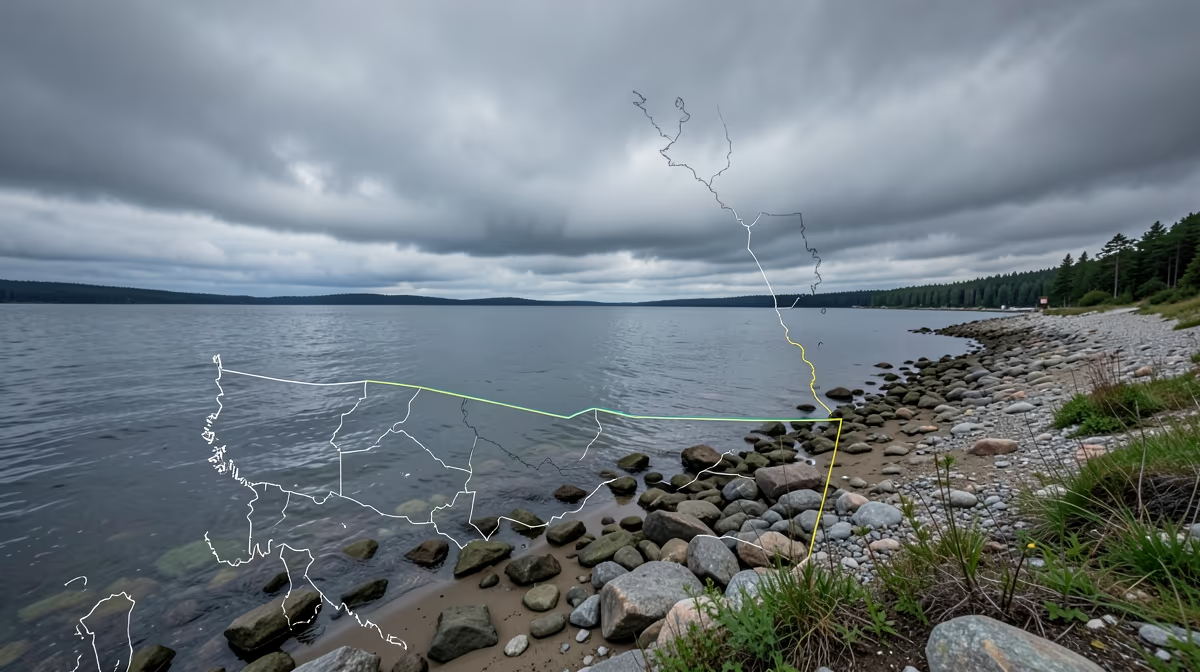
The sudden announcement regarding the Trump Lake Ontario order has sent shockwaves through international policy circles and regional communities alike. President Donald Trump has signed an executive order to officially rename Lake Ontario to "Lake America" within the United States, targeting one of the major Great Lakes shared by North America. This unilateral action has drawn swift attention, highlighting how domestic policy measures can instantly spill over into cross-border relations and cartographic standards.
Background of the Lake America Renaming Directive
The subject of the order is Lake Ontario, traditionally the smallest and easternmost of the five Great Lakes of North America. It serves as an essential waterway connecting to the Saint Lawrence River and forms a natural international boundary between Ontario, Canada, and New York, United States. Naming and renaming geographic features typically involves domestic geographic boards, though international bodies of water usually involve diplomatic coordination between neighboring sovereign nations. The executive action specifically impacts how the body of water is designated on U.S. federal maps and documents.
- AP News reports initial consideration of the renaming proposal by Trump
- Canadians express strong opposition and diplomatic concern over the potential rebranding
- Trump officially signs the executive order renaming the US portion to Lake America
The Great Lakes are a massive system of interconnected freshwater lakes in the upper mid-east region of North America, connected to the Atlantic Ocean via the St. Lawrence Seaway. Major news outlets including AP News, NewsNation, Axios, and CBC reported on the signing of the order, confirming that the executive action targets the U.S. side of the water body while prompting immediate hesitation across the border.
Impact on US Canada Diplomatic Tensions
Unsurprisingly, the decision has drawn swift pushback and balking from officials and residents in Canada. Canadians have largely expressed strong opposition to the idea, as Lake Ontario is a vital shared resource bordered significantly by the province of Ontario. Officials and citizens alike view the unilateral renaming attempt as tone-def to cross-border relations, raising questions about the stability of long-standing transboundary resource agreements.
- AP News covers the initial consideration and Canadian reaction
- NewsNation, News4JAX, and Axios report the official signing of the order
- CBC highlights the direct diplomatic friction and Canadian pushback
Cross-border commerce, tourism, and joint ecological management efforts could face diplomatic friction or confusion as the executive action is reviewed. Because renaming international or shared water bodies typically requires complex bilateral agreements, the implementation faces substantial hurdles across federal agencies in both nations.
Analyst View and Political Dimensions
The root cause of the directive points toward domestic political theater leveraging nationalist iconography and unilateral executive actions targeting shared international resources to rally political base support. The executive order functions as a symbolic assertion of nationalism, drawing immediate pushback from international neighbors and creating a domestic wedge issue regarding overreach and cross-border diplomacy.
The move may also serve as an administrative precedent or testing ground for unilateral domestic renaming of federally managed geographic features to provoke media cycles and cultural debates, following historical domestic renaming disputes over geographic features like Mount Denali or international boundary water naming conventions. Economically, potential friction looms in tourism, cross-border commerce, and regional cooperative management bodies that rely on joint United States and Canadian stewardship of the Great Lakes basin.
What Comes Next
Further diplomatic friction and official statements between US and Canadian authorities are expected following the executive order to rename Lake Ontario.
Over the next 72 hours, initial legal and legislative assessments are anticipated regarding the feasibility and jurisdiction of renaming a shared international body of water. Analysts expect increased bilateral tensions as Canadian authorities and regional stakeholders push back against unilateral renaming efforts of a shared border water.
The best-case scenario envisions the order being recognized as largely symbolic within U.S. jurisdiction, leading to diplomatic talks rather than lasting structural disruption to cross-border management. Conversely, the worst-case scenario involves the unilateral move escalating into broader diplomatic retaliation or legal challenges over international boundaries and shared resource management.
Frequently Asked Questions
Did Trump sign an order to rename Lake Ontario?
Yes, reports from outlets like NewsNation and Axios indicate that an executive action or order has been initiated to rename Lake Ontario as 'Lake America' within the United States. This move has quickly drawn significant media attention and political discussion.
Why did Trump want to rename Lake Ontario to Lake America?
While official motivations center around nationalist branding and domestic geographic identity, the announcement aligns with past efforts by the administration to alter notable landmarks. The symbolic gesture seeks to emphasize American ownership and pride over the shared border water body.
How are Canadians reacting to the proposed renaming of Lake Ontario?
Canadians have largely balked and expressed strong opposition to the idea, as Lake Ontario is a vital shared resource bordered significantly by the province of Ontario. Officials and citizens alike view the unilateral renaming attempt as tone-deaf and disrespectful to cross-border relations.
Who is affected by the renaming of Lake Ontario?
The decision directly impacts residents, businesses, and environmental agencies operating around the Great Lakes basin in both the United States and Canada. Cross-border commerce, tourism, and joint ecological management efforts could face diplomatic friction or confusion.
What happens next regarding the Lake America executive order?
Legal challenges, domestic debate, and official pushback from Canadian authorities are widely anticipated as the order is reviewed. Because renaming international or shared water bodies typically requires complex bilateral agreements, the implementation faces substantial hurdles.
What specific geographic feature is involved in this executive order?
The subject of the order is Lake Ontario, which is traditionally the smallest and easternmost of the five Great Lakes of North America. It serves as an essential waterway connecting to the Saint Lawrence River and forms a natural international boundary between Ontario, Canada, and New York, United States.
Conclusion
President Donald Trump's executive order to rename the U.S. portion of Lake Ontario as Lake America has generated significant diplomatic pushback and media coverage across North America. While the action is limited to domestic U.S. designations on maps and federal documents, it intersects with complex binational water management and shared geographic agreements with Canada. As legal assessments, regional stakeholder responses, and official government statements develop, the long-term impact on U.S.-Canada relations and transboundary resource governance remains a central focus for policymakers and observers.
Sources
- Trump mulls renaming Lake Ontario as ‘Lake America.’ Canadians balk at the idea — AP News
- Trump signs order renaming Lake Ontario to ‘Lake America’ — NewsNation
- Trump signs order renaming Lake Ontario as 'Lake America' in the United States — News4JAX
- Trump moves to rename Lake Ontario to "Lake America" — Axios
- Trump signs order to rename Lake Ontario as 'Lake America' — CBC


.webp)