
US Aircraft Carriers Face Multi-Billion Dollar Tech Reversal
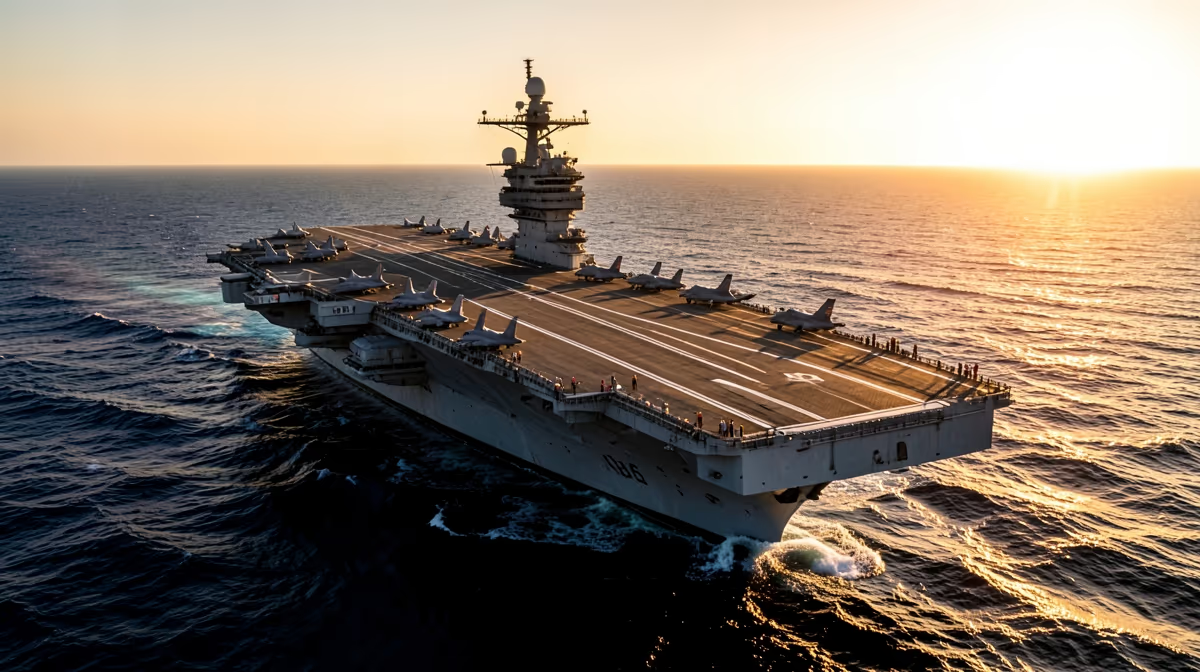
President Trump orders Navy to restore older tech on aircraft carriers, sparking major discussions about modern fleet capabilities. The directive issued by the White House instructs the U.S. Navy and the Pentagon to return to older aircraft carrier launching systems—specifically steam catapults—to launch jets, a move that reports indicate could cost billions of dollars and involve significant naval redesigns.
Background and Technical Shift
President Trump has issued a directive ordering the U.S. Navy to return to older technology on its aircraft carriers, specifically targeting the systems used to launch fighter jets. Instead of newer advanced tech, future and existing designs are being directed to utilize traditional steam-powered catapults.
The decision marks a significant shift in military procurement and design strategy, moving away from high-tech solutions that have experienced development challenges in favor of historically proven mechanical systems. Modern U.S. aircraft carriers, such as the Ford-class, were designed to utilize advanced electromagnetic aircraft launch systems meant to replace traditional steam catapults. However, the recent White House memo pushes for a reversal of this technological progression back to the older steam-powered systems.
- President Trump ordered the Navy to restore older technology on aircraft carriers.
- The directive specifically mandates a return to using steam catapults to launch jets.
- Reports indicate the redesign and implementation process will cost billions of dollars.
- The changes apply to major naval assets like the Ford-class carriers.
- The White House memo also touches upon concepts involving foreign-built warships and the establishment of a fifth public shipyard.
Key Developments and Fleet Implications
The directive, which has drawn attention from multiple defense and mainstream news outlets, targets key systems on U.S. aircraft carriers, such as the Ford-class carriers. Reports from sources including the Wall Street Journal, The Guardian, and USNI News highlight that the administration is pushing for a return to the traditional steam catapult system instead of newer technological alternatives.
In addition to the shift back to steam catapults, the newly highlighted White House directives also touch on broader naval logistics, including discussions surrounding a fifth public shipyard and the consideration of foreign-built warships. Critics and defense analysts have pointed out that overhauling these critical carrier systems at this stage will likely entail multi-billion-dollar expenses and complex engineering hurdles.
The Navy has yet to outline the exact implementation timeline for the directive or detail how the transition back to older tech will affect current construction and maintenance schedules. Defense officials and military contractors are expected to face significant logistical challenges as they evaluate the feasibility and financial impact of retrofitting modern carriers with legacy systems.
Strategic and Economic Analysis
Growing frustration within the executive branch over the reliability, escalating costs, and technological delays associated with modern electromagnetic aircraft launch systems on Ford-class carriers is driving a push toward proven mechanical legacy systems like steam catapults. This directive highlights a recurring friction point between executive authority, military procurement bureaucracy, and defense contractors, positioning the administration as a champion of practical reliability over high-tech overreach.
Retrofitting or redesigning carriers to restore older tech like steam catapults risks significant financial burdens, potentially costing billions in modifications, delayed schedules, and redundant research and development. Beyond the technical debate over catapults, the simultaneous discussion around foreign-built warships points to a deeper crisis in domestic shipbuilding capacity and shipyard industrial bottlenecks.
Any perceived regression in U.S. naval power projection technology could be scrutinized by strategic competitors like China and Russia, though proponents argue that combat readiness and mechanical dependability ultimately outweigh novel tech in contested scenarios.
Outlook and Future Projections
Military analysts and defense contractors will review the White House directive regarding the return to steam catapults on Ford-class aircraft carriers, assessing initial logistical impacts and policy feasibility over the next 24 hours. Congressional committees and Pentagon officials are expected to begin discussions regarding the multi-billion dollar cost implications and redesign timelines mandated by the order within the next 72 hours.
Analysts would likely expect significant pushback from naval engineers and defense officials due to the technical complexity, delays, and multi-billion dollar costs associated with retrofitting advanced carriers with older steam catapult technology. In the best-case scenario, the transition process is carefully managed to integrate reliable legacy systems without causing severe disruptions to current carrier readiness or excessive budget overruns. Conversely, the worst-case scenario involves the order leading to massive financial waste, severe logistical delays in fleet modernization, and prolonged technical disputes between the White House and defense leadership.
Frequently Asked Questions
What did President Trump order the US Navy to do regarding aircraft carriers?
President Trump ordered the Navy and Pentagon to redesign US aircraft carriers to return to older technology, specifically utilizing steam catapults to launch jets instead of newer systems. The directive also calls for the establishment of a fifth public shipyard and even mentions foreign-built warships.
Why is the return to older tech on aircraft carriers controversial?
The order to restore older technology like steam catapults on modern Ford-class carriers is expected to cost billions of dollars and potentially disrupt advanced naval engineering. Critics and defense analysts question the wisdom of moving backward from newer electromagnetic launch systems to legacy mechanical systems.
Who is affected by Trump's order on aircraft carrier technology?
The directive directly impacts the US Navy, the Pentagon, defense contractors, and naval shipyards responsible for designing, building, and maintaining aircraft carriers. It forces a major reevaluation of current shipbuilding plans and modernization efforts for the fleet.
What happens next following the White House memo on carrier tech?
The Pentagon and the Navy will need to review the presidential directive and determine the feasibility and logistical steps required to redesign current and future aircraft carriers. This process will likely involve intense congressional scrutiny, budget adjustments, and debates over military readiness.
What is the background behind the US aircraft carrier launch systems?
Modern US aircraft carriers, such as the Ford-class, were designed to utilize advanced electromagnetic aircraft launch systems meant to replace traditional steam catapults. However, the recent White House memo pushes for a reversal of this technological progression back to the older steam-powered systems.
What specific older technology is being restored on the aircraft carriers?
The primary focus of the presidential order is the reinstatement of steam catapults for launching jets off aircraft carriers. Additionally, the directive encompasses broader naval industrial changes, including a push toward a fifth public shipyard.
Conclusion
President Trump has officially ordered the U.S. Navy and the Pentagon to transition aircraft carriers back to legacy technologies, specifically mandating steam catapults alongside broader considerations like foreign-built warships and a fifth public shipyard. While the directive aims to resolve reliability issues associated with modern electromagnetic launch systems, it introduces significant multi-billion-dollar cost implications and complex engineering hurdles. Military leadership, defense contractors, and congressional committees continue to evaluate the logistical feasibility and financial footprint of the redesign as the Navy determines its implementation timeline.
Sources
- Exclusive | Trump Orders Navy to Restore Older Tech on Aircraft Carriers, Costing Billions — WSJ
- Trump orders Pentagon to redesign US aircraft carrier to use steam catapults to launch jets — The Guardian
- Trump orders return of steam catapults on carriers, fifth public shipyard — Breaking Defense
- Trump orders the Navy to return to an older system of launching jets off aircraft carriers — ABC News - Breaking News, Latest News and Videos
- Trump orders Navy to return to older system of launching jets off aircraft carriers — Euronews.com
- New White House Memo Calls for Foreign-Built Warships, Return to Steam Catapults on Ford Carriers — USNI News


.webp)

