
China Tariff Evasion Investigation Targets Over 40 Nations
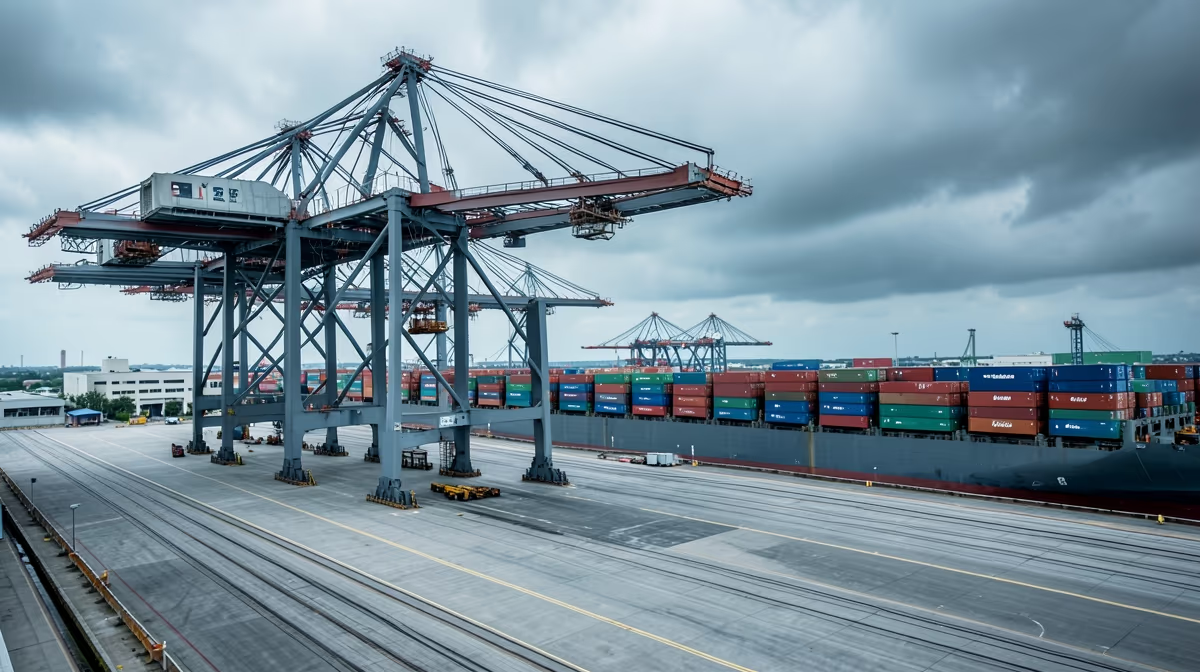
The administration has raised serious concerns regarding China tariff evasion, pointing fingers at international allies. The White House has accused more than 40 countries of helping China evade US tariffs by acting as middlemen, marking a significant escalation in ongoing trade enforcement efforts.
How Global Nations Assist in Tariff Evasion
According to reports from major news outlets, the Trump administration has identified over 40 trading partners involved in networks that assist Beijing in circumventing import duties. These nations are reportedly acting as middlemen to mask the true origin of Chinese goods, allowing them to enter the US market while dodging heavy import taxes. Trade enforcers have reportedly begun deploying artificial intelligence tools to crack down on these tariff evasion schemes.
The structural integration of Chinese manufacturing into global supply chains allows third-party nations to act as transit hubs, routing goods to bypass stringent US tariffs. Tariffs are taxes imposed on imported goods to protect domestic industries from foreign competition. Historically, when governments implement heavy tariffs on specific nations, third-party intermediary countries are sometimes used to reroute goods and obscure their country of origin in an effort to avoid paying the duties.
The allegations bring international scrutiny to numerous nations acting as transit or transshipment points, with specific reports noting that countries like India have been named within this tariff evasion network framework. These actions underscore Washington's broader strategy to close loopholes in its restrictive trade policies against China.
The Enforcement Mechanism and AI Crackdown
As the administration ramps up its oversight using advanced technological tools, the targeted countries face mounting pressure to address how Chinese goods are routed through their ports and markets. The developments signal potential friction in US trade relations with dozens of nations caught in the crosshairs of the enforcement campaign.
- The White House accused over 40 countries of helping China avoid US tariffs
- Trading partners are accused of acting as middlemen to evade tariffs
- Trump trade enforcers are deploying AI in the tariff evasion crackdown
- The administration named India among the countries in the China tariff evasion network
The Trump administration is leveraging aggressive trade enforcement and public naming of over 40 intermediary countries to pressure global partners into aligning with US protectionist policies. The deployment of AI tools by trade enforcers to track tariff evasion could lead to predictive trade barriers that automatically penalize logistics corridors rather than just final country of origin.
Why This Matters for International Trade
Tariff evasion undermines the intended protectionist impact on domestic US industries while forcing multinational corporations to re-evaluate complex, multi-country sourcing strategies. When countries help route goods to bypass tariffs, it undermines the intended economic impact of trade policies designed to protect domestic industries. Such practices can lead to tighter trade enforcement, strained international diplomatic relations, and potentially higher costs or stricter border checks for global commerce.
This enforcement action highlights a widening US effort to close economic loopholes, pressuring nations caught in the middle to choose between deeper trade ties with Beijing or Washington. The affected parties include US domestic manufacturers, international trade partners, global shipping companies, and consumers relying on imported goods.
Future Outlook and Potential Scenarios
Diplomatic and trade channels are likely to react to the White House's accusation involving over 40 countries acting as middlemen to help China evade US tariffs, with impacted nations reviewing trade data and preparing responses. Over the next 72 hours, analysts anticipate increased trade enforcement actions, potential use of AI tools for crackdown on tariff evasion, and rising diplomatic friction between the US and the targeted trading partners, including India.
Analysts would likely expect the administration to double down on trade compliance and deploy advanced tools like AI to monitor transshipment hubs, potentially raising secondary tariff risks for intermediary countries.
In the best-case scenario, targeted countries engage in transparent dialogue with US trade officials to tighten customs enforcement and prevent illicit transshipment without escalating into broader trade wars. In the worst-case scenario, the allegations spark retaliatory trade measures, widespread friction across global supply chains, and further protectionist policies impacting dozens of nations caught in the US-China trade dispute.
The White House has formally accused over 40 countries of acting as middlemen to help China evade US tariffs, prompting an aggressive trade enforcement crackdown using artificial intelligence tools.
Frequently Asked Questions
What did the White House accuse over 40 countries of doing?
The White House accused more than 40 trading partners of helping China avoid U.S. tariffs by acting as middlemen. These nations allegedly facilitate transshipment or other evasive practices to bypass trade restrictions.
Why is the White House cracking down on China tariff evasion?
The crackdown aims to close loopholes that undermine the effectiveness of U.S. trade policy and tariffs intended to protect domestic industries. By allowing goods to be funneled through third countries, the intended economic pressure on China is blunted.
Who is affected by the recent tariff evasion accusations?
Over 40 countries, including nations like India, have been named as part of this alleged tariff evasion network. These nations now face heightened scrutiny and potential diplomatic or economic repercussions from U.S. trade enforcers.
What tools are being used in the new tariff evasion crackdown?
Trade enforcers under the Trump administration are deploying artificial intelligence (AI) to identify and track complex trade patterns. This technology helps detect anomalies and unmask intermediaries helping to reroute Chinese goods.
What is the background behind the China tariff evasion allegations?
The ongoing tensions stem from broad U.S. tariffs imposed on Chinese imports to counter trade imbalances and unfair practices. As restrictions tightened, investigators increasingly found that goods were being rerouted through alternative international channels.
What happens next following the White House announcement?
With advanced AI tools now deployed for enforcement, targeted nations and businesses face stricter trade audits and potential penalties. The U.S. is expected to increase pressure on these intermediaries to halt the flow of tariff-dodging imports.
Conclusion
The White House has formally identified over 40 countries participating in networks that assist China in avoiding US import tariffs through intermediary and transshipment channels. Trade enforcement agencies are actively deploying artificial intelligence technologies to monitor supply chain movements and close evasion loopholes. Impacted nations and global trading partners are reviewing trade data and preparing diplomatic responses as the administration escalates its compliance measures.
Sources
- White House accuses over 40 countries of helping China avoid US tariffs — The Hill
- White House says more than 40 nations help China dodge tariffs — The Washington Post
- White House claims over 40 US trading partners are helping China evade tariffs by acting as middlemen — finance.yahoo.com
- Trump trade enforcers deploy AI in tariff evasion crackdown — Fortune
- US says dozens of countries helped China dodge Trump's tariffs — BBC
- Trump Administration Names India Among 40 Countries in China Tariff Evasion Network: how 21 outlets framed it — NewsCord


.webp)

