
US Navy Aircraft Carriers Face Major Overhaul as Steam Catapults Return
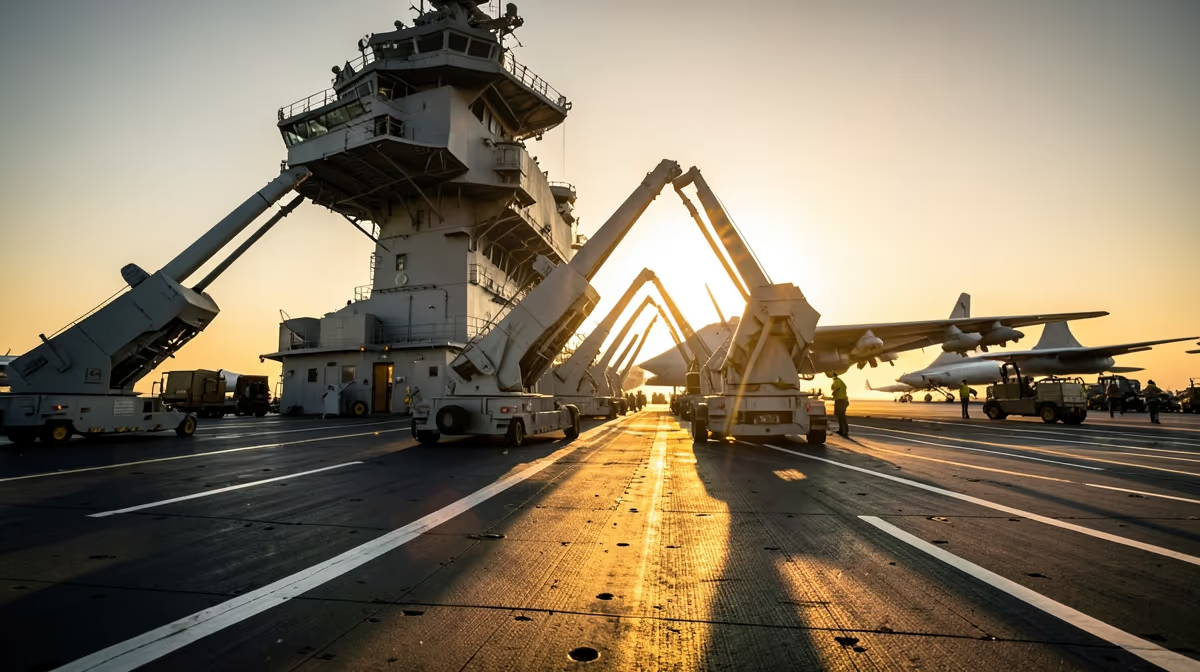
In a major policy shift affecting the future of maritime defense, Trump orders steam catapults to be reinstated on US Navy aircraft carriers, moving away from newer electromagnetic systems. The White House has issued a directive ordering the US Navy and Pentagon to redesign aircraft carriers to return to older steam catapult technology for launching jets, sparking discussions over military technology and associated costs.
Background and Technological Context
Aircraft carriers use catapults to accelerate heavy jets from a dead stop to takeoff speed over a very short runway. For decades, steam catapults were the industry standard, utilizing high-pressure steam from a carrier's nuclear reactors or boilers. In recent years, the Navy transitioned toward Electromagnetic Aircraft Launch Systems (EMALS) to reduce maintenance and improve launch control, though the new technology has faced various development and reliability hurdles.
President Trump's directive to revert from the advanced Electromagnetic Aircraft Launch System back to legacy steam catapults stems from persistent reliability concerns with newer technologies and a preference for traditional, proven mechanical systems on US Navy aircraft carriers. The decision targets technology that has been a staple of American naval aviation for decades, favoring the mechanical reliability of steam over newer tech. However, military analysts note that implementing this order could require major redesigns and cost billions of dollars, stirring debate within defense circles.
What Unfolded in the White House Directive
A new White House memo has called for significant shifts in US warship design, including the return to steam catapults on Ford-class carriers and exploring foreign-built warships. The directive mandates a pivot away from newer technological systems back to the older mechanism used to launch jets from aircraft carrier flight decks.
Major news outlets, including The Wall Street Journal, The Guardian, and The Washington Post, reported that the order to restore this older technology could potentially cost billions of dollars. The decision impacts ongoing naval architecture and procurement strategies, raising questions about logistical implementation and future military spending.
The White House memo also touched on other naval updates, including the creation of a fifth public shipyard. Defense analysts and naval experts are examining the operational implications of reversing modernization efforts on the Navy's premier carriers. The move also intersects with broader discussions regarding naval shipyard capacity and procurement timelines.
Key Developments and Verified Facts
- President Trump ordered the U.S. Navy and Pentagon to redesign aircraft carriers to use steam catapults
- The directive marks a shift away from newer electromagnetic launch systems used on Ford-class carriers
- Reports indicate the mandated change could cost billions of dollars and require extensive redesign work
- The White House memo also touched on other naval updates, including the creation of a fifth public shipyard
- Major news media outlets including the Wall Street Journal, The Guardian, and The Washington Post covered the breaking directive
The directive to abandon electromagnetic systems in favor of legacy steam technology carries multi-billion-dollar cost implications for the U.S. Navy.
Strategic and Economic Impact
The decision reflects a populist challenge to military-industrial procurement norms, showcasing executive intervention in complex defense acquisition programs and appealing to critics of costly, delayed high-tech military overhauls. Reintroducing steam catapults into current and future Ford-class carrier designs or retrofitting systems threatens to cost billions of dollars, potentially disrupting long-term naval budgeting and forcing trade-offs with other shipbuilding priorities.
Shifting propulsion and launch technology on primary power-projection assets touches on broader questions of US naval readiness and modernization pace at a time of heightened strategic competition with peer adversaries. The mandate could reflect deeper institutional pushback from naval aviators and operators who experienced ongoing maintenance bottlenecks with EMALS, prompting political leadership to champion a return to lower-risk engineering solutions. Historically, the recurrent debate over adopting complex naval technologies echoes early friction during the transition from coal to oil propulsion, or the initial adoption phases of nuclear power in warships.
Immediate Outlook and Expert Perspective
Defense analysts and military officials are expected to review the White House directive requiring a return to steam catapults and the integration of a fifth public shipyard over the next 24 hours. Further debate will likely emerge regarding the financial implications and engineering feasibility of redesigning aircraft carriers to swap modern electromagnetic systems for older steam technology over the next 72 hours.
Analysts would likely expect significant pushback from naval engineers and defense contractors regarding the cost, timeline, and logistical challenges of retrofitting or redesigning aircraft carriers with older launch technology. A smooth administrative transition and careful cost-benefit analysis ensure that any modifications to carrier designs balance operational reliability with fiscal responsibility in the best-case scenario. Conversely, the directive could lead to severe budget overruns, multi-billion-dollar delays in carrier programs, and friction between civilian leadership and military procurement officials in the worst-case scenario.
Frequently Asked Questions
What did the White House memo order regarding aircraft carriers?
The White House memo ordered the U.S. Navy and Pentagon to redesign aircraft carriers to use steam catapults instead of newer electromagnetic systems, and also touched on the creation of a fifth public shipyard and exploring foreign-built warships.
Which aircraft carriers are affected by the policy shift?
The directive specifically impacts Ford-class carriers like the USS Gerald R. Ford, which were built to utilize newer electromagnetic launch technology.
What are the main concerns surrounding the return to steam catapults?
Defense analysts and reports indicate that reversing modernization efforts to install older tech could cost billions of dollars, cause multi-billion-dollar program delays, and require extensive redesign work.
Conclusion
The White House directive ordering the U.S. Navy to return to steam catapults on aircraft carriers marks a significant pivot in American naval procurement and defense policy. As the Pentagon, Navy leadership, and defense contractors begin reviewing the feasibility of swapping modern electromagnetic launch systems for legacy steam technology, questions regarding multi-billion-dollar costs, shipyard integration, and engineering timelines remain central. Official responses from military leadership and the administrative rollout of the redesign will shape the trajectory of U.S. maritime defense strategy in the coming days.
Sources
- Exclusive | Trump Orders Navy to Restore Older Tech on Aircraft Carriers, Costing Billions — WSJ
- Trump orders Pentagon to redesign US aircraft carrier to use steam catapults to launch jets — The Guardian
- Trump orders return of steam catapults on carriers, fifth public shipyard — Breaking Defense
- New White House Memo Calls for Foreign-Built Warships, Return to Steam Catapults on Ford Carriers — news.usni.org
- Trump orders the Navy to return to an older system of launching jets off aircraft carriers — The Washington Post
- Trump orders US aircraft carriers to go back to steam catapults — South China Morning Post


.webp)

