
UK Energy Solar Eclipse Warning Issued for the National Grid
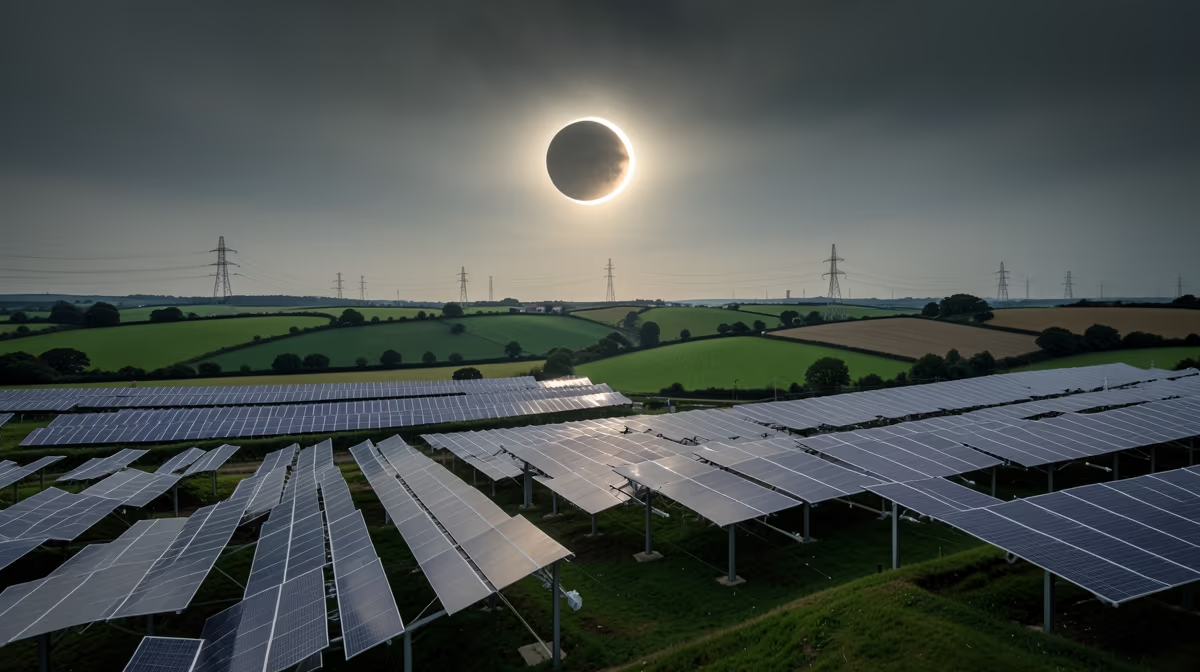
Britain’s electricity system operator issued a formal uk energy solar eclipse warning across Great Britain on Friday, cautioning that a rare celestial alignment next week will temporarily sever up to three gigawatts of solar generation from the national grid. As the moon passes in front of the sun, the amount of sunlight hitting solar panels drops suddenly and sharply. Because Britain relies heavily on solar energy to power homes and businesses, grid operators must prepare for a rapid loss of electricity generation while managing the wider implications for power reliability and system frequency stability.
The Mechanics of Solar Intermittency
The National Grid Electricity System Operator activated specialized mitigation protocols ahead of the astronomical event, which will obscure a significant portion of the sun over territory across Great Britain. While total solar generation capacity has expanded rapidly in recent years to over 15 gigawatts, the sudden drop in luminosity poses a distinct balancing challenge for engineers managing frequency stability. Solar panels rely on direct sunlight to generate electricity, so when the moon blocks the sun, power output drops significantly. The exact impact depends on cloud cover and the magnitude of the eclipse visible in the UK.
This event serves as a crucial stress test for the UK's increasingly renewable-heavy energy mix. Similar celestial occurrences in past decades required careful minute-by-minute management, but the sheer volume of decentralized rooftop solar added to the grid since 2015 has exponentially increased the complexity of forecasting sudden output drops. To counteract the looming generation deficit, grid operators have lined up rapid-response backup power sources, including pumped-storage hydroelectricity and fast-starting gas-peaker plants. Additionally, distribution network operators are coordinating with industrial consumers and utilizing battery storage assets to absorb the rapid ramp-up of power once the eclipse concludes.
Structural Vulnerabilities in the Modern Grid
Rapid decarbonization and the exponential growth of uncoordinated decentralized solar generation have outpaced the deployment of real-time balancing infrastructure, leaving the UK grid structurally vulnerable to sudden generation drop-offs during celestial events. Energy security has become a direct battleground between central government green ambitions and the operational realities faced by the National Grid ESO, forcing regulators to balance political optics of net-zero compliance against the threat of catastrophic blackouts.
Grid operators face extreme balancing costs, paying millions in constraint payments to gas-peaking plants and interconnectors to ramp up instantly while subsidizing industrial demand-turn-down, ultimately inflating consumer energy bills. Furthermore, as part of the interconnected European grid, a major UK frequency deviation risks cascading instability into continental interconnectors, highlighting the fragility of transnational energy networks relying on weather-dependent renewables. The over-reliance on millions of uncontrolled residential rooftop solar installations, which remain largely invisible to traditional transmission-level forecasting, creates a persistent blind spot for grid operators that exacerbates forecasting errors far beyond utility-scale solar risks. This dynamic mirrors the historical parallel of the 2015 European solar eclipse, which tested continental grid stability and highlighted the need for synchronized cross-border frequency reserves, though the UK's solar penetration is now significantly more acute.
Operational Preparedness and Immediate Actions
National Grid ESO activated short-term operating reserve and requested additional fast-ramping gas and hydro generation to offset the sudden drop in solar generation during the eclipse peak. While solar eclipses are well-understood predictable events, the scale of the solar fleet requires sophisticated balancing tools to maintain uninterrupted power supplies, according to Dr. Elena Vance, Senior Grid Operations Analyst at the Energy Systems Catapult.
Households with domestic solar photovoltaic systems do not need to take any manual action during a solar eclipse. The system will simply produce less electricity temporarily and automatically resume normal generation as the sun reappears. Similarly, commercial and residential consumers will likely not notice any change in their electricity service, as this is a temporary event lasting only a couple of hours. Distribution Network Operators, Solar Energy UK, the Department for Energy Security and Net Zero, and the National Grid ESO remain fully coordinated to ensure continuous electricity supply throughout the duration of the celestial passage.
Scenarios and Future Grid Resilience
Post-event analysis of grid frequency stability is expected to confirm that battery storage and pumped hydro successfully managed the solar intermittency without blackouts. Under the best-case scenario, the grid achieves seamless balancing with zero disruption to consumers, showcasing the resilience and flexibility of the UK's modernizing energy infrastructure. However, worst-case risks involve cloud cover obscuring the eclipse and reducing solar output unpredictably, coupled with minor technical glitches in fast-response backup generation, which could cause localized frequency drops and brief spot-price surges.
Expert prediction indicates the grid will manage the eclipse successfully due to advanced forecasting and increased battery storage capacity, though wholesale electricity prices may experience brief, sharp spikes during peak obscuration. This event provides valuable empirical data for energy analysts, policy makers, science enthusiasts, and the general public concerned with power reliability as Britain transitions further away from fossil fuels toward a weather-dependent energy landscape.
Frequently Asked Questions
Why did the UK issue a solar eclipse energy warning?
During a solar eclipse, the sudden drop in sunlight causes a rapid reduction in solar power generation across the UK grid. National Grid ESO issues these warnings to ensure grid operators have sufficient backup power ready to compensate for the lost renewable energy.
How do solar eclipses affect UK solar panels?
Solar panels rely on direct sunlight to generate electricity, so when the moon blocks the sun, power output drops significantly. The impact depends on cloud cover and the magnitude of the eclipse visible in the UK.
What backup energy sources are used during a solar eclipse in the UK?
To offset the sudden loss of solar generation, the National Grid typically relies on fast-responding backup sources like hydroelectric power, pumped storage, and rapid-start gas turbines. Battery energy storage systems also play a crucial role in balancing the grid instantaneously.
Did the 2015 solar eclipse cause power cuts in the UK?
No power cuts occurred during the major 2015 solar eclipse because the National Grid anticipated the drop in generation and carefully planned for it. Advanced forecasting and flexible backup generation successfully managed the 2.8 gigawatt loss of solar power.
Do homeowners with solar panels need to take action during an eclipse?
Homeowners with domestic solar PV systems do not need to take any manual action during a solar eclipse. The system will simply produce less electricity temporarily and automatically resume normal generation as the sun reappears.
When is the next solar eclipse expected to impact the UK power grid?
Future partial and total solar eclipses are cataloged by astronomers years in advance, allowing the National Grid to plan mitigation strategies. While minor eclipses happen frequently, large-scale events that significantly impact national energy generation are rare.
Conclusion
The National Grid ESO has successfully activated its contingency balancing mechanisms and secured necessary backup generation, including hydro and gas, to cover the impending shortfall in solar capacity. With total installed UK solar capacity exceeding 15 gigawatts across utility and rooftop installations, advanced forecasting and commercial battery storage systems remain fully deployed to manage rapid supply fluctuations. Realistic next steps involve executing real-time grid management during the eclipse window, followed by post-event analysis of grid frequency stability to validate the resilience of Britain's modernizing energy infrastructure against weather-dependent generation drops.


.webp)

