
US-Iran Relations Hit a Critical Turning Point Amid Escalating Tensions
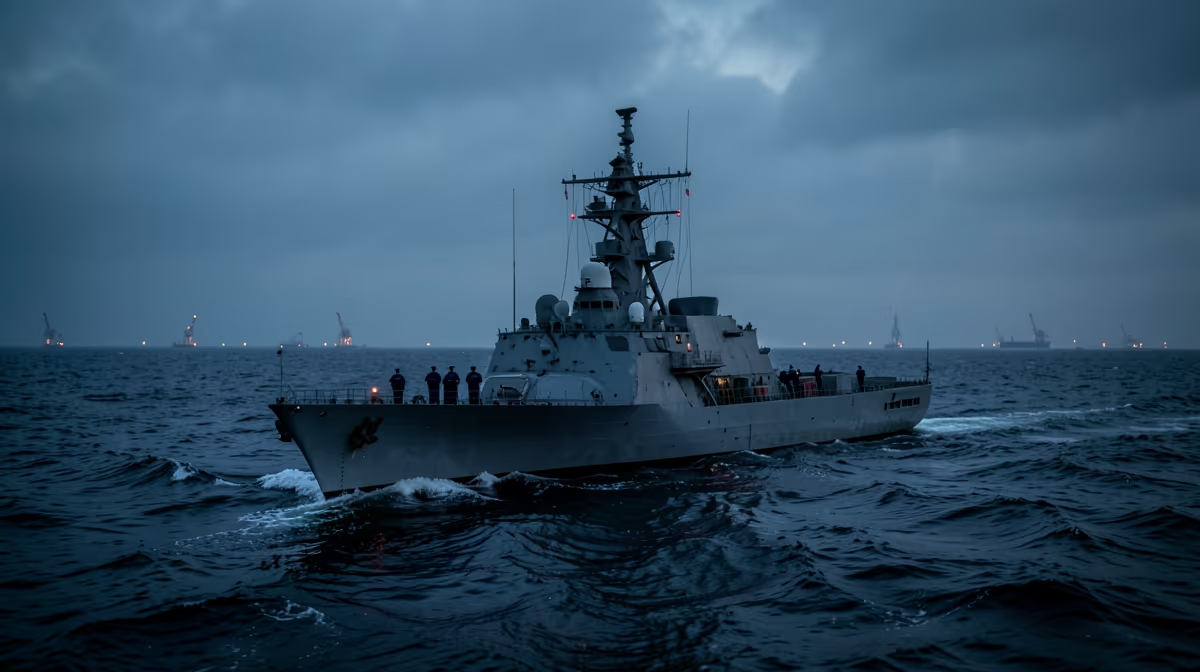
The United States announced new economic sanctions targeting Iran's illicit oil shipping network on Tuesday, following a recent escalation in regional tensions and stalled diplomatic efforts in Vienna. As the middle east escalation continues, policymakers are closely monitoring us-iran relations to prevent a deeper diplomatic crisis. The Treasury Department's Office of Foreign Assets Control implemented the measures, which target multiple front companies and vessel operators allegedly facilitating the sale of Iranian petroleum to Asian buyers. Officials stated the action aims to curtail revenues funding regional proxy groups. This decision comes amid heightened military posture in the Persian Gulf, where U.S. naval forces recently intercepted explosive-laden drone boats. Defense analysts suggest the sanctions are designed to exert maximum economic pressure without triggering a direct military confrontation. International markets reacted moderately to the announcement, with crude oil futures remaining relatively stable as traders priced in existing supply constraints. Meanwhile, Iranian officials have condemned the move as economic warfare that violates the spirit of previous diplomatic engagements. According to a senior administration official speaking on condition of anonymity, the administration remains committed to diplomatic pathways, but will not hesitate to use financial authorities to disrupt destabilizing activities and the illicit petroleum trade.
Background Context
Tensions between the United States and Iran have flared up again following recent military actions and cyber threats in the Middle East, rooted in a structural incompatibility between the post-1979 Iranian clerical regime's anti-imperialist foundational identity and U.S. hegemony in the region. U.S. officials are closely monitoring Iranian-backed groups and nuclear activities, raising concerns about a broader regional conflict. Diplomatic talks have stalled, leaving both nations at an impasse. While neither side currently wants a full-scale war, the risk of a miscalculation on the ground or at sea remains high, prompting the U.S. to reinforce its military posture in the region. US-Iran relations have been severely strained since the 1979 Iranian Revolution and the U.S. hostage crisis. Tensions deepened significantly after the U.S. withdrew from the 2015 Iran nuclear deal in 2018 and reimposed heavy economic sanctions. Historical milestones include the 1953 Operation Ajax orchestrated by the CIA and MI6, the 1979 Islamic Revolution and embassy hostage crisis, the 2015 signing of the Joint Comprehensive Plan of Action, and the 2018 U.S. withdrawal under the maximum pressure campaign.
Key Verified Facts
U.S. and Iranian forces have experienced periodic standoffs in the Middle East. Iran continues to advance its nuclear program despite international sanctions. Washington has deployed additional military assets to protect U.S. troops and allies. Proxy groups linked to Iran have targeted U.S. positions in the region. Economic sanctions remain a core pillar of U.S. pressure against Tehran. The U.S. Treasury Department imposed new sanctions on Tuesday targeting companies and vessels involved in Iranian oil shipping. U.S. naval forces recently intercepted unmanned drone boats in the Persian Gulf. Iran has publicly condemned the newly announced economic measures. These developments highlight the fragile nature of current diplomatic channels, which rely heavily on intermediaries such as Switzerland due to the absence of formal diplomatic ties since April 1980.
Geopolitical and Economic Dimensions
Domestic regime survival in Tehran depends on perpetual anti-American posturing to suppress internal dissent, while Washington faces a bipartisan consensus favoring containment, heavily influenced by domestic lobby groups and alliance commitments with Israel and the Gulf states. Economically, Washington wages asymmetric warfare through primary and secondary sanctions designed to sever Iran from the global financial system. Tehran counters this through an economy of resistance, illicit oil smuggling to Asia, and integration into non-Western trade blocs like BRICS. Geopolitically, a high-stakes proxy theater spans the Axis of Resistance across Lebanon, Syria, Iraq, and Yemen, directly challenging the U.S.-led security architecture and accelerating the transition toward a multipolar world order as China and Russia diplomatically shield Iran. Beneath the conventional armed conflict, a covert cyber and intelligence war operates, focusing on infrastructure sabotage, cyberespionage, and the weaponization of commercial shipping lanes.
Why This Matters
An escalation between the U.S. and Iran could disrupt global oil supplies, spike energy prices at home, and drag other global powers into a wider conflict, directly impacting the global economy and international security. Those affected include American military personnel in the Middle East, citizens and allies in the region including Israel and Gulf states, and everyday consumers worldwide who could face higher fuel and economic costs. Global oil markets, Middle East regional security, and U.S. domestic politics represent the primary impact areas identified by intelligence assessments and market analysts.
Future Outlook And Scenarios
Diplomatic channels remain active through intermediaries to prevent escalation following regional proxy skirmishes, while military forces maintain a high state of deterrence in the immediate term. Over the next seventy-two hours, intelligence assessments will dictate potential repositioning of naval assets in the Middle East, accompanied by heightened rhetorical warnings from both Washington and Tehran. Key players involved include the U.S. Department of State, the Iranian Ministry of Foreign Affairs, and regional mediators. Expert prediction indicates that both nations are expected to manage tensions below the threshold of direct military conflict, relying instead on economic sanctions, cyber vigilance, and proxy signaling. The best-case scenario involves a de-escalation agreement or informal understanding reached to curb maritime harassment and resume back-channel nuclear talks. Conversely, the worst-case scenario entails a miscalculation by regional proxies leading to a significant U.S. casualty event, triggering direct kinetic retaliation against Iranian assets.
Frequently Asked Questions
Why are US-Iran relations so tense?
US-Iran relations have been strained for decades, starting significantly with the 1979 Iranian Revolution and the subsequent hostage crisis at the US Embassy in Tehran. Tensions have since been exacerbated by Iran's nuclear program, US economic sanctions, and conflicting geopolitical interests in the Middle East. Both nations frequently clash over regional proxy conflicts and maritime security in the Persian Gulf.
Are the US and Iran currently in a war?
The US and Iran are not in a state of direct open warfare, but they have engaged in prolonged shadow warfare and indirect military confrontations. This dynamic includes cyberattacks, proxy conflicts involving regional militia groups, and occasional direct strikes on military assets in the Middle East. Diplomatic channels remain severely limited, with most communications handled through intermediaries like Switzerland.
What is the current status of the Iran nuclear deal?
The original Iran nuclear deal, known as the Joint Comprehensive Plan of Action (JCPOA), effectively stalled after the United States unilaterally withdrew from the agreement in 2018 under the Trump administration. Despite attempts by the Biden administration and international allies to revive diplomacy, efforts to restore the pact have repeatedly broken down. Consequently, Iran has advanced its uranium enrichment far beyond the limits set in the original agreement.
Why does the US impose economic sanctions on Iran?
The United States enforces sweeping economic sanctions against Iran to curb its nuclear ambitions, restrict its ballistic missile program, and counter its support for regional militant groups. These sanctions target key sectors of the Iranian economy, including oil exports, banking, and shipping, severely impacting the country's financial stability. Washington aims to pressure Tehran into altering its regional and domestic policies through maximum economic isolation.
Can US citizens travel to Iran?
The US Department of State strongly advises US citizens against traveling to Iran due to the very high risk of kidnapping, wrongful detention, and arrest. Dual US-Iranian nationals are at particularly high risk, as Iran does not recognize dual citizenship and may subject them to interrogation and imprisonment. Consular assistance for Americans in Iran is extremely limited because the US has no diplomatic presence in the country.
Does the US have diplomatic relations with Iran?
The United States and Iran do not maintain formal diplomatic relations, having severed official ties in April 1980 following the takeover of the US Embassy in Tehran. Since then, the Swiss Embassy in Tehran has acted as the protecting power for US interests in Iran, handling limited consular and diplomatic matters. Direct communication between high-ranking officials is rare and typically occurs through third-party intermediaries during international summits or regional crises.
Conclusion
The unfolding diplomatic and military friction between Washington and Tehran underscores a deeply entrenched geopolitical standoff marked by active Treasury sanctions, maritime vigilance, and stalled nuclear diplomacy. While economic pressure and proxy dynamics continue to test regional stability, intelligence assessments indicate that both nations maintain a shared imperative to avoid direct military conflict through sustained deterrence and intermediary channels. Stakeholders across global markets, policymaking circles, and security sectors will continue monitoring maritime movements and diplomatic signals as military forces and regional mediators navigate this precarious threshold.


.webp)

