
Verizon Outage Sparks Nationwide Panic as Millions Lose Cellular Connection
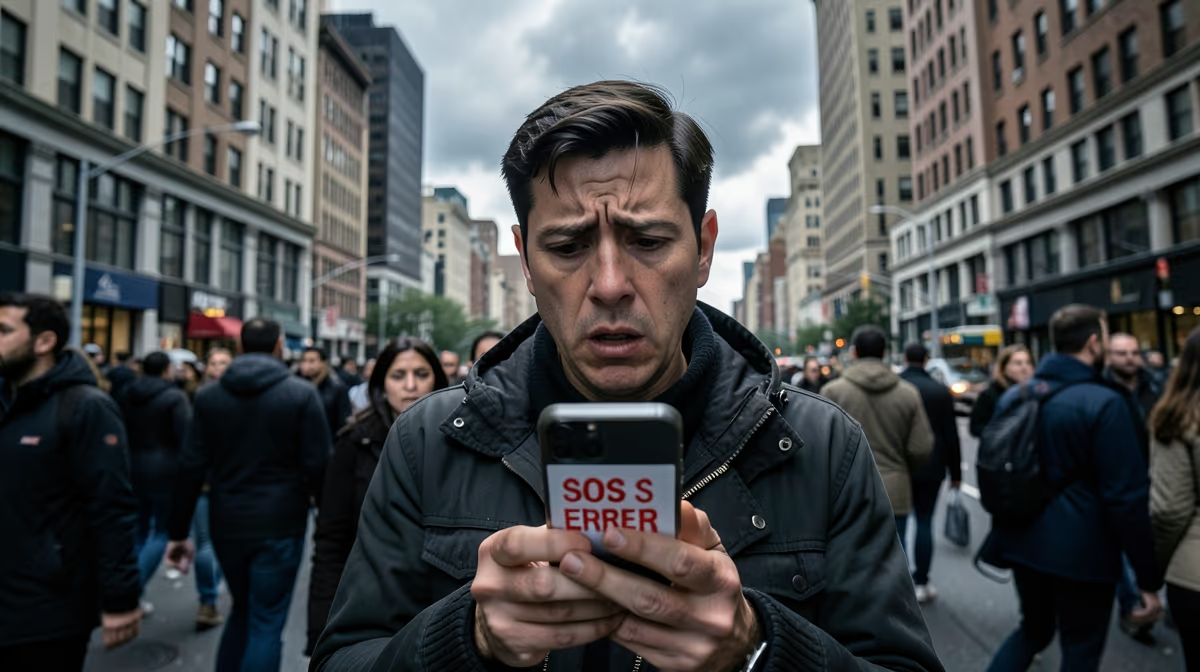
Millions of digital lifelines severed within minutes expose the fragile digital architecture underpinning modern infrastructure across the United States. Thousands of Verizon customers across the country experienced a widespread cellular and internet outage on Monday, leaving users unable to make calls, send texts, or access mobile data due to a yet-unidentified core network failure. Users across the United States are currently reporting a widespread verizon outage, affecting both cellular data and voice calls. If you are a Verizon customer and noticed your phone suddenly stopped working today, you are not alone. Thousands of people across the United States are currently unable to make phone calls, send text messages, or use cellular data. Many users are seeing an 'SOS' message on their smartphone screens instead of signal bars, meaning their phones cannot connect to the network. Verizon's technical teams are aware of the issue and are currently working to fix it. However, the exact cause of the widespread outage has not yet been publicly announced, and there is no official timeline for when full service will be restored for everyone.
Where is the Verizon Outage Happening?
The disruption began early Monday morning, triggering a surge of complaints on outage-tracking platforms like Downdetector, where reports peaked in major metropolitan areas including New York, Atlanta, Chicago, and Los Angeles. Many users reported their devices were stuck in SOS mode, preventing standard cellular communication and disrupting daily operations for businesses and remote workers reliant on the network. Verizon engineering teams immediately mobilized to investigate the root cause of the failure, implementing emergency protocols to reroute traffic and restore connectivity. While the company has not yet detailed the exact trigger behind the widespread disruption, technicians have reported gradual recovery for some users as systems are rebooted and traffic is stabilized. Federal and local communication authorities are monitoring the situation closely, particularly regarding potential impacts on emergency services. While no official widespread disruptions to 911 services have been formally confirmed, several local public safety agencies issued alternative contact numbers as a precaution while the cellular network issues persisted. In an official statement released via social media, Verizon Support stated that they are aware of an issue impacting service for some customers, and that engineers are engaged to work quickly to identify and fix the issue.
What Downdetector Shows About the Current Verizon Status
Downdetector and other tracking sites registered a massive spike in user complaint reports starting early in the day, confirming that a major network failure was underway. A significant technical failure on Verizon's network caused nationwide service disruptions, drawing complaints from all corners of the country. Verified facts confirm that a widespread Verizon network outage affected thousands of users across the United States on Monday, and Downdetector registered a massive spike in user complaints starting early Monday morning. Many affected customers reported their mobile devices displaying SOS mode instead of standard signal bars, and Verizon confirmed it is actively working on a fix while deploying engineering teams to investigate the core network issue. The precise root cause of the network outage, the total number of impacted subscribers, and an exact timeline for full nationwide service restoration remain under active investigation. Verizon wireless customers across various regions of the United States were affected, as well as users on smaller discount mobile carriers that rent network space from Verizon, known as Mobile Virtual Network Operators or MVNOs. Major telecommunication companies like Verizon operate massive, highly complex digital networks that occasionally experience software glitches, hardware failures, or routing errors, leading to unexpected nationwide outages.
Why This Matters for National Connectivity Resilience
In today's digital world, smartphones are essential lifelines used for everything from remote work and banking to navigating traffic and communicating with family. When a major carrier goes down, it instantly disrupts daily life, leaving people isolated, unable to receive important alerts, or struggling to complete basic daily transactions. The disruption exposed critical vulnerabilities in legacy core routing software compounded by rapid 5G Non-Standalone network densification and insufficient automated failover protocols. Analysts point out that carriers rapidly deploy 5G network slices over aging legacy routing architecture, where a routine software patch triggers a cascading BGP routing loop in primary regional nodes. Automated failover systems then saturate and fail under unprecedented signaling traffic, causing millions of consumers and critical businesses to lose connectivity simultaneously. The situation also created a disproportionate impact on rural first responder communications and industrial internet of things supply chain logistics, which rely on secondary MVNO networks that failed simultaneously. This incident carries historical parallels to the 2003 Northeast blackout, where a localized software bug in a utility control system cascaded into a widespread structural failure due to a lack of dynamic load shedding.
Economic And Political Fallout
The economic angle involves immediate stock volatility, Service Level Agreement penalty payouts to enterprise clients, potential regulatory fines, and accelerated capital expenditures diverted toward infrastructure modernization rather than shareholder returns. On the political front, the incident triggered intensified scrutiny from the Federal Communications Commission and Congress regarding critical infrastructure resilience, leading to bipartisan pushes for stricter federal mandates on telecom cybersecurity and redundancy. Geopolitically, the event highlighted systemic supply chain vulnerabilities in telecom hardware, raising foreign intelligence concerns regarding foreign-made routing components and foreign cyber espionage exploitability. Telecommunications analysts expect heightened regulatory scrutiny from the FCC and increased consumer churn toward competing carriers as a result of reliability concerns. Federal regulators launched emergency investigations, and telecom executives now face congressional hearings as part of the broader fallout from the network failure.
What Comes Next
Over the next twenty-four hours, the industry anticipates full network restoration for affected customers, the deployment of technical root-cause analysis by Verizon engineers, and the issuance of initial customer communication regarding service credits. Looking toward the next seventy-two hours, stakeholders expect the release of the official incident report detailing the network failure, the implementation of patch updates to prevent recurrence, and the processing of customer compensation claims. In the best-case scenario, the outage is resolved quickly with minimal disruption to emergency services, and Verizon swiftly issues transparent communication along with generous service credits, retaining consumer trust. In the worst-case scenario, prolonged cascading network failures recur, disrupting critical infrastructure and emergency 911 services, leading to severe regulatory fines and massive brand reputation damage.
Frequently Asked Questions
Is there a Verizon outage right now?
To check if Verizon is currently experiencing an outage in your area, you can visit official status trackers like Downdetector or check the Verizon Support page. These platforms provide real-time updates and user-submitted reports regarding network disruptions across the US. You can also log into your My Verizon app to see if local service advisories have been issued.
How do I check for Verizon outages in my area?
You can check for local outages by visiting the Verizon Network Status website and entering your ZIP code. Additionally, checking social media platforms like X, formerly Twitter, often reveals if other local users are experiencing similar connectivity issues. Customer service can also be reached by dialing 611 from a working mobile device.
Why is my Verizon service not working?
Your Verizon service might not be working due to a local network outage, maintenance work, or a temporary software glitch on your device. Common troubleshooting steps include toggling airplane mode on and off, restarting your phone, or reinserting your SIM card. If the issue persists, checking online outage maps can confirm if the problem is on Verizon's end.
Does Verizon compensate customers for outages?
Verizon typically does not automatically issue credits or compensation for standard network outages unless the disruption is prolonged and extensive. However, customers affected by major, multi-day service failures can sometimes request a goodwill credit by contacting customer support. Eligibility is determined on a case-by-case basis by account representatives.
How can I make calls during a Verizon outage?
If your cellular network is down, you can still make calls and send texts by enabling Wi-Fi Calling on your smartphone if you have access to a working internet connection. Another option is to temporarily use a messaging app like WhatsApp, FaceTime, or Facebook Messenger over Wi-Fi to communicate. In emergency situations, any functioning mobile phone with signal from another carrier can still dial 911.
How long do Verizon outages usually last?
The duration of a Verizon outage depends entirely on the underlying cause, ranging from a few minutes for minor software updates to several hours for physical infrastructure damage caused by severe weather or accidents. Verizon technicians work around the clock to restore service as quickly as possible during major disruptions. You can monitor estimated restoration times through the My Verizon app when available.
Conclusion
The widespread Verizon network outage demonstrated the profound vulnerability of modern telecommunications infrastructure, leaving thousands of users across the United States without voice or data connectivity. While engineering teams mobilized to investigate root causes and restore service, the disruption triggered immediate regulatory scrutiny and highlighted the urgent need for robust infrastructure resilience. As technical investigations proceed and regulators evaluate the systemic failures, affected customers and enterprise clients await official incident reports, service restoration confirmation, and accountability measures from telecom providers.


.webp)
