
Yaroslavl Refinery Strike Reveals Major Vulnerabilities in Russia
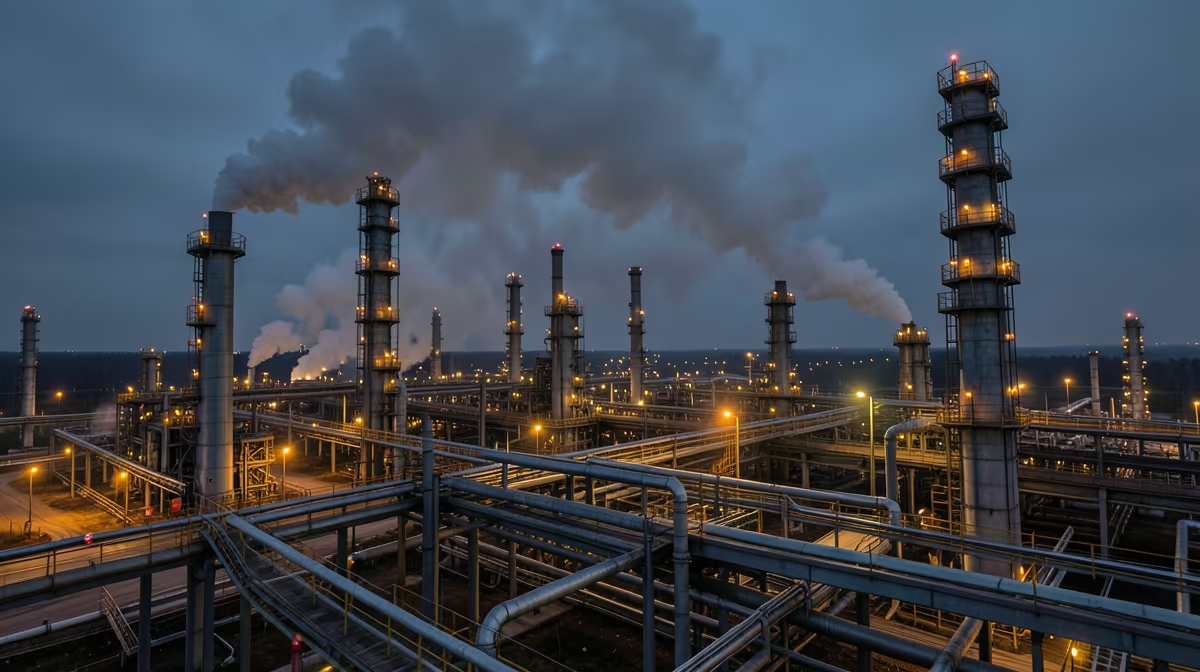
Precision long-range aerial strikes have penetrated deep into central Russia, forcing industrial facilities to scramble as emergency response teams battle sudden fires at critical processing plants. The Yaroslavl oil refinery, one of Russia's major fuel processing facilities, experienced a significant security incident following a drone attack in early 2024, raising immediate concerns within global energy markets regarding the vulnerability of critical Russian infrastructure. Recent reports indicate a significant oil disruption at the major yaroslavl refinery facility, raising concerns over regional fuel supplies, as international observers monitor the unfolding situation closely.
Background and Infrastructure Overview
The Yaroslavl refinery is a major facility in Russia for processing crude oil into fuel. Located in central Russia, the plant plays a crucial role in supplying refined petroleum products to the domestic market and neighboring regions. The facility has long been a key part of Russia's vast energy infrastructure, helping convert raw petroleum into the refined products that power transportation and industry.
Operated by Slavneft, a joint venture evenly split between major Russian energy companies Gazprom Neft and Rosneft, the refinery handles millions of tons of crude oil annually. Crude oil is primarily supplied to the facility via pipeline networks connected to Russia's major oil-producing regions, ensuring a steady and reliable flow of feedstock for continuous operations. Modernization projects over the years have helped improve its refining depth and overall energy efficiency, though Western technology dependencies under current sanctions complicate long-term maintenance.
What Unfolded on the Ground
The facility became a target amid a broader wave of long-range aerial strikes aimed at disrupting the logistical and economic backbone of Russia's energy sector. Uncrewed aerial vehicles impacted the Yaroslavl refinery infrastructure, causing localized fires and prompting emergency response protocols without resulting in reported casualties. Emergency response teams were quickly deployed to the site to contain localized blazes and assess structural damage to the processing units.
According to regional emergency services, all fires resulting from the drone strikes were swiftly contained, and no casualties were reported among plant personnel. Meanwhile, international defense analysts stated that these precision strikes demonstrate a clear capability to reach deep into Russian territory, fundamentally altering the risk calculus for the domestic energy sector. The full extent of the structural damage to specific processing units, the exact duration of the production slowdown, and the long-term adjustments to Russian air defense deployments around critical energy infrastructure remain ongoing developments.
Market Implications and Global Repercussions
Energy security experts point out that these targeted strikes are designed to squeeze domestic fuel supplies and reduce export revenues, which remain a primary source of funding for the Russian state. Despite government assurances that domestic markets will remain fully supplied through strategic reserves and alternative routing, regional fuel prices have shown increased volatility. International energy analysts noted that successive attacks on Russian refineries have forced Moscow to reevaluate its air defense priorities, shifting assets from frontline combat zones to protect vital industrial centers deep within the country.
While direct physical impacts on global markets are managed through existing frameworks, sustained attacks on Russian refining capacity will incrementally tighten global product balances, exerting mild upward pressure on international crack spreads. The vulnerability of aging Russian critical energy infrastructure to long-range asymmetric drone warfare and precision strikes creates upward pressure on global refined product prices and insurance premiums. This dynamic directly complicates efforts to keep energy markets stable, shifting the cost of conflict from the frontlines to Russia's core economic engine.
Outlook and Operational Assessments
Local authorities and international observers are closely tracking operational status updates, evaluation of repair timelines, and potential impacts on regional Russian fuel supply. Market reactions in global crude and refined product pricing depend heavily on whether structural damage requires extended repairs. Under best case scenarios, minor structural damage is swiftly repaired with negligible impact on overall Russian export volumes and global product availability. Conversely, worst case scenarios involve significant, prolonged distillation unit damage leading to extended domestic fuel rationing in Russia and a sharp reactionary spike in global middle distillate prices. Assessment of potential drone strike aftermath continues alongside evaluations by the Russian Ministry of Energy, the U.S. Department of Energy, and global oil traders.
Frequently Asked Questions
What is the Yaroslavl Refinery?
The Yaroslavl Refinery is a major Russian petroleum refining facility located in the city of Yaroslavl. It plays a significant role in producing various fuel products and supplying the domestic market in Russia.
Who owns the Yaroslavl Refinery?
The refinery is operated by Slavneft, which is a joint venture evenly split between major Russian energy companies Gazprom Neft and Rosneft. These parent companies manage the strategic operations and crude oil supplies for the facility.
What products does the Yaroslavl Refinery produce?
The facility produces a wide range of petroleum products including high-octane gasoline, diesel fuel, jet fuel, and fuel oil. It also manufactures various lubricants and bitumens to meet industrial and transportation demands.
Where does the Yaroslavl Refinery get its crude oil?
Crude oil is primarily supplied to the refinery via pipeline networks connected to Russia's major oil-producing regions. This ensures a steady and reliable flow of feedstock for continuous refining operations.
Has the Yaroslavl Refinery been affected by international sanctions?
As part of Russia's energy sector, the refinery and its parent companies face various international restrictions and sanctions from Western nations. These measures impact equipment imports, technology access, and certain financial transactions.
What is the processing capacity of the Yaroslavl Refinery?
The refinery has a substantial processing capacity, typically handling millions of tons of crude oil annually. Modernization projects over the years have helped improve its refining depth and overall energy efficiency.
Conclusion
The security incident at the Yaroslavl refinery highlights the growing vulnerability of critical energy infrastructure to long-range aerial strikes. While emergency services successfully contained localized fires and verified that no personnel were injured, the full operational impact on domestic fuel processing and regional supply chains continues to be evaluated. Authorities and international market participants remain focused on structural damage assessments, repair timelines, and potential shifts in global refined product pricing as the situation develops.


.webp)

