
Yaroslavl Refinery Security Shift Sparks Major Global Supply Concerns
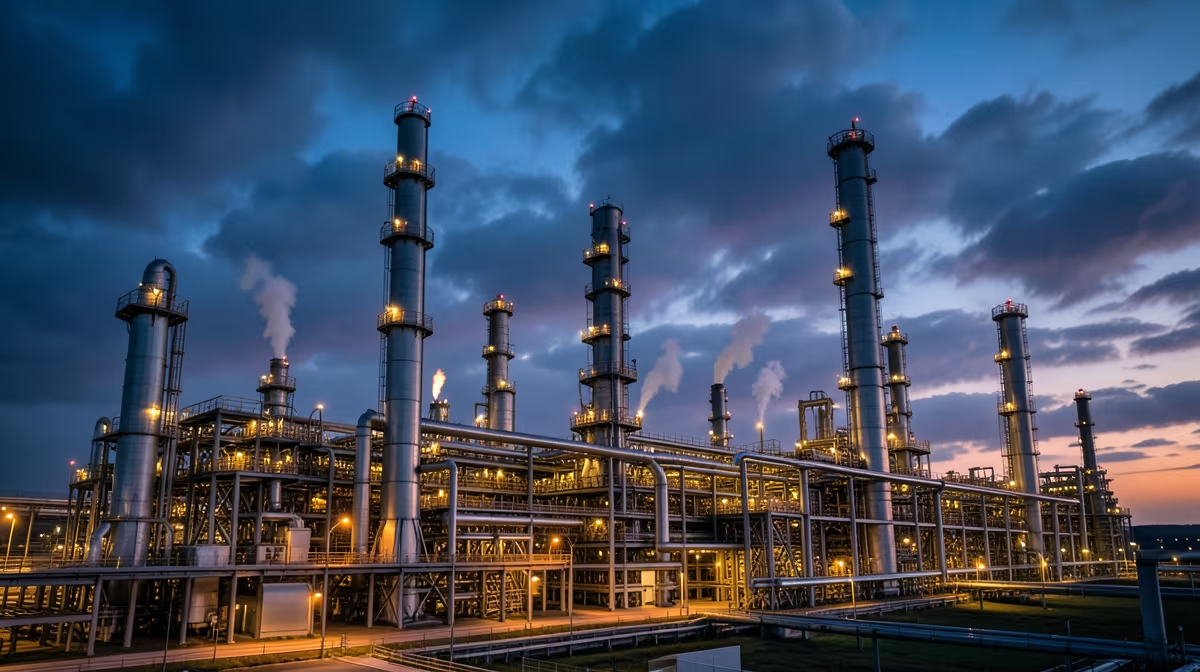
Emergency services responded to a fire at the Slavneft-YANOS oil refinery in Yaroslavl, Russia, following a reported drone attack early Wednesday, raising fresh concerns over security infrastructure at key Russian energy facilities. Recent developments surrounding the yaroslavl refinery have drawn international attention as analysts assess the broader impacts on regional energy infrastructure.
Overview of the Yaroslavl Refinery Operations
The facility is operated by Slavneft-YANOS, which is a joint venture primarily controlled by Russia's major energy companies, Rosneft and Gazprom Neft. These parent companies oversee the strategic management and operational activities of the plant. The Yaroslavl refinery is a major petroleum refining facility located in the city of Yaroslavl, Russia, and is one of the leading oil processing plants in the country, producing a wide range of high-quality petroleum products.
The refinery has a long history dating back to the Soviet era, having officially commenced operations in the 1961 commissioning phase as a cornerstone of the Soviet central planning fuel matrix. Over the decades, it has undergone numerous modernization phases to meet modern environmental standards and technological requirements. It boasts a substantial crude oil processing capacity, typically handling tens of millions of tons annually. It is considered one of the most technologically advanced and efficient refining complexes in the Russian Federation.
The plant produces a comprehensive assortment of refined petroleum products, including Euro-5 standard automotive gasoline and diesel fuel. Additionally, it manufactures jet fuel, fuel oil, lubricants, and various petrochemical feedstocks for industrial use, serving as a vital supplier of petroleum products to the central Russian market, including Moscow.
Impact of Recent Security Incidents on Production
The incident at the Yaroslavl refinery, one of the largest oil processing plants in central Russia, triggered an automated safety response and a rapid deployment of firefighting units. Regional authorities confirmed that the blaze was localized quickly, preventing extensive structural damage to the primary crude distillation units. Preliminary assessments from local emergency headquarters indicate that operations at the facility faced temporary disruptions as safety protocols were enacted. Despite the severity of the initial blast, plant operators worked to ensure that critical processing streams were safely secured to mitigate environmental and economic fallout.
A fire occurred at the Slavneft-YANOS oil refinery in Yaroslavl, and emergency response teams were deployed immediately to contain the blaze. No immediate mass casualties have been officially reported by regional health services. According to Yaroslavl Region Governor Mikhail Evraev, emergency services are operating at the scene, and all necessary measures have been taken to secure the facility and protect local residents, emphasizing that the situation remains under control.
Refineries are massive industrial facilities where crude oil is processed and turned into useful products like gasoline, diesel, and jet fuel. Reports indicate that the facility faced disruptions, often linked in recent times to drone strikes or technical incidents amid the ongoing conflict in Ukraine. Emergency services and local officials have been dealing with the situation on the ground to secure the area and manage any potential fires or structural damage. Similar incidents have targeted Russian energy infrastructure repeatedly over the past year.
Economic Fallout and Market Repercussions
Incidents at major Russian refineries can temporarily disrupt the supply of fuel both within Russia and on the global energy market. Because Russia is one of the world's top oil producers, any damage to its refining capacity puts upward pressure on global fuel prices and tests the security of critical industrial infrastructure during wartime. The situation affects Russian consumers and industries relying on local fuel supplies, global energy markets, and nearby residents in Yaroslavl concerned about safety and environmental impacts.
The economic angle involves an acceleration of the shift from crude oil exports to domestic deficit management, tightening domestic fuel margins while forcing costly state-backed insurance and repair outlays. Furthermore, aging Soviet-era infrastructure combined with strict import dependencies on specialized European catalytic cracking catalysts makes critical Russian refining nodes highly vulnerable to asymmetric disruptions. There is also a severe bottleneck in acquiring domestic replacements for Western digital control systems, which threatens prolonged capacity throttling even after physical repairs conclude, following the implementation of sweeping Western technology sanctions restricting access to modern refining upgrades in 2022 and the escalation of long-range drone strikes targeting deep-interior Russian refining infrastructure starting in 2024.
Geopolitical and Strategic Dimensions
Due to its strategic importance to the Russian energy sector, the refinery has been subject to international economic sanctions by Western nations and has occasionally been reported as a target of drone attacks amid ongoing geopolitical tensions. The political angle demonstrates the vulnerability of regional governors to Kremlin pressure regarding fuel supply security, exposing tensions between federal wartime production quotas and regional industrial safety. On a broader scale, the geopolitical angle reduces global refined product supply elasticity, subtly impacting diesel and gasoline price benchmarks while signaling to international markets the limits of Russian air defense over critical industrial zones. This mirrors historical parallels such as the strategic bombing campaign targeting Axis synthetic fuel and refining installations during the later stages of World War II, focusing on economic attrition.
Short-Term Outlook and Assessment
In the next 24 hours, assessment of physical and structural damage following recent incidents will take place, alongside emergency stabilization and safety inspections by regional authorities. Moving into the next 72 hours, the focus shifts to the implementation of repair schedules, potential adjustments to regional fuel distribution, and increased security measures at critical energy infrastructure sites across the region. Key players involved in managing these steps include Slavneft-YANOS, the Russian Ministry of Energy, and the Yaroslavl Regional Administration, with impact areas concentrated on the domestic fuel supply chain, regional refining capacity, and industrial safety regulations.
Expert prediction suggests operations will likely face partial disruptions while repairs are prioritized, prompting temporary reallocation of refined products from other domestic refineries to maintain local market stability. In a best-case scenario, there will be minor structural impact with rapid containment, allowing for a swift resumption of standard refining operations within a week and minimal impact on retail fuel prices. Conversely, a worst-case scenario involves significant damage to primary processing units leading to prolonged downtime, localized fuel shortages, and substantial financial costs for reconstruction.
Frequently Asked Questions
What is the Yaroslavl Refinery and where is it located?
The Yaroslavl Refinery, also known as Slavneft-YANOS, is a major petroleum refining facility located in the city of Yaroslavl, Russia. It is one of the leading oil processing plants in the country, producing a wide range of high-quality petroleum products.
Who owns the Yaroslavl Refinery?
The refinery is operated by Slavneft-YANOS, which is a joint venture primarily controlled by Russia's major energy companies, Rosneft and Gazprom Neft. These parent companies oversee the strategic management and operational activities of the plant.
What products does the Yaroslavl Refinery produce?
The facility produces a comprehensive assortment of refined petroleum products, including Euro-5 standard automotive gasoline and diesel fuel. Additionally, it manufactures jet fuel, fuel oil, lubricants, and various petrochemical feedstocks for industrial use.
What is the processing capacity of the Yaroslavl Refinery?
The refinery boasts a substantial crude oil processing capacity, typically handling tens of millions of tons annually. It is considered one of the most technologically advanced and efficient refining complexes in the Russian Federation.
When was the Yaroslavl Refinery established?
The refinery has a long history dating back to the Soviet era, having officially commenced operations in the 1960s. Over the decades, it has undergone numerous modernization phases to meet modern environmental standards and technological requirements.
Has the Yaroslavl Refinery been targeted in recent conflicts or sanctions?
Due to its strategic importance to the Russian energy sector, the refinery has been subject to international economic sanctions by Western nations. It has also occasionally been reported as a target of drone attacks amid ongoing geopolitical tensions.
Conclusion
Emergency services successfully contained and extinguished a fire at the Slavneft-YANOS oil refinery following aerial drone activity, preventing widespread structural destruction at the facility. While the exact extent of damage to specialized refining equipment and the precise timeline for full operational recovery remain under active investigation, regional authorities have prioritized safety protocols and damage assessments. Operations are expected to face partial short-term disruptions as plant operators secure critical processing streams and regional administrators coordinate fuel distribution stability, with ongoing oversight from federal energy ministries.


.webp)

