
California State of Emergency Declared as Severe Super El Niño Nears
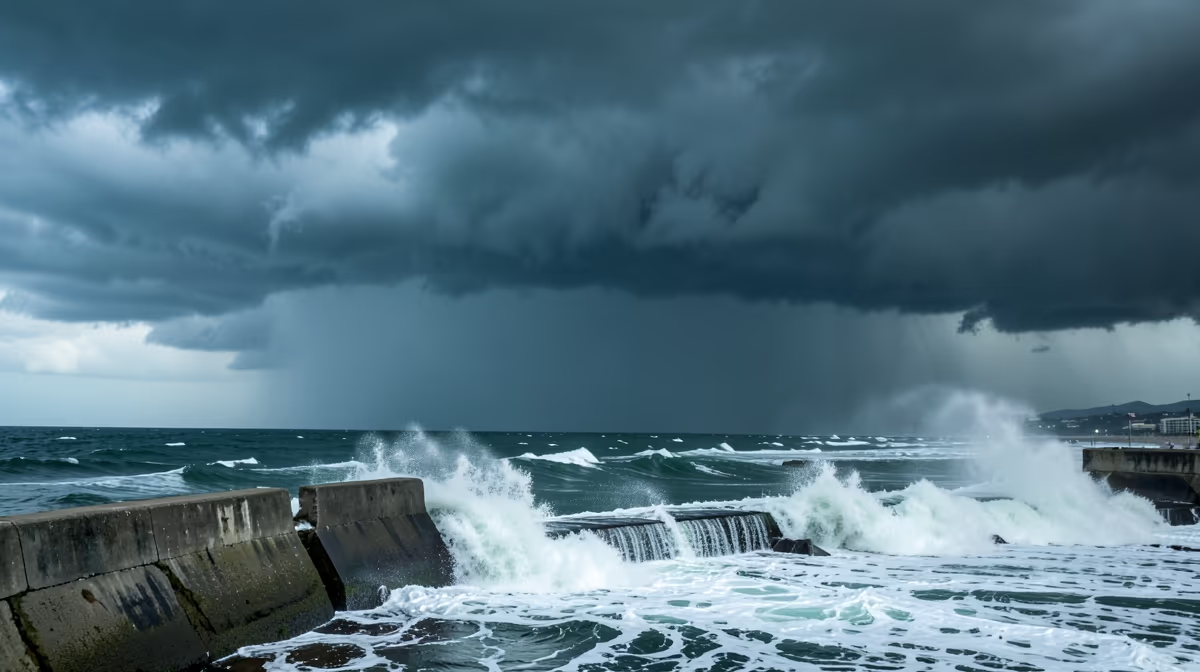
Pacific ocean temperature anomalies are currently signaling the arrival of a climatic force capable of overwhelming even the most resilient drainage systems and coastal defenses. The official response has shifted from passive observation to active state-wide defense as the West Coast prepares for a season of unprecedented atmospheric turbulence. Governor Gavin Newsom has officially issued a California state of emergency to mobilize resources ahead of upcoming hazardous weather, prioritizing the hardening of state infrastructure. This proactive measure is designed to accelerate the deployment of equipment and personnel before a predicted "super" El Niño storm season makes landfall.
The emergency declaration serves as a strategic bypass of bureaucratic hurdles, allowing California to fast-track flood defense construction and resource allocation before the most intense storms hit.
The Mechanics of a Super El Niño
The root cause of the current mobilization lies in the intensifying climate pattern characterized by a significant warming of the central and eastern tropical Pacific Ocean. When these ocean temperatures rise above historical averages, they fundamentally alter global jet streams, often steering a conveyor belt of moisture directly toward the southwestern United States. Meteorologists tracking these ocean temperature anomalies have identified indicators of a "super" El Niño, a classification reserved for the most intense cycles that historically bring catastrophic precipitation levels.
These cycles are not merely seasonal rain events but are characterized by prolonged moisture plumes that can lead to overflowing rivers, mudslides, and severe flooding. The impending arrival of this severe weather pattern threatens the state with significant infrastructure strain. By declaring an emergency well in advance of the first major storm, state officials aim to ensure that both local and state agencies can respond to hazards without the delays typically associated with standard procurement and activation protocols.
Mobilization and Resource Allocation
The state of emergency is a administrative tool that unlocks several critical functions of the state government. Most immediately, it allows the state to streamline the deployment of emergency services and cut through red tape that might otherwise slow down the movement of heavy machinery or the distribution of emergency funds. Authorities are currently positioning resources in high-risk areas, particularly those near recent burn scars where the risk of debris flows is highest.
Emergency management officials are coordinating with regional authorities to evaluate the readiness of levees, drainage channels, and coastal barriers. The proclamation allows for the rapid-deployment of contracting procedures, which can be essential for reinforcing vulnerable infrastructure. While the exact timing of individual storm systems remains uncertain, the state’s strategy focuses on inter-agency coordination to mitigate potential damage. Residents in flood-prone communities are being urged to monitor updates as officials refine storm track predictions.
Analyst Perspective: Political and Economic Dimensions
From an analytical standpoint, the decision by the executive branch to issue a pre-emptive declaration carries significant political weight. By acting ahead of the weather, Governor Newsom’s administration seeks to demonstrate high levels of preparedness and federal-state coordination. This proactive stance is often viewed as a measure to deflect potential criticism regarding disaster response readiness that typically follows major weather events. Furthermore, an early declaration is a necessary step to secure vital disaster relief funds from federal sources should the storms reach catastrophic proportions.
The economic implications are equally profound. Seasonal flooding in California historically causes billions of dollars in damage to the agricultural sector, real estate markets, and global supply chains. Proactive declarations unlock emergency state funds to harden infrastructure, potentially saving billions in long-term recovery costs. However, analysts also point to a "hidden angle" in these emergency measures. The rapid-deployment contracting procedures triggered by such declarations often bypass traditional environmental reviews. This raises questions regarding the long-term ecological trade-offs made during the emergency construction of levees and channels.
Comparative Regional Emergencies
California is not the only jurisdiction currently utilizing emergency declarations to manage escalating risks. Across the United States, several states have recently issued similar orders in response to either extreme weather or public health threats, highlighting a period of intense regional resource strain.
| Region | Primary Reason for Emergency Declaration |
|---|---|
| California | Anticipated Super El Niño Storm Season |
| Ohio | Severe Storms Impacting Several Counties |
| New Jersey | Preparation for Significant Nor'easter |
| West Virginia | Severe Weather in Boone and Lincoln Counties |
| Florida (Hillsborough/Pasco/Pinellas) | Dengue Fever Outbreak (170 cases reported) |
These concurrent emergencies mirror global climate adaptation and security challenges. As climate change exacerbates the intensity and frequency of cycles like El Niño, sub-national jurisdictions are increasingly forced to compete for resources and federal attention. The situation in Florida, where counties like Hillsborough and Pasco have declared emergencies over 170 cases of dengue fever, underscores that state-level emergency powers are being utilized for a diverse array of modern threats beyond traditional weather events.
Historical Parallels and Potential Outcomes
The current meteorological models have drawn comparisons to the 1997-1998 super El Niño event. That cycle remains a benchmark for disaster management professionals, as it resulted in billions of dollars in damages across California and necessitated widespread federal disaster declarations. The lessons learned from that era have informed the current emphasis on proactive infrastructure reinforcement.
The timeline for the current mobilization follows a structured progression: 1. Meteorological models indicate intensifying super El Niño conditions in the Pacific basin. 2. State officials conduct assessments of infrastructure vulnerabilities and resource shortfalls. 3. The Governor issues a formal state of emergency to accelerate preemptive storm preparation.
Under a best-case scenario, these proactive measures will allow sufficient time for the reinforcement of flood defenses, resulting in significantly mitigated property damage and no loss of life. Conversely, the worst-case scenario involves storm systems arriving with greater severity or speed than anticipated, potentially overwhelming local response capabilities and causing widespread infrastructure failure.
Future Outlook: The Next 72 Hours
Within the next 24 hours, state and regional authorities are expected to ramp up the specific allocation of resources to the most vulnerable geographic zones. This includes the movement of water-rescue equipment and the activation of emergency operations centers at the county level. Over the next 72 hours, broader infrastructural defenses will likely be coordinated, accompanied by an increase in public warnings and the mobilization of response teams.
Expert analysts expect heightened emergency preparedness measures to remain in place throughout the season as regions brace for the full impact of the super El Niño cycle. The focus remains on public safety and the protection of critical infrastructure as the first major waves of the storm season approach the coast.
Frequently Asked Questions
Why did California declare a state of emergency?
Governor Newsom declared a state of emergency to prepare the state ahead of a forecasted super El Niño storm season. This proactive declaration helps mobilize resources and streamline emergency response efforts to protect residents and infrastructure.
What is an El Niño storm season and why does it matter?
An El Niño weather pattern often brings significant moisture and severe storm activity to regions like California, increasing the risk of heavy rainfall, flooding, and mudslides. Preparing for these impacts is crucial for minimizing property damage and preventing loss of life.
Who is affected by the California emergency declaration?
Communities across California, particularly those vulnerable to flooding, landslides, and severe weather hazards, are directly impacted by the emergency measures. Local authorities and emergency management agencies are stepping up preparations to assist these areas.
What happens next as California prepares for the storms?
State and local agencies will activate emergency response protocols, position rescue equipment, and work on reinforcing flood defenses. Residents are encouraged to stay updated on weather forecasts and follow local evacuation or safety advisories.
What background led to the super El Niño warning?
Meteorologists track ocean temperature anomalies and atmospheric conditions in the Pacific Ocean to forecast El Niño cycles. These climate indicators signaled the potential for an unusually strong storm season, prompting swift governmental action.
Did other regions declare states of emergency recently?
Yes, various states have issued weather or health-related emergency declarations recently, including parts of Ohio, New Jersey, and West Virginia for severe storms and nor'easters, as well as Florida counties responding to dengue fever cases.
Conclusion
California has officially entered a heightened state of readiness following Governor Newsom’s state of emergency declaration. The move is a direct response to meteorological data suggesting a "super" El Niño event that could severely test the state's infrastructure. By mobilizing resources early, the state aims to bypass traditional bureaucratic delays, securing funds and personnel before the peak of the storm season. As emergency management agencies coordinate with regional authorities over the coming days, the focus remains on fortifying flood defenses and ensuring public safety in high-risk zones. The success of these measures will depend on the speed of implementation and the ultimate severity of the incoming Pacific storm systems.
Sources
- Newsom declares state of emergency for California ahead of super El Niño storm season — CNN
- Governor Dewine Declares State of Emergency in Several Ohio Counties - WHIZ - Fox 5 / Marquee Broadcasting — WHIZ
- State of Emergency for parts of New Jersey ahead of nor'easter | Live updates — 6abc Philadelphia
- Morrisey declares state of emergency in Boone and Lincoln counties — WV MetroNews
- Hillsborough, Pasco and Pinellas counties issue states of emergency over dengue fever — Tampa Bay Times
- Hillsborough County declares state of emergency as dengue fever cases reach 170 — WFLA


.webp)


