
Crocs Sues Five Below Over $7 Foam Clogs in High-Stakes Legal Battle
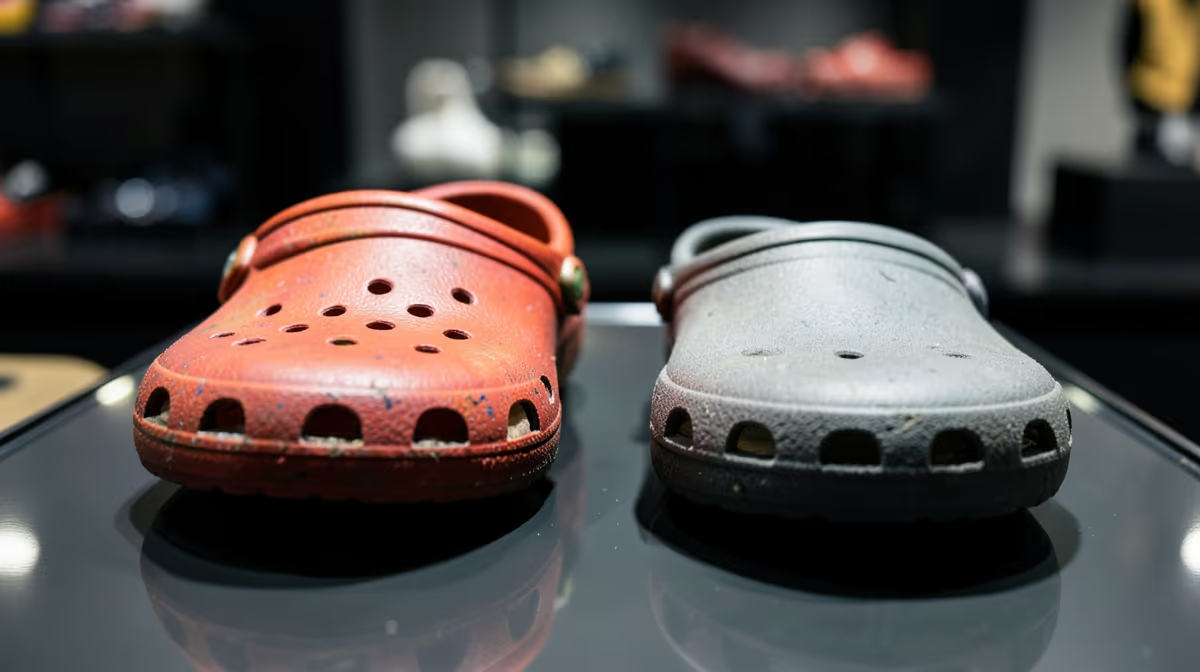
A single design contour on a budget-friendly shoe has become the focal point of a high-stakes legal confrontation in the United States. Crocs sues Five Below in a recent legal action concerning trademark infringement and the sale of alleged knockoff footwear, sparking a debate over where brand protection ends and budget retail begins.
At the heart of the dispute is an affordable foam clog sold by the discount chain Five Below for approximately $7. Crocs, the global leader in molded footwear, alleges that this product is not merely a competitor but an unauthorized knockoff that copies the iconic, trademarked design of its classic clogs. As the litigation moves into the federal court system, industry observers, intellectual property lawyers, and retail analysts are focusing on how the distinctive silhouette of a utility shoe became one of the most protected assets in the modern footwear market.
The outcome of this legal battle may ultimately depend on a single, minute design feature, potentially setting a new threshold for how closely discount retailers can replicate iconic branded goods.
The $7 Silhouette Sparking a Federal Lawsuit
The legal battle emerged in late September 2026, with reports surfacing across major news outlets including USA Today, Yahoo Finance, and The Business Journals. Crocs has initiated this legal action against Five Below, accusing the deep-discount retailer of selling footwear that mimics the distinctive design elements and trade dress of its famous classic clogs.
The primary point of contention involves the pricing and visual similarity of the products. While authentic Crocs clogs typically command a premium price reflective of the brand's market position, the Five Below version is priced at roughly $7. Crocs argues that this significant price disparity, combined with a design that is "confusingly similar" to its own, constitutes unfair competition and design infringement.
- Crocs alleges that Five Below is selling unauthorized knockoffs.
- The lawsuit focuses on the iconic foam clog design.
- The disputed footwear is sold at a deep discount of approximately $7.
- Multiple news organizations reported the filing between September 23 and September 25, 2026.
Design Details and Legal Thresholds
Winning a trademark and design infringement case of this scale often requires more than just showing that two products look alike to the casual observer. Legal experts indicate that the resolution of this case could hinge on very specific, minute visual details. In intellectual property law, trade dress refers to the visual appearance of a product or its packaging that signifies the source of the product to consumers.
For Crocs to prevail, its legal team must demonstrate that the Five Below clogs are so similar that consumers could easily mistake the cheaper alternative for the authentic branded item. This involves analyzing the placement of ventilation holes, the curvature of the heel strap, and the specific proportions of the foam mold. Five Below, a chain known for offering trendy novelty items and budget goods, now faces the challenge of defending its footwear inventory against these technical claims of infringement.
Proving trademark infringement and trade dress violations often requires demonstrating that consumers are likely to be confused by specific protected aesthetic features.
The Economic Tug-of-War in Budget Retail
The economic dimension of this lawsuit highlights the margin pressures faced by discount chains and the aggressive defensive strategies of premium brands. For Five Below, the ability to offer budget-friendly alternatives to popular trends is a cornerstone of its business model. However, for a brand like Crocs, whose valuation depends heavily on a distinct brand identity and the defense of its trademarks, allowing a $7 "lookalike" to persist in the market could dilute the brand's exclusivity and perceived value.
| Factor | Crocs (Plaintiff) | Five Below (Defendant) |
|---|---|---|
| Product Type | Iconic Foam Clogs | Budget-Friendly Clogs |
| Estimated Price | Premium Market Rate | Approximately $7 |
| Core Legal Argument | Trademark & Trade Dress Infringement | Retail of Low-Cost Alternatives |
| Market Strategy | Intellectual Property Protection | High-Volume Discount Retail |
The root cause of this litigation is the proliferation of ultra-low-cost retail alternatives that replicate proprietary footwear designs. Iconic brands are increasingly forced to aggressively defend their intellectual property to maintain product differentiation in a market flooded with fast-fashion alternatives.
Global Supply Chains and IP Enforcement
The geopolitical and logistical context of this case cannot be ignored. Global supply chain networks now enable the rapid prototyping and distribution of low-cost alternative goods. This speed tests the limits of international and domestic design patent protections. When a product achieves "iconic" status, it becomes a target for manufacturers who can produce similar items at a fraction of the cost.
This case also touches on a political angle regarding consumer protection and corporate lobbying. On one side, discount retailers argue they are democratizing access to trendy fashion for lower-income consumers. On the other, major brands push for stricter IP enforcement to protect their market share and the investments made in product development. The outcome of the Crocs legal battle US could redefine the legal threshold for trade dress, potentially forcing discount retailers to fundamentally alter how they source private-label footwear.
Historical Context and Legal Precedents
This dispute mirrors previous high-stakes design patent cases, most notably Apple Inc. v. Samsung Electronics. In that instance, the legal battle centered on whether minor physical contours and aesthetic choices constituted protectable trade dress. Similarly, the Crocs lawsuit will examine whether the shape of a foam clog is a functional necessity or a protectable artistic expression of a brand.
- Five Below introduced foam clogs resembling the iconic Crocs design.
- Crocs filed a federal lawsuit alleging design copying and trademark infringement.
- Legal analysts began examining how minute design details will determine the court's ruling.
- Industry observers are now monitoring potential injunctions that could halt sales.
Strategic Forecast for the Retail Sector
As the litigation progresses, several developments are expected in the short and long term. In the next 24 to 72 hours, media coverage and commentary from legal experts will likely intensify, focusing on the specific design patents held by Crocs.
Expert Predictions and Industry Impact
Analysts expect increased scrutiny on all discount retailers offering budget-friendly versions of branded footwear. If Crocs secures a favorable ruling, it could set a precedent that discourages retailers from stocking "lookalike" products that sit too close to the original design.
Potential Outcomes
- Best-case scenario: A swift legal resolution or settlement that clarifies the boundaries of design protection without causing major disruptions to the broader retail market.
- Worst-case scenario: Extended litigation that results in high legal costs for both companies and prompts a broader industry-wide crackdown, potentially limiting consumer access to low-cost footwear alternatives.
Frequently Asked Questions
Why is Crocs suing Five Below?
Crocs has filed a lawsuit against deep-discount retailer Five Below alleging that the company is selling unauthorized knockoffs of its iconic foam clogs. The legal dispute centers on affordable alternatives being sold for around $7 that closely mimic Crocs' signature footwear design.
How much do the Five Below clogs cost in the lawsuit?
The controversial clogs sold by Five Below that sparked the legal battle are priced at approximately $7. This significantly undercuts traditional Crocs footwear, drawing widespread consumer attention and legal scrutiny.
What could the outcome of the Crocs v. Five Below lawsuit hinge on?
Legal experts suggest that winning the case could heavily hinge on one tiny design detail inherent to the clog's structure. Proving trademark infringement and trade dress violations often requires demonstrating that consumers are likely to be confused by specific protected aesthetic features.
Who is affected by the Crocs and Five Below legal dispute?
The lawsuit directly impacts Crocs and Five Below, but it also has broader implications for discount retailers and fast-fashion brands selling affordable footwear alternatives. Consumers who purchase budget-friendly shoes might also see changes in product availability if injunctions are granted.
What are the broader market implications of the Crocs trademark lawsuit?
This case highlights ongoing tensions between major footwear brands and discount stores offering lower-priced lookalikes. A ruling in favor of Crocs could lead to stricter enforcement against lookalike products across the discount retail sector.
What happens next in the legal battle between Crocs and Five Below?
As the lawsuit progresses through the courts, both legal teams will likely present arguments regarding design patents, trade dress protection, and consumer confusion. Depending on the court's preliminary findings, Five Below may be forced to halt sales of the disputed $7 clogs while litigation continues.
Conclusion
The legal confrontation between Crocs and Five Below serves as a significant marker in the ongoing struggle over intellectual property in the retail sector. By targeting a $7 shoe, Crocs is signaling that no price point is too low to ignore when it comes to defending its iconic design. The case highlights the fine line between a budget-friendly alternative and an unauthorized knockoff. As the litigation unfolds in the U.S. court system, the focus will remain on whether the minute design details of the Five Below footwear infringe upon the established trade dress of the Crocs classic clog. For now, the retail industry remains on high alert, as the ruling could fundamentally change the sourcing and sales strategies for discount chains across the country.
Sources
- Crocs says Five Below copied its famous clog design — USA Today
- Crocs and deep discount shop Five Below are in a legal fight ... over a $7 shoe — Yahoo Finance
- Crocs Accuses Five Below Of Selling $7 Knockoffs Clogs In Lawsuit: Reports — DailyVoice.com
- Crocs Is Suing Five Below Over a $7 Clog. Winning the Case Could Hinge on 1 Tiny Design Detail — inc.com
- Crocs sues Five Below over alleged knockoffs of iconic clogs — The Business Journals
- Crocs Sues Five Below Over Alleged Design Copying — Talk Radio 98.3 WLAC


.webp)


