
Delta Flight Emergency Landing Triggers Major Aviation Safety Review
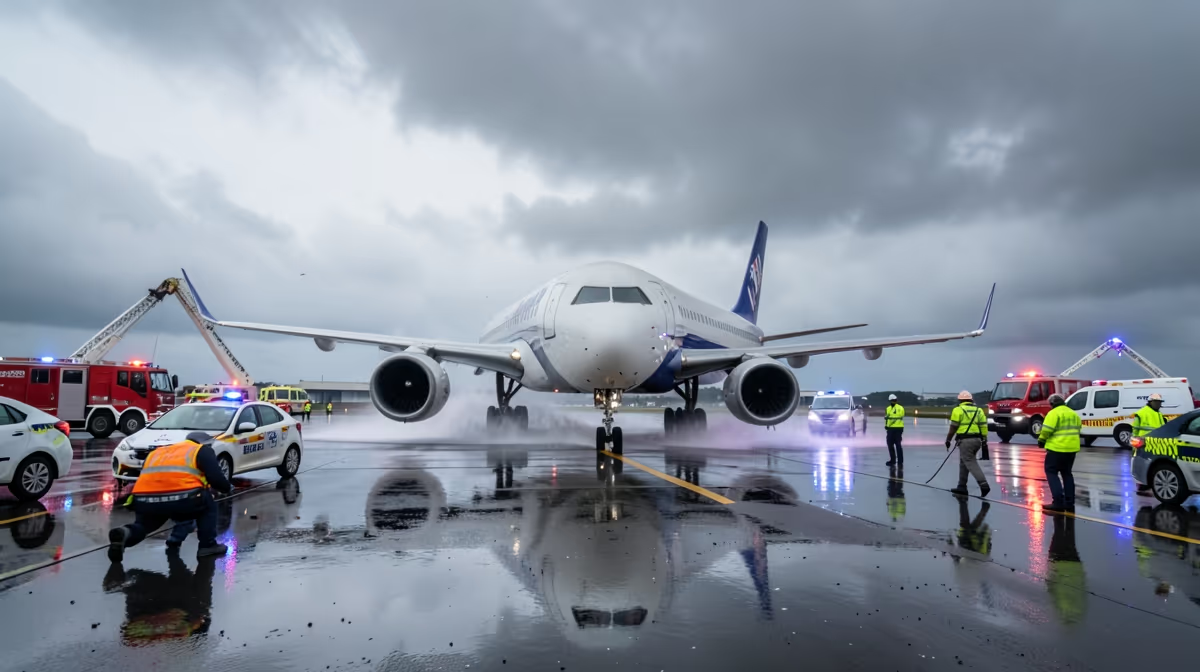
High above the dark expanse of the Atlantic, a routine journey toward the American Northeast transformed into a race against an invisible threat as haze began to permeate the pressurized environment. The sudden Delta flight emergency landing in Portugal has sparked a comprehensive review of transatlantic safety protocols after smoke in the cabin forced an immediate diversion, highlighting the razor-thin margins of mid-ocean aviation.
Safety incidents involving smoke in aircraft cabins highlight the critical importance of rigorous aviation safety standards and rapid crew response.
The Mid-Atlantic Pivot
A transatlantic Delta flight traveling toward Boston was forced to make an abrupt U-turn over the Atlantic Ocean, ultimately diverting to Portugal following the detection of smoke inside the cabin. The aircraft, identified as flight DL251, was well into its journey when the crew encountered the unexpected safety issue mid-air. For passengers, the experience began with the alarming sight and smell of smoke, a scenario that triggers some of the most stringent emergency protocols in commercial aviation.
Standard operating procedures for smoke in the cabin or cargo holds dictate that flight crews must prioritize an immediate diversion to the nearest suitable airport. In the vast corridor of the Atlantic, options are limited, requiring pilots to make rapid calculations regarding fuel, distance, and ground-based emergency capabilities. The decision to execute a U-turn and head for the Iberian Peninsula was a direct response to these safety mandates, ensuring that the aircraft reached a land-based facility before any potential escalation of the onboard hazard.
Emergency Response in Porto
Emergency services met the aircraft upon its landing in Porto, Portugal, where the airfield had been cleared and first responders were positioned on standby. The arrival of the flight prompted immediate medical attention for those on board, as the effects of smoke inhalation and the stress of a mid-ocean emergency took their toll.
Medical Assessments and Hospitalizations
Initial reports from the scene indicated a significant medical response. Multiple sources confirm that several passengers or crew members were subsequently transported to local hospitals for evaluation and treatment. While the exact severity of their conditions and the final headcount of those hospitalized varied across initial reports—with some outlets citing three individuals and others four—it is confirmed that the Portuguese emergency authorities prioritized respiratory health following the smoke exposure.
- Delta flight departs for Boston and encounters smoke in the cabin over the Atlantic.
- Flight makes an abrupt U-turn and executes an emergency landing in Porto.
- Emergency services evaluate passengers and crew on the tarmac.
- Multiple individuals are hospitalized for medical assessment.
- Airline and aviation analysts begin assessing the cause of the onboard emergency.
Investigating the Root Cause
The root cause of the incident appears to be an unexpected mechanical or electrical malfunction that resulted in smoke filling the cabin. Aviation safety investigators and Delta Air Lines maintenance teams are now tasked with identifying the specific origin of the failure. Commercial aircraft are equipped with sophisticated detection and ventilation systems designed to handle such hazards, yet the presence of smoke in the passenger cabin suggests a failure that bypassed or overwhelmed these primary safeguards.
Maintenance Logs and Systemic Inspections
Analysts expect heightened regulatory scrutiny on the specific aircraft type and Delta's maintenance logs. Specifically, investigators will look into recent cabin environmental control system issues or electrical wiring anomalies. The investigation will aim to determine if the smoke was a localized mechanical anomaly or if it points toward a more systemic fleet-wide risk. The best-case scenario for the carrier would be a minor, easily fixable mechanical failure with no broader safety implications. However, the worst-case scenario involves a deeper, systemic mechanical defect that could require extensive fleet inspections and lead to widespread disruptions.
Economic and Geopolitical Impact
Unscheduled emergency diversions incur substantial operational costs for commercial carriers. These expenses go beyond the immediate landing fees and include passenger rebooking, hotel accommodations, and the logistical challenge of moving a grounded aircraft back into service.
| Impact Area | Consequences of Diversion |
|---|---|
| Operational Costs | Rebooking, hotel accommodations, and airport fees |
| Maintenance | Unexpected grounding and specialized parts replacement |
| Network Scheduling | Disruptions to subsequent transatlantic flight rotations |
| Regulatory | Increased scrutiny on maintenance and safety logs |
The Role of European Hubs
The incident underscores the critical role of European hubs like Porto in the global aviation network. Transatlantic flight corridors rely heavily on international cooperation between North American and European aviation networks. Portugal, as the westernmost point of continental Europe, serves as a vital safety net for aircraft crossing the Atlantic. This reliance on European diversion airports highlights the underlying importance of extended-range twin-engine operational reliability and the supply chain constraints that currently affect the replacement of critical aircraft parts.
A Shifting Landscape for Aviation Safety
Airlines and aviation authorities face heightened regulatory scrutiny regarding passenger safety and fleet maintenance standards following high-profile mid-air incidents. When smoke is detected, the crew's rapid response is not just a company policy but a matter of international aviation law designed to prevent catastrophic outcomes.
The 1998 Swissair Flight 111 tragedy, which also involved smoke in the cabin originating from electrical wiring issues, fundamentally reshaped modern aviation safety directives regarding inflight fire detection and response.
This historical parallel serves as a somber reminder of why such incidents are treated with the utmost gravity. The memory of past tragedies ensures that modern pilots do not hesitate to divert when the integrity of the cabin atmosphere is compromised.
Future Outlook and Investigative Timeline
The next 24 to 72 hours are critical for both the hospitalized individuals and the technical investigation. Authorities and medical personnel in Portugal will continue providing care to those affected, while aviation safety investigators begin their deep dive into the aircraft's systems.
- Ongoing medical monitoring for passengers and crew hospitalized in Porto.
- Delta Air Lines to coordinate alternative travel arrangements for the impacted Boston-bound travelers.
- Preliminary findings of the maintenance inspection to be shared with aviation regulators.
- Assessment of potential fleet-wide checks depending on the source of the smoke.
As the situation continues to be assessed, Delta Air Lines is expected to issue updates regarding the condition of its staff and passengers. The focus remains on a swift and full recovery for those hospitalized and a transparent investigation into the source of the smoke to ensure continued safety for the thousands of travelers who traverse the Atlantic daily.
Frequently Asked Questions
What happened to the Boston-bound Delta flight in Portugal?
A Boston-bound Delta flight was forced to make an emergency landing in Portugal after reports of smoke in the cabin. The aircraft made an abrupt U-turn over the Atlantic Ocean before diverting safely to land.
Were any passengers or crew injured during the Delta emergency landing?
Yes, several individuals required medical attention following the incident. Multiple people were hospitalized after the plane landed safely due to smoke exposure.
Why did the Delta plane make an emergency landing in Portugal?
The aircraft diverted to Portugal because of smoke detected in the cabin while flying over the Atlantic Ocean. Crew members followed standard safety protocols to land the plane promptly and address the hazard.
Which airport did the diverted Delta flight land at?
The Boston-bound aircraft made its emergency landing at Porto Airport in Portugal. Emergency services were on standby to assist passengers and crew upon arrival.
What typically happens after an emergency aircraft diversion due to cabin smoke?
Following an emergency landing for cabin smoke, aviation authorities and airline maintenance teams conduct a thorough inspection of the aircraft to determine the source of the issue. Affected passengers are typically provided with medical evaluations, alternative travel arrangements, and updates from the airline.
How many people were hospitalized after the Delta flight incident?
Reports indicate that multiple individuals, including several passengers or crew members, were taken to the hospital for evaluation and treatment following the emergency landing in Portugal.
Conclusion
The emergency landing of the Boston-bound Delta flight in Porto serves as a stark reminder of the complexities inherent in transatlantic travel. While the diversion was successful and the aircraft landed safely, the hospitalization of several individuals underscores the potential health risks associated with cabin smoke incidents. As investigators peel back the layers of the aircraft’s mechanical and electrical systems, the aviation industry will be watching closely to see if this was an isolated malfunction or a sign of broader maintenance challenges. For now, the priority remains the recovery of the passengers and crew and the safe return of the remaining travelers to their final destination.
Sources
- Boston-bound Delta flight makes emergency landing in Portugal due to smoke in cabin By Reuters — Investing.com
- 3 People Hospitalized After Delta Plane Makes Emergency Landing Due to Smoke in the Cabin — Yahoo
- 4 taken to hospital after Boston-bound Delta flight makes abrupt U-turn over Atlantic Ocean and lands in P — The Economic Times
- What happened to Delta flight DL251? Boston-bound plane makes emergency landing in Porto | Hindustan Times — Hindustan Times
- US-bound Delta jet makes emergency landing in Portugal — Inquirer.net


.webp)

