
Hang Seng Index Slips as Regional Market Pressures Catch Investors Off Guard
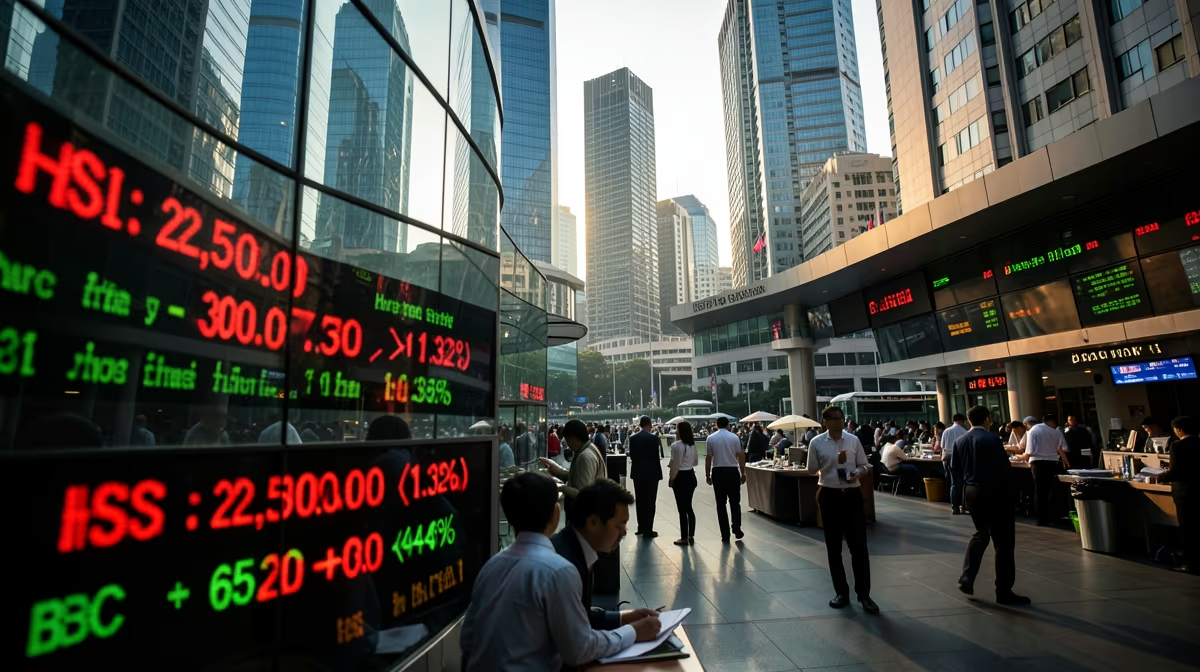
A sudden divergence in the Hong Kong stock exchange is forcing global investors to reassess the stability of Asian tech and logistics heavyweights. The Hang Seng Index slips today as investors react to fluctuating tech and logistics shares across Asian markets, exposing a stark division between struggling digital platforms and resilient energy assets. This micro-level volatility highlights a broader structural shift within regional equities, where regulatory pressures and macroeconomic uncertainties continue to weigh heavily on investor confidence.
The sharp opening drop in the Hang Seng Index underscores a persistent divergence between struggling tech-logistics equities and resilient energy-commodity assets.
The Morning Sell-off
| Stock or Index | Performance at Market Open | Sector Classification |
|---|---|---|
| Hang Seng Index | Opened 0.95% Lower | Broad Benchmark Index |
| CNOOC (00883) | Rose 1.5% | Oil and Energy |
| JD Logistics | Notable Dive | Logistics and Supply Chain |
| Meituan | Notable Dive | E-commerce and Food Delivery |
| Kuaishou | Notable Dive | Social Media and Short Video |
| Trip.com | Notable Dive | Travel Services |
This polarization demonstrates that while Hong Kong stocks drop overall, select defensive value plays are acting as temporary lifeboats for capital seeking refuge from high-growth volatility.
Tech and Logistics Under Pressure
When Meituan stocks fall along with declines in logistics and travel leaders, it signals deeper concerns regarding consumer demand and platform profitability. JD Logistics faced intense selling pressure, highlighting a challenging environment for supply chain operators. Similarly, Kuaishou and Trip.com experienced sharp downward moves, underscoring that both digital entertainment and travel services are highly sensitive to shifting economic winds. Together, these declines put persistent downward pressure on the broader benchmark index, leaving tech and non-ferrous metal equities struggling to find a solid floor.
Energy Sector Resilience
The rise of oil and energy equities suggests a strategic reallocation of capital. Amid broader macroeconomic headwinds and tech sector volatility, investors are shifting focus toward asset-heavy, yield-producing commodity stocks. This localized resilience, while helpful, was ultimately insufficient to fully offset the heavy losses recorded by the index's massive technology and logistics components, reinforcing the highly fragmented nature of the current market environment.
A Structural Shift in Derivative Markets
The introduction of these structured warrants reveals an intriguing sub-trend: while primary tech indices face contraction, financial institutions are actively creating specialized derivative instruments in international markets. This suggests a strategic effort to capture market volatility and provide hedging options, rather than a complete flight of capital from Hong Kong-linked assets. By listing these instruments in Malaysia, Kenanga IB offers Southeast Asian investors direct exposure to biotechnology sub-indices, creating new access points during a period of heightened domestic equity pressure.
Analyzing the Root Causes
Global investors remain cautious regarding Chinese and Hong Kong equities amid broader macroeconomic headwinds, even as regional financial institutions outside China innovate with new derivative products.
This cautious environment draws an interesting historical parallel to the 2015-2016 Chinese stock market turbulence. During that period, regulatory shifts and tech sector volatility triggered sharp corrections in major Hong Kong-listed mainland enterprises. Today, a similar pattern of investor anxiety is visible as regulatory uncertainties and growth concerns prompt traders to scale back their exposure to high-beta tech platforms, shifting instead to defensive energy plays or specialized derivative instruments.
The Path Forward and Market Predictions
Under a best-case scenario, oil and energy stocks will sustain their upward momentum, helping to offset tech sector losses and enabling the Hang Seng Index to find a stable trading floor. Conversely, the worst-case scenario would see broad-based selling pressure across tech, logistics, and non-ferrous metal stocks deepen, dragging the entire index further down. Analysts expect continued short-term caution among investors, with commodity-linked stocks providing localized support while high-profile tech components remain under pressure.
Frequently Asked Questions
Why did the Hang Seng Index slip recently?
The Hang Seng Index opened 0.95% lower as major tech and non-ferrous metal stocks faced heavy downward pressure. Companies like JD Logistics, Meituan, Kuaishou, and Trip.com saw significant stock dives during the trading session.
What stocks bucked the downward trend when the Hang Seng Index slipped?
While most major sectors struggled and opened lower, oil stocks managed to buck the broader negative trend. Notably, CNOOC shares traded up by 1.5% amidst the morning market pressure.
Who is affected by the recent movement in the Hang Seng Index?
Investors holding shares in major Chinese tech giants, logistics firms, and non-ferrous metal companies are directly impacted. Additionally, global traders monitoring Hong Kong 50 CFDs and structured warrants are watching the volatility closely.
What is a Hang Seng Biotech Index structured warrant?
Kenanga Investment Bank recently introduced the world’s first Hang Seng Biotech Index structured warrants to the Malaysian market. These financial instruments offer investors new ways to gain exposure to the biotechnology sector tied to the broader index.
What happens next for the Hong Kong stock market after the recent slip?
Markets will continue to monitor macroeconomic indicators, tech sector performance, and commodity trends to gauge recovery potential. Investors are keeping a close watch on whether heavyweights like Meituan and JD Logistics can reverse their recent losses.
How do global events influence the Hang Seng Index?
The Hang Seng Index is highly sensitive to shifting investor sentiment across Asian markets, regulatory updates on Chinese tech firms, and global commodity price fluctuations. These external pressures frequently lead to notable opening gaps and intraday volatility.
Conclusion
The recent drop in the Hang Seng Index highlights the ongoing friction between high-growth tech enterprises and defensive commodity assets in the Hong Kong market. With the index opening 0.95% lower, driven by sharp declines in heavyweight listings like JD Logistics and Meituan, the short-term outlook remains cautious. However, the resilience of oil stocks like CNOOC and the expansion of derivative instruments like Kenanga IB's biotech structured warrants in Malaysia indicate that market players are actively finding ways to navigate the volatility. Moving forward, the market’s stability will depend on whether tech and logistics equities can find a solid floor or if the **Asian markets decline** will deepen under broader macroeconomic headwinds.
Sources
- Hang Seng Index slips as JD Logistics, Meituan, Kuaishou, Trip.com stocks dive — TradingView
- HK Market Open | Hang Seng Index Opens 0.95% Lower; Oil Stocks Buck the Trend, CNOOC (00883) Up 1.5%; Tech and Non-Ferrous Metal Stocks Under Pressure — Moomoo
- Hang Seng Index opens 0.95% lower — chinadailyhk.com
- Kenanga Investment Bank Introduces World’s First Hang Seng Biotech Index Structured Warrants to Malaysia — Asia News Network
- Kenanga IB offers world's first Hang Seng Biotech Index structured warrants — The Star
- Hong Kong 50 CFD Trading — ThinkMarkets


.webp)


.webp)