
SAT-SRAW Glide Bombs Contract Signed by India MoD for IAF Strikes
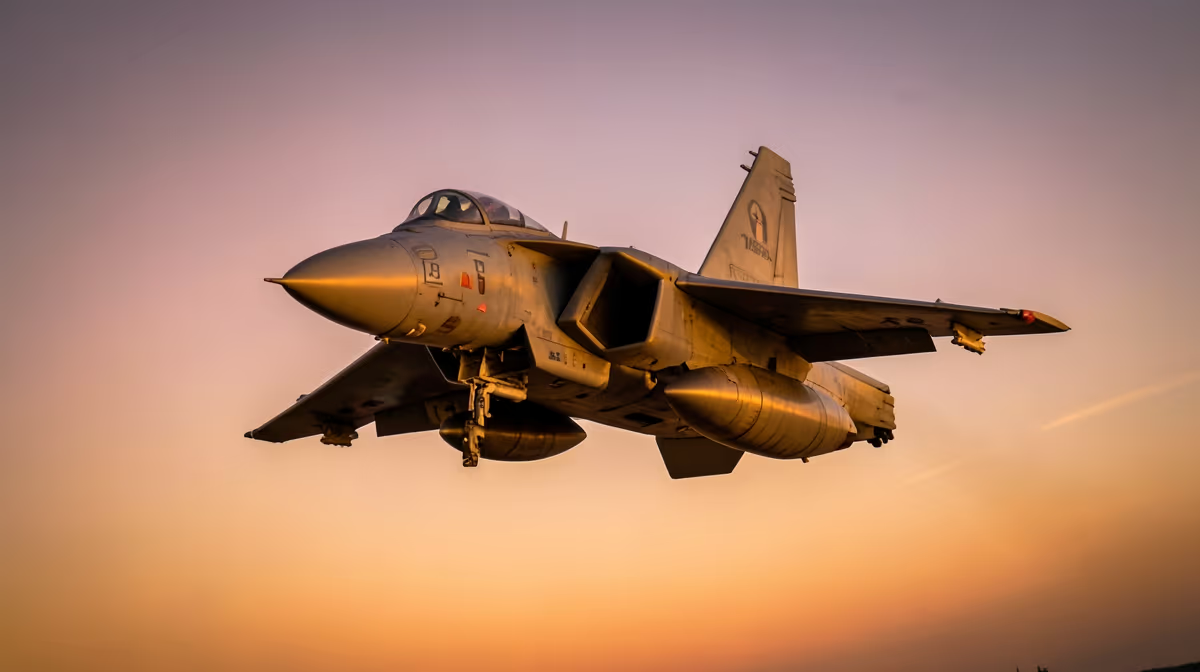
The geometry of modern air combat is being rewritten by munitions that can navigate autonomously to their targets while the launch aircraft remains miles beyond the reach of enemy fire. The Indian Ministry of Defense has officially signed a significant contract for SAT SAAW glide bombs, marking a major milestone in bolstering the Indian Air Force's operational readiness. This ₹811 crore agreement represents more than just a procurement order; it is a strategic pivot toward indigenous precision strike capabilities that aim to redefine how India secures its borders and projects power.
The ₹811 crore procurement of 160 SAT-SAAW glide bombs signals a definitive shift toward indigenous standoff precision warfare, allowing the IAF to strike critical targets from 100 kilometers away.
Strengthening the Arsenal: The ₹811 Crore Milestone
The Ministry of Defence (MoD) has finalized an agreement that injects significant capital into the domestic defense industrial ecosystem. Valued at precisely ₹811 crore, the contract facilitates the procurement of 160 Semi-Active Laser-Guided Smart Anti-Airfield Weapons (SAT-SAAW) for the Indian Air Force (IAF). This acquisition is designed to meet an urgent operational requirement to enhance indigenous precision strike capabilities and extend the standoff engagement range of India’s aerial fleet.
The financial injection is expected to stimulate high-tech manufacturing within the country, supporting local defense contractors and bolstering the long-term economic sustainability of the aerospace sector. This move aligns strongly with New Delhi's domestic political narrative of "Aatmanirbhar Bharat" (Self-Reliant India). By focusing on indigenous satellite-guided weaponry, the government is showcasing tangible progress in reducing reliance on foreign military imports, a move that comes amid heightened electoral and strategic scrutiny.
| Contract Specification | Details |
|---|---|
| Procurement Item | SAT-SAAW Glide Bombs |
| Total Units | 160 |
| Contract Value | ₹811 crore |
| Primary User | Indian Air Force (IAF) |
| Weapon Range | 100 kilometers |
| Guidance System | Satellite-guided / Semi-Active Laser |
Technical Precision: Reshaping Operation Sindoor
The SAT-SAAW is categorized as a standoff precision-guided munition. These weapons are dropped from aircraft and possess the aerodynamic capability to glide over significant distances toward a pre-defined target. This "standoff" capability is critical in modern warfare, as it allows the launching aircraft to remain safely outside the envelope of enemy air defense systems, such as surface-to-air missiles and anti-aircraft artillery.
100-Kilometer Standoff Capability
Operating with a 100-kilometer range, these indigenous satellite-guided weapons are designed to target and neutralize enemy installations with high precision. Specifically, the SAAW system is optimized for strikes against airfields and critical infrastructure. The integration of such high-precision assets is part of a broader effort known as "Operation Sindoor," which is effectively reshaping the IAF’s tactical strike arsenal.
By fielding advanced 100-km range weapons, the IAF can now engage heavily defended adversary assets with minimal risk to aircrews. This tactical upgrade alters conventional attrition calculations, particularly in high-altitude conflicts where air defense networks are increasingly dense and sophisticated.
Indigenous Satellite Guidance
The "SAT" in SAT-SAAW refers to the satellite guidance that directs the weapon to its target. This technology ensures that even in adverse weather conditions or environments with limited visibility, the munitions can find their mark. The transition to indigenous satellite-guided munitions suggests a broader doctrinal shift toward networked, cost-effective standoff warfare. Instead of relying on expensive, imported platforms for every strike, the IAF is moving toward a model where precision is delivered through locally developed, smart munitions.
Strategic and Geopolitical Implications
The deployment of the SAT-SAAW system signals a high level of strategic readiness to regional adversaries. By demonstrating technological self-sufficiency in precision-guided munitions, India projects an enhanced deterrence posture along its contested borders. This development is not occurring in a vacuum; it is part of a historical modernization push that accelerated following the post-Balakot air strikes. That period served as a catalyst for fast-tracking standoff precision munitions and accelerating the procurement of indigenous hardware to counter evolving regional air defense networks.
The procurement of 160 SAT-SAAW glide bombs reflects an urgent operational requirement to enhance indigenous precision strike capabilities and extend the standoff engagement range of the Indian Air Force.
Beyond the immediate tactical advantages, the integration of these weapons suggests that India is preparing for high-intensity, short-duration conflicts where the ability to neutralize enemy airfields quickly and accurately can decide the outcome of the opening phase of a war. The reliance on domestic solutions for such critical requirements further reinforces India's objective to become a global hub for defense manufacturing.
The Broader IAF Landscape: Training and Legal Shifts
While the acquisition of SAT-SAAW glide bombs headlines the technological modernization of the IAF, other developments within the force indicate a comprehensive overhaul of its operational and personnel structures. This includes advancements in training platforms and landmark legal decisions that affect the composition of the officer corps.
Training Infrastructure and HAL Deliveries
Hindustan Aeronautics Limited (HAL) has recently begun deliveries of the HTT-40 basic trainer aircraft. Simultaneously, the organization has completed work on the Tejas Mk.1 trainers. These platforms are essential for preparing the next generation of pilots to operate sophisticated aircraft capable of deploying advanced munitions like the SAAW. The synchronization of new weapon contracts with the delivery of modern training aircraft underscores a holistic approach to air force readiness.
Judicial Intervention and Article 142
In a significant personnel development, the Supreme Court of India recently invoked Article 142 of the Constitution to reinduct a war widow and former IAF officer into service as a Squadron Leader. This extraordinary use of judicial power highlights the evolving legal landscape surrounding military service and the rights of officers. While the SAT-SAAW contract addresses the hardware needs of the force, this judicial ruling touches on the human and legal elements of the institution.
Transitioning Roles: The Human Element
The IAF is also seeing a diverse range of transitions among its personnel. While many continue to serve in high-stakes roles, others are choosing different paths after their service. An example of this shift is a former Indian Air Force officer who left the service to start a clothing brand, citing a simple desire to "pause" from the rigors of military life. This highlights the multifaceted nature of the people behind the machine, moving from tactical strike planning to entrepreneurial ventures, reflecting a broader societal trend of post-service diversification.
Analysis of the Defense Industrial Ecosystem
The ₹811 crore contract for SAT-SAAW glide bombs is more than a purchase; it is an investment in the domestic defense industrial ecosystem. Analysts observe that such contracts provide the necessary capital for local firms to innovate and scale.
Economic and Political Drivers
- Capital Injection: The contract supports local defense contractors, fostering a high-tech manufacturing environment.
- Self-Reliance: It reduces the outflow of foreign exchange and builds a local supply chain for critical military components.
- Election Narrative: Tangible progress in indigenous manufacturing serves as a strong political indicator of government performance in national security.
Historical Context
The shift toward indigenous smart munitions is a direct response to past operational challenges. The need for standoff weapons became glaringly apparent during historical air engagements where local forces lacked sufficient long-range precision options. The current procurement is the culmination of years of development and testing, aimed at ensuring that the IAF does not remain reliant on foreign suppliers during a crisis.
Future Outlook and Deployment Timeline
In the next 24 to 72 hours, analysts expect continued reporting and deeper commentary regarding the strategic implications of this contract. The focus will likely remain on how the 100-km range weapons will be integrated into frontline squadrons.
Expert Predictions
Defense experts anticipate that the finalization of this ₹811 crore deal will accelerate the production and integration schedules of other advanced munitions. The best-case scenario involves a smooth production cycle and timely delivery of the 160 units, which would further boost domestic manufacturing confidence. However, potential logistical bottlenecks or manufacturing delays could still pose risks to the deployment timeline.
- Production Phase: Manufacturing of the 160 units will commence following the contract signing.
- Integration: The weapons will be integrated into the existing fleet of IAF strike aircraft.
- Operational Readiness: Frontline squadrons will undergo training for the tactical deployment of the SAAW system.
- Future Scaling: Potential scaling of production to meet the requirements of other branches of the military.
Frequently Asked Questions
What contract did the India Ministry of Defence recently sign for the IAF?
The Ministry of Defence signed an ₹811 crore contract to procure 160 Semi-Active Laser-guided Smart Anti-Airfield Weapons (SAT-SAAW) for the Indian Air Force. This indigenous satellite-guided weapon system is designed to significantly enhance the IAF's precision strike capabilities.
Why does the acquisition of SAT-SAAW glide bombs matter for the IAF?
This weapon system provides the Indian Air Force with advanced long-range strike capabilities, allowing for high-precision targeting of enemy airfields and critical infrastructure from a safe distance. It plays a crucial role in modernizing the air force's tactical inventory.
Who is affected by the recent MoD contract for SAT-SAAW?
The Indian Air Force directly benefits from this procurement by receiving upgraded tactical strike assets to bolster national defense. Additionally, domestic defense manufacturing receives a boost through the acquisition of indigenous weapon systems.
What happens next following the signing of the SAT-SAAW contract?
With the ₹811 crore contract now finalized, the manufacturing and delivery phases for the 160 glide bombs will commence according to the agreed timeline. The IAF will subsequently integrate these precision weapons into its operational arsenal.
What is the background of the SAAW precision strike arsenal in India?
India has been steadily expanding its indigenous defense manufacturing capabilities, focusing on smart munitions that offer extended ranges of up to 100 kilometers. The integration of weapons like the SAAW is part of a broader effort to reshape the IAF's precision strike options.
What is the specific financial value and quantity associated with the SAT-SAAW deal?
The Ministry of Defence inked the agreement at a total cost of ₹811 crore. This specific financial outlay covers the procurement of 160 SAT-SAAW glide bombs dedicated to enhancing the Indian Air Force's operational readiness.
Conclusion
The signing of the ₹811 crore contract for 160 SAT-SAAW glide bombs marks a definitive moment for India’s defense sector. By equipping the Indian Air Force with indigenous, satellite-guided standoff weapons, the Ministry of Defence is addressing a critical operational gap while reinforcing the national push for industrial self-reliance. These munitions, with their 100-kilometer range, allow for precision strikes against enemy airfields with reduced risk to pilots, fundamentally shifting the tactical landscape in the region. As the IAF integrates these weapons alongside new training platforms like the HTT-40 and Tejas Mk.1, the force is transitioning toward a more modern, networked, and self-sufficient future. The focus now moves to the manufacturing phase and the timely delivery of these assets to frontline squadrons to ensure strategic deterrence remains robust.
Sources
- SC invokes Article 142; reinducts war widow, former IAF officer into service as Squadron Leader — ANI News
- India’s 100-Km SAAW: How Operation Sindoor Is Reshaping IAF’s Precision Strike Arsenal — The Times of India
- HAL begins HTT-40 deliveries, and completes Tejas Mk.1 trainers — Asian Military Review
- Ex-Indian Air Force Officer On Leaving Service To Start Clothing Brand: "Simply Wanted To Pause" — NDTV
- MoD inks ₹811 crore contract for 160 SAT-SAAW glide bombs for IAF — The Hindu
- Indigenous satellite guided weapon to give air force long range strike capability — The Times of India


.webp)

