
Iran Hormuz Deal Stuns US Officials as Midterm Stakes Rise Rapidly
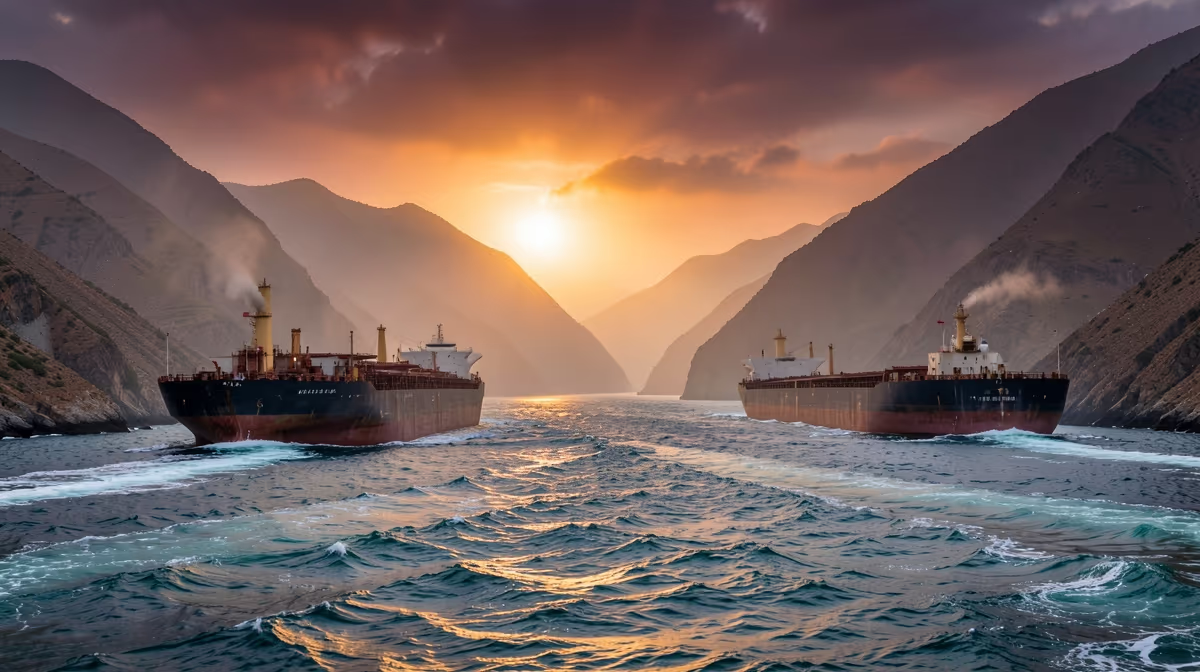
A single waterway, less than 21 miles wide at its narrowest point, now holds the power to reshape the political landscape of the United States. As the political clock ticks down, the prospect of an Iran Hormuz deal US midterms breakthrough has forced the administration into a high-stakes geopolitical gamble that pits long-term strategy against immediate electoral survival.
The strategic choking of the Strait of Hormuz by Iran has created severe economic pressure on global energy supplies, forcing the US administration to weigh foreign policy concessions against domestic electoral vulnerabilities ahead of the midterms.
Strait of Hormuz negotiations and the political fallout
The sudden diplomatic overture from Tehran has placed Donald Trump in a position of significant political difficulty. Iran has floated a potential deal to reopen the critical Strait of Hormuz, a move that comes at a time when the administration is navigating a complex web of international tensions and domestic pressures. This unexpected opening is not merely a regional matter; it is a high-stakes exertion of leverage over global energy corridors designed to coincide with the upcoming United States midterms.
The Strait of Hormuz serves as the world's most vital oil transit chokepoint, connecting the Persian Gulf with the Gulf of Oman and the Arabian Sea. It is the primary artery for the global petroleum trade, and any disruption to its flow resonates through every corner of the global economy. By dangling the possibility of a reopening just as American voters prepare to head to the polls, Iran has introduced a volatile variable into the electoral equation.
The administration must now decide whether to engage with a proposal that could provide immediate economic relief or maintain its current posture of maximum pressure. Observers note that the intersection of high-stakes Middle East diplomacy and the domestic electoral timetable has created an urgent challenge for the White House, as any move regarding the waterway could heavily influence both global energy markets and domestic political narratives.
Weighing global oil routes against strategic leverage
The economic implications of the Hormuz crisis are direct and punishing. As a crucial artery for global petroleum transit, the strait's restriction threatens supply chains and drives up energy prices. For an administration facing midterms, the prospect of rising fuel costs is a significant electoral liability. The White House currently faces intense pressure to project an image of international strength while simultaneously delivering relief at the gas pump to avoid negative consequences at the ballot box.
| Impact Area | Strategic Significance |
|---|---|
| US Midterm Elections | Influence on voter sentiment through energy prices and inflation control |
| Global Trade and Shipping | Security of the world's most vital oil transit chokepoint for crude oil |
| Middle East Policy | Balancing long-term deterrence against immediate regional stabilization |
| International Diplomacy | Testing the limits of secondary sanctions and alliance cohesion |
Inflation fears, magnified by energy price spikes, have become a focal point for voters. By leveraging its geographic position at this specific choke point, Iran is attempting to extract diplomatic concessions by targeting the economic vulnerabilities of the West. The administration’s dilemma is whether to accept terms that might be viewed as a retreat in foreign policy in exchange for the economic stability required to navigate the election cycle.
The China-Russia connection and diplomatic pressure
The crisis in the Strait of Hormuz does not exist in a vacuum, but rather within a broader context of shifting global power dynamics. Reports indicate that Trump has directly asked Chinese leader Xi Jinping to stop providing assistance to Iran. This move highlights the administration's attempt to isolate Tehran and cut off its economic lifelines as part of a broader strategy to counter its geopolitical leverage.
At the same time, international scrutiny is mounting over other diplomatic maneuvers. The administration's decision to extend a G20 invite to Vladimir Putin has drawn sharp criticism, including from Russian dissidents who labeled the move as shameful. These intersecting developments suggest a landscape where the administration is fighting on multiple diplomatic fronts simultaneously.
A Shifting Landscape of Power
Tehran's overtures may be specifically designed to exploit internal divisions among Western allies. While some partners may prioritize immediate economic stabilization and the reopening of trade routes, others remain committed to a strategy of maximum pressure. This internal friction tests the limits of US deterrence and the effectiveness of secondary sanctions. Furthermore, reports from media outlets like The Guardian suggest a perception of waning power surrounding the current administration’s positioning, which may embolden regional actors to push for more favorable terms in any potential deal.
Historical parallels and the 1973 oil crisis
Analysts have pointed to the 1973 oil crisis as a historical parallel to the current situation. During that period, geopolitical conflicts in the Middle East translated directly into severe economic shocks for Western nations, forcing profound domestic political recalculations. The current scenario mirrors that era in the way geographic choke points are used as tools of economic warfare to influence the domestic policies of global powers.
The root cause of the current tension lies in the strategic choking of the strait by Iran, which has created a state of severe economic pressure. This is a classic example of how foreign policy challenges can intersect with domestic electoral timelines. Just as in the 1970s, the administration is finding that its ability to manage global energy flows is inextricably linked to its domestic political standing.
- Iran escalates tensions by restricting transit through the Strait of Hormuz.
- The US administration pressures international partners, specifically asking China to halt economic support for Tehran.
- Iran dangles a potential deal to reopen the strait as the US midterm elections draw closer, creating a strategic dilemma for Washington.
Security assessment and the role of international players
The security of global oil routes remains the primary concern for international shipping companies and global energy consumers. The Strait of Hormuz is not just a regional waterway; it is an international necessity. The current maneuver by Iran is seen by some as a stalling tactic or a test of resolve rather than a genuine move toward long-term peace.
Expert predictions suggest that the next 24 to 72 hours will be dominated by intense diplomatic maneuvering. The Trump administration is expected to conduct a thorough assessment of the Iranian proposal while simultaneously monitoring the reactions of regional stakeholders and diplomatic partners. The key players in this drama—Trump, Iran, Xi, and Putin—are each navigating their own strategic interests as the situation unfolds.
Securing a reopening of the vital waterway could significantly impact energy markets and influence voter sentiment just as the midterms begin.
Predicting the next steps in Middle East diplomacy
The outlook for the coming days remains uncertain. In a best-case scenario, a diplomatic breakthrough could allow for the reopening of the Strait of Hormuz, easing geopolitical tensions and stabilizing energy markets just in time for the midterms. This would provide the administration with a significant victory to present to the electorate.
However, the worst-case scenario involves the proposed deal failing to materialize or being revealed as a strategic stalling tactic. This would compound the existing geopolitical risks and leave the administration facing both a foreign policy crisis and an economic downturn simultaneously. Analysts expect heightened political pressure on the White House as these foreign policy challenges continue to intersect with the domestic electoral calendar.
The role of Beijing remains a critical variable. Whether China responds to the request to halt assistance to Iran will determine the effectiveness of the administration's isolation strategy. As the world watches the Strait of Hormuz, the decisions made in Washington, Tehran, and Beijing over the coming days will have repercussions that last far beyond the upcoming election cycle.
Frequently Asked Questions
What is the recent development regarding Iran and the Strait of Hormuz involving Trump?
Iran has floated the possibility of a deal to reopen the strategic Strait of Hormuz ahead of the United States midterms. This puts President Trump in a challenging negotiating position as he weighs his administration's next moves.
Why does the potential Hormuz deal matter for the US midterms?
The timing of Iran's proposal right before the US midterms creates high-stakes political and economic pressure for the Trump administration. Securing a reopening of the vital waterway could significantly impact energy markets and influence voter sentiment.
Who is affected by the closure and potential reopening of the Strait of Hormuz?
Global energy markets, international shipping lanes, and consumers worldwide are directly affected by tensions in the Strait of Hormuz. Additionally, the political fallout impacts the US administration and its foreign policy standing ahead of upcoming elections.
What actions has Trump taken regarding Iran's international support?
As tensions persist, reports indicate that Trump has specifically asked Chinese President Xi Jinping to stop helping Iran. This diplomatic pressure is part of a broader strategy to isolate Tehran and counter its geopolitical leverage.
What happens next as Trump weighs the Iranian proposal?
Trump faces tough choices on whether to accept the terms of Iran's proposed deal or pursue alternative containment strategies. The administration must balance short-term economic relief in energy markets against long-term strategic objectives in the Middle East.
What is the specific geopolitical background surrounding these negotiations?
The current diplomatic friction occurs against a backdrop of escalating regional maneuvers and broader international disputes involving key global players like Russia and China. As highlighted by recent geopolitical developments, the administration's foreign policy is facing mounting scrutiny on multiple fronts.
Conclusion
The current standoff over the Strait of Hormuz represents a critical juncture where international energy security meets domestic political strategy. Iran's offer to reopen the waterway has presented the Trump administration with a complex dilemma: accept a deal that could stabilize gas prices and influence the midterms, or maintain a rigorous foreign policy stance that risks economic volatility. With the added layers of diplomatic pressure on China and controversial invites to Russia, the White House is navigating one of the most significant foreign policy challenges of the current cycle. The next few days of assessment and negotiation will determine whether a diplomatic breakthrough is possible or if the region will remain a flashpoint for global economic and political instability.
Sources
- ‘The weaker he gets, the more dangerous he gets’: Trump lashes out as his power wanes — The Guardian
- Trump's plans for massive arch move ahead — BBC
- Trump faces tough choices as Iran dangles deal to reopen Hormuz before US midterms — The Guardian
- ‘Shameful’: Russian Dissident Blasts Trump’s G20 Invite to Putin — CNN
- South African white genocide does not exist, new ambassador to US tells BBC — BBC
- Trump asks Xi to stop helping Iran — The Telegraph