
Israel Bound Flight Diverted After Mid-Air Cockpit Altercation
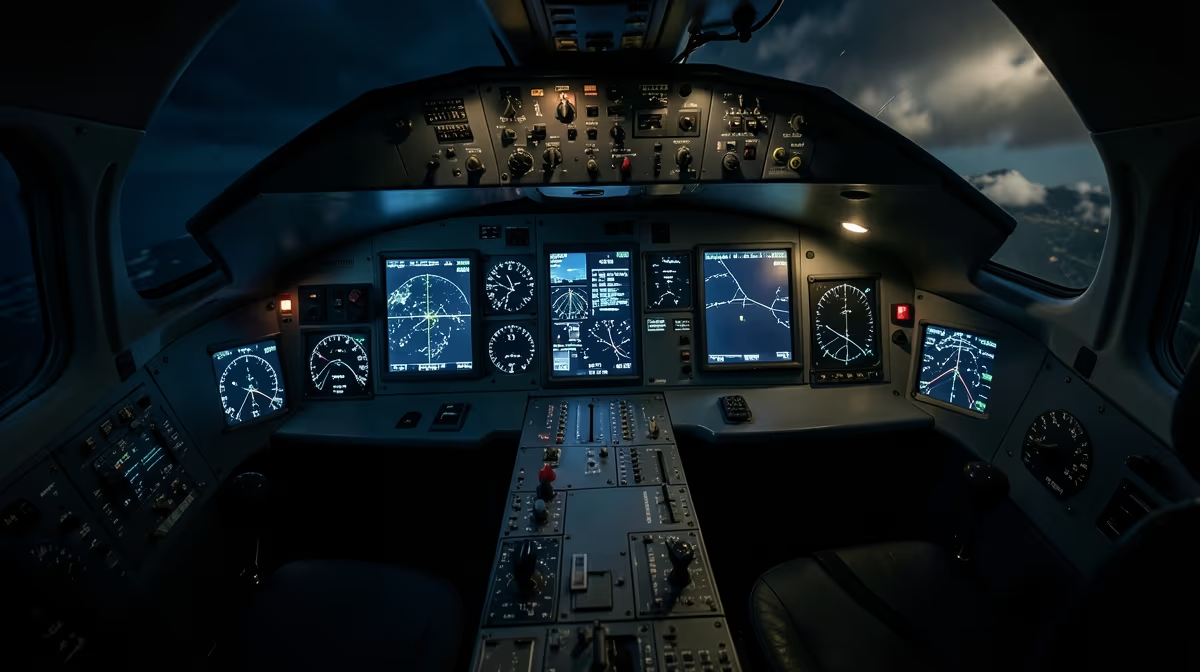
A sudden fracture in cockpit discipline transformed a routine commercial journey into a high-stakes international security event that resonated across Middle Eastern capitals. An Israel bound flight diverted to Saudi Arabia after an unexpected cockpit altercation between the two individuals entrusted with the safety of everyone on board, forcing a deviation from one of the region’s most sensitive flight corridors.
The safe landing of an Israel-bound commercial aircraft in Saudi Arabia amid a high-stakes security alert underscores the practical, behind-the-scenes air traffic cooperation and emergency protocols maintained between regional states despite complex diplomatic landscapes.
A Mid-Air Crisis in the Cockpit
The incident began as a standard flydubai service operating from Dubai International Airport toward Tel Aviv’s Ben Gurion Airport. While the aircraft was navigating its planned route, a physical altercation broke out between the pilots within the flight deck. This internal brawl escalated rapidly, moving beyond a verbal dispute and creating an immediate and severe risk to the aircraft's operation and the safety of the passengers.
In the high-pressure environment of a commercial cockpit, the breakdown of cooperation is more than a professional failure; it is a critical safety breach. Flight safety relies entirely on clear communication, mutual trust, and calm decision-making. When interpersonal conflicts reach the level of physical violence, the standardized protocols that govern flight operations are fundamentally compromised. As the fight intensified, the crew’s ability to manage the aircraft was hindered, leading to a series of emergency transmissions that would soon alert air traffic controllers across the region.
The Transmission of Hijacking Codes
As the situation inside the cockpit spiraled out of control, the aircraft began transmitting emergency and hijacking transponder codes. These specific "squawk" codes are designed to alert ground control to the most dire of situations, such as unlawful interference or a complete loss of cockpit integrity. The transmission of these signals, combined with a brief period where the aircraft lost standard radio contact, triggered immediate alarms within regional aviation security networks.
Initial reports from aviation tracking services and news agencies suggested a potential security threat or a hijacking in progress. This led to a brief but intense period of uncertainty as ground controllers attempted to verify the status of the flight. The use of hijacking codes on a route bound for Israel—a destination that already commands heightened security awareness—amplified the perceived severity of the event. However, as communication was eventually re-established, it became clear that the emergency was internal.
Flight safety heavily relies on clear communication, cooperation, and calm decision-making inside the cockpit.
Emergency Diversion to Saudi Arabian Airspace
With the cockpit environment compromised by the ongoing brawl, the decision was made to execute an emergency landing at the nearest viable facility. The aircraft successfully diverted to an airport within Saudi Arabia. This unscheduled landing was a direct result of the pilots' inability to continue the flight safely to Tel Aviv.
The successful landing of a flight destined for Israel on Saudi soil is a significant operational development. While the two nations have a complex diplomatic history, international aviation protocols dictate that in an emergency, the safety of the passengers and crew takes precedence over political boundaries. Saudi Arabian airport authorities responded to the emergency signals by facilitating a safe arrival, demonstrating the functional necessity of regional air traffic coordination during crises.
| Phase of Incident | Event Description |
|---|---|
| Departure | Flydubai flight leaves Dubai for Tel Aviv. |
| Altercation | Physical brawl breaks out between pilots in the cockpit. |
| Alert | Aircraft transmits emergency and hijacking squawk codes. |
| Silence | Standard contact with ground control is briefly lost. |
| Diversion | Flight changes course toward a Saudi Arabian airport. |
| Resolution | Aircraft lands safely; hijacking is officially ruled out. |
Geopolitical and Economic Implications
The incident highlights the intense operational stress and professional friction faced by flight crews operating routes that intersect historically fraught airspaces. Beyond the immediate safety risks, such diversions carry heavy economic and political weight. For the airline, flydubai, the unscheduled landing in a foreign territory results in substantial operational costs, including aviation fuel expenditures, significant schedule disruptions, and the logistical challenge of managing passengers in a location not on their original itinerary.
From a geopolitical perspective, the event sheds light on a "hidden angle" of modern aviation: the interaction between hyper-vigilant automated security protocols and human anxiety. The hasty transmission of hijacking codes suggests that the crew, or the aircraft's automated systems responding to the chaos in the cockpit, may have prematurely escalated a routine—albeit severe—interpersonal dispute into an international security incident. This points to the high level of tension inherent in regional airborne operations, where any deviation from the norm is viewed through a lens of potential threat.
Safety Protocols and Crew Management
Aviation analysts suggest that this rare pilot altercation will likely lead to heightened scrutiny of cockpit communication protocols. The fact that a personal dispute could escalate to the point of triggering hijacking alerts raises questions about the psychological screening and mental health oversight of flight crews. Commercial aviation is built on the principle of redundancy and "Crew Resource Management" (CRM), which is specifically designed to prevent a single point of failure—including the failure of a pilot's professional conduct.
The passengers on board the diverted flight faced not only severe delays but also a period of panic as the aircraft changed course under emergency conditions. Upon landing in Saudi Arabia, they were subject to security evaluations and the logistical uncertainty of how they would eventually reach their destination in Tel Aviv. The airline and regional authorities had to coordinate closely to manage the passengers' welfare and ensure their eventual transit.
The Road Ahead for Regional Aviation
Following the incident, several key players—including flydubai management, Saudi Arabian airport authorities, and Israeli officials—are tasked with unravelling the specifics of the brawl. In the immediate 24-hour window, authorities are expected to release clarifying statements to reassure the public and the aviation industry that the incident was an isolated dispute and not indicative of a broader security vulnerability.
Within the next 72 hours, aviation regulators will likely begin a deep-dive review into the conduct of the specific crew members involved. This will involve analyzing cockpit voice recorders and flight data to determine the exact timeline of the fight and why the hijacking codes were triggered. The airline will face pressure to address its internal crew management and ensure that such a total breakdown of professional discipline does not recur.
Expert Prediction on Regulatory Response
Analysts expect that this incident will trigger a broader discussion within the industry regarding emergency code transmission procedures. The "worst-case" scenario for the industry would be a prolonged regulatory investigation that leads to increased friction regarding emergency diversions in the region or heightened security concerns that complicate future flight paths. Conversely, the "best-case" scenario involves a swift confirmation that this was an isolated interpersonal dispute, allowing normal operations to resume with reinforced safety protocols in place.
Impact on Middle Eastern Flight Routes
The diversion serves as a reminder of the fragility of regional flight routes. While air traffic cooperation between regional states remains functional behind the scenes, incidents of this nature put that cooperation to the test. The safe handling of the aircraft by Saudi authorities is a testament to the international standards of aviation safety, yet the cause of the diversion—a brawl between the very people responsible for the plane—remains a troubling anomaly in the history of commercial flight in the Middle East.
Frequently Asked Questions
Why did an Israel-bound flight divert to Saudi Arabia?
An Israel-bound flight was forced to divert to Saudi Arabia following a physical altercation between the pilots inside the cockpit. Israeli officials confirmed the unusual incident occurred mid-flight, prompting the unexpected landing.
Was the flight hijacked during the incident?
No, authorities officially ruled out a hijacking after the aircraft landed safely at a Saudi airport. Early concerns arose because emergency and hijacking codes were transmitted and contact was temporarily lost.
Which airline operated the flight that diverted to Saudi Arabia?
Reports indicate the flight involved was operated by flydubai, traveling from Dubai toward Tel Aviv. The unexpected cockpit brawl led to the transmittal of emergency signals before the safe diversion.
What security implications arise from a pilot brawl on an international flight?
An in-flight altercation between pilots poses severe safety risks, triggering emergency protocols and potential airspace complications. Because the flight diverted to Saudi Arabia, diplomatic coordination and immediate security assessments were required.
Who was affected by the flydubai flight diversion?
Passengers onboard the Tel Aviv-bound flight experienced significant delays and unexpected detours when the plane landed in Saudi Arabia. Aviation authorities and the airline had to manage passenger safety and coordinate alternative travel arrangements.
What happens next following the pilot fight investigation?
Airlines and aviation regulators typically conduct rigorous internal investigations into pilot conduct and cockpit discipline following such severe breaches. Review processes are expected to address how cockpit disputes are handled to prevent future emergency diversions.
Conclusion
The diversion of the flydubai flight to Saudi Arabia stands as a stark reminder of the critical importance of human factors in aviation safety. While the technical systems and regional emergency protocols functioned as intended—allowing for a safe landing despite the transmission of hijacking codes—the root cause was a fundamental failure of professional conduct within the cockpit. Hijacking has been officially ruled out by both Israeli and international officials, confirming that the crisis was entirely internal to the flight deck crew. Moving forward, the focus will shift toward disciplinary actions for the pilots involved and a comprehensive review of airline safety protocols to ensure that personal disputes never again compromise the security of international airspace. The incident also highlights the pragmatic cooperation between regional aviation authorities, which remains vital for passenger safety in the complex geopolitical landscape of the Middle East.
Sources
- Israel-bound flight diverted to Saudi Arabia after brawl between pilots, Israeli official says — Reuters
- UAE flights today: Emirates, Etihad, Air Arabia, flydubai delays, cancellations; Air Canada extends Dubai suspension — Gulf News
- Hijacking ruled out as flydubai flight to Tel Aviv lands at Saudi airport — The Times of Israel
- Israel-Bound Flydubai Flight Diverts to Saudi Arabia After Pilots Fight — Kyiv Post
- Flydubai flight from Dubai to Tel Aviv reports hijacking code, loses contact — Anadolu Ajansı
- Flydubai Tel Aviv Flight Diverts to Saudi Arabia After Transmitting Emergency, Hijacking Codes — The Media Line


.webp)

