
Russian Army Boosted to 2.4 Million in Major Moscow Decree
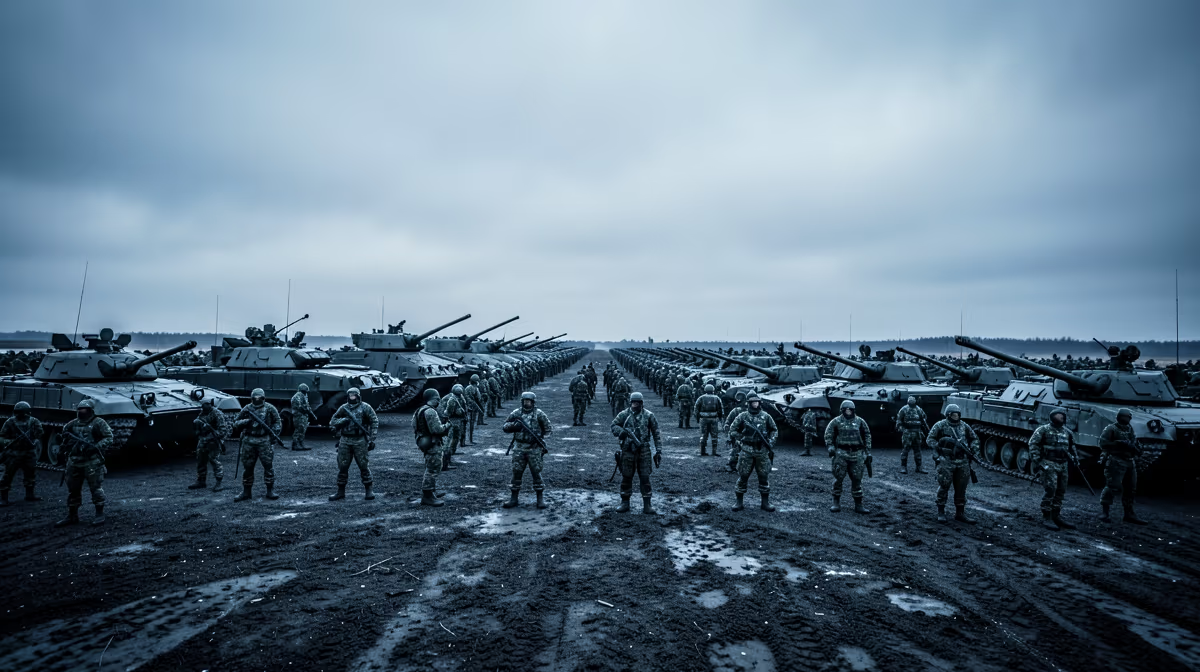
The architectural blueprints of European security are being redrawn by a single stroke of a pen in Moscow, moving the world closer to a state of permanent mobilization. Russian President Vladimir Putin has signed a decree to have the Russian army boosted to 2.4 million active service members, a massive structural expansion that arrives as NATO allies brace for a significant escalation in regional hostilities.
This move marks a definitive pivot in the Kremlin’s long-term strategy, signaling that the current conflict is no longer viewed as a short-term operation but as a sustained struggle requiring a vast reservoir of human and technical resources. By setting a target of 2.4 million personnel, Moscow is not only addressing current battlefield attrition but is also positioning its military apparatus to challenge Western deterrence frameworks for years to come.
The expansion of the Russian army to 2.4 million personnel represents a qualitative shift toward automated warfare and a long-term strategic commitment that transcends the current borders of the Ukraine conflict.
The Scale of the Expansion Decree
The new decree signed by Vladimir Putin establishes a formidable new ceiling for the Russian armed forces. While the overarching goal is to have the Russian army boosted to 2.4 million personnel, the expansion is being implemented through a series of incremental and specialized mobilizations. One such recent step involved a decree adding 15,500 troops specifically to the army ranks, serving as a building block toward the larger 2.4 million active service member target.
This expansion is happening across several fronts: - The integration of thousands of new active-duty troops into standard infantry and armored divisions. - A strategic focus on specialized units to modernize the force structure. - The replenishment of personnel to sustain high-intensity combat operations in Ukraine. - The preparation of reserve pools intended to project strength against rival coalitions.
Western analysts are now closely evaluating Russia's actual capacity to absorb, train, and equip such a massive influx of personnel. The challenge for the Kremlin lies not just in recruitment, but in the logistical reality of providing modern hardware and leadership to a force of this size.
A Qualitative Pivot toward Unmanned Systems
Perhaps the most significant "hidden angle" of this expansion is that it is not merely a quest for raw infantry volume. Reports indicate a major organizational growth targeting Russia's Unmanned Systems Forces. This suggests a tactical evolution where Moscow is attempting to marry mass mobilization with advanced technology.
The expansion of drone-specific units signals a pivot toward automated and asymmetric warfare. By creating dedicated branches for unmanned systems, the Russian military is adapting to the lessons of the modern battlefield, where drone technology has often outpaced traditional artillery and tank warfare. This structural reorganization suggests that the 2.4 million figure includes a significant number of specialized technicians and operators, rather than just traditional conscripts.
The International Dimension: North Korean Involvement
The expansion of the Russian military is no longer a strictly domestic affair. Ukrainian President Volodymyr Zelenskyy and various intelligence briefings have highlighted a growing international dimension to the conflict. Reports suggest that more North Korean troops are expected to be deployed in Russia to support ongoing operations.
This deployment adds a layer of complexity to the global security landscape. The involvement of North Korean personnel serves as a force multiplier for Moscow, allowing it to expand its operational footprint without immediately relying solely on domestic conscription. For NATO, the presence of third-party state actors on the European periphery represents a severe escalation, potentially widening the scope of the war and drawing in more international stakeholders.
Economic Consequences and Domestic Strain
Expanding the armed forces to millions of active personnel is an endeavor fraught with economic peril. The Russian state budget is facing heavy structural strain as it attempts to fund this massive buildup. The costs are not limited to salaries; they include the long-term burden of military pensions, healthcare for veterans, and the production of equipment.
| Economic Impact Area | Consequence of Military Expansion |
|---|---|
| State Budget | Massive increase in high defense expenditure |
| Labor Market | Acute shortages as working-age men are diverted to the front |
| Inflation | Rising pressures driven by wartime spending and supply constraints |
| Industrial Output | Focus shifted almost entirely toward military-industrial needs |
Domestically, Vladimir Putin is attempting to signal a commitment to total state mobilization and prolonged resolve. However, the Kremlin must also manage the political sensitivity of recruitment streams. By using incremental decrees and seeking international support, the government attempts to mitigate the social friction that usually accompanies large-scale, sudden mobilizations.
NATO Response and Geopolitical Hardening
The reaction from Western defense alliances has been one of heightened readiness. NATO is currently bracing for potential escalation, viewing the expansion as a clear sign that Moscow is preparing for a long-term confrontation with the West. The growth in Russian troop numbers has forced European nations to review their own operational readiness and force postures.
Geopolitical analysts suggest this expansion accelerates the "hardening" of European security lines. As Russia scales up its military footprint, NATO member states are likely to respond with: 1. Recalibrated defense planning to match the increased Russian troop density. 2. Increased defense spending across the alliance to maintain a credible deterrent. 3. Enhanced monitoring of the Russian-European border regions. 4. Formal assessments of the strategic implications of Russia's specialized drone forces.
Analytical Perspective: Root Causes and Historical Parallels
The root cause of this expansion is a combination of the sustained high-intensity war in Ukraine and long-term strategic posturing against NATO. Moscow appears convinced that only a massive increase in personnel can break the current tactical stalemates and project sufficient power to deter Western interference.
Historians and analysts draw parallels between this move and the mass force expansions of the 20th century. During the mid-stages of prolonged conflicts, nations often undergo structural reorganizations to sustain their momentum. The current shift toward a 2.4 million-strong force echoes the "Red Army" expansions of the past, where raw numbers were used to compensate for technical gaps—though the current focus on Unmanned Systems Forces suggests a more modern, hybrid approach.
Future Outlook and Expert Predictions
In the immediate term, the next 24 hours are expected to see continued analysis and international diplomatic reactions to the decree. Defense officials in Western capitals will likely issue statements regarding the security implications of such a significant boost in personnel.
Over the next 72 hours, NATO and Western defense officials are expected to release formal assessments. These will focus on the strategic reality of the expansion—specifically, whether Russia can truly equip 2.4 million troops or if the number is intended primarily as a psychological tool for deterrence.
Expert Prediction on Force Absorption
Potential Scenarios
Frequently Asked Questions
Why did Vladimir Putin order the Russian army to be boosted?
Russian President Vladimir Putin signed a decree to expand the military's total troop strength to 2.4 million, marking a significant increase in personnel. This move comes as the ongoing conflict in Ukraine continues and international tensions with NATO escalate.
How many active troops are being added to the Russian military?
Recent decrees and reported expansions have introduced thousands of additional personnel to the ranks, including specific operational additions such as 15,500 new troops in recent mobilizations. Overall, the broader strategic plan targets an active military personnel capacity of 2.4 million.
What does the Russian army expansion mean for NATO?
NATO and Western defense analysts are bracing for further escalation following Putin's announcement of a larger military footprint. The growth in Russian troop numbers signals a long-term commitment to sustaining high-intensity conflict and challenges regional security.
Are other countries involved in the deployment of troops to Russia?
Reports from Ukrainian leadership and intelligence briefings indicate that additional forces, including North Korean personnel, are expected to be deployed in support of Russian operations. This international dimension has further heightened concerns among Western allies.
What specific branches of the Russian military are seeing growth?
Alongside general troop increases, Russia is focusing on major organizational expansions within specialized branches, including the Unmanned Systems Forces. These updates reflect modern warfare demands where drone technology and automated systems play a central role.
What happens next as Russia builds up its armed forces?
As Russia continues to implement these large-scale recruitment and mobilization orders, neighboring countries and NATO members are expected to review their own defense postures. The sustained expansion points toward a protracted conflict with no immediate diplomatic resolution in sight.
Conclusion
The decision to have the **Russian army boosted to 2.4 million** active personnel is a clear signal of Moscow's intent to sustain and potentially escalate its military posture in Europe. By combining massive recruitment goals with a qualitative pivot toward unmanned systems and seeking support from international allies like North Korea, the Kremlin is preparing for a multi-year confrontation. NATO and the international community are now tasked with assessing the reality of this buildup—distinguishing between bureaucratic targets and actual combat-ready capacity. As the global security landscape hardens, the move toward a force of 2.4 million ensures that the current tensions will likely persist, with no immediate diplomatic exit in sight.
Sources
- Ukraine war briefing: Putin orders army expansion as Zelenskyy says more North Koreans to be deployed in Russia — The Guardian
- Putin orders new expansion of Russia's military — brusselstimes.com
- New Russian mobilisation: Putin signs decree adding 15,500 troops to army — Euronews.com
- Putin Orders Russian Army Boosted to 2.4 Million, Adding 1.5 Million Troops as NATO Braces for Escalation — Kyiv Post
- Russia to planning to expand military despite Vladimir Putin's Europe attack 'promise' — aol.co.uk
- Putin’s last chance? Major expansion of Russia’s Unmanned Systems Forces [REPORT] — Defence24.com


.webp)

