
Meta Lightweight Virtual Reality Glasses and Smart Wearables Change Tech
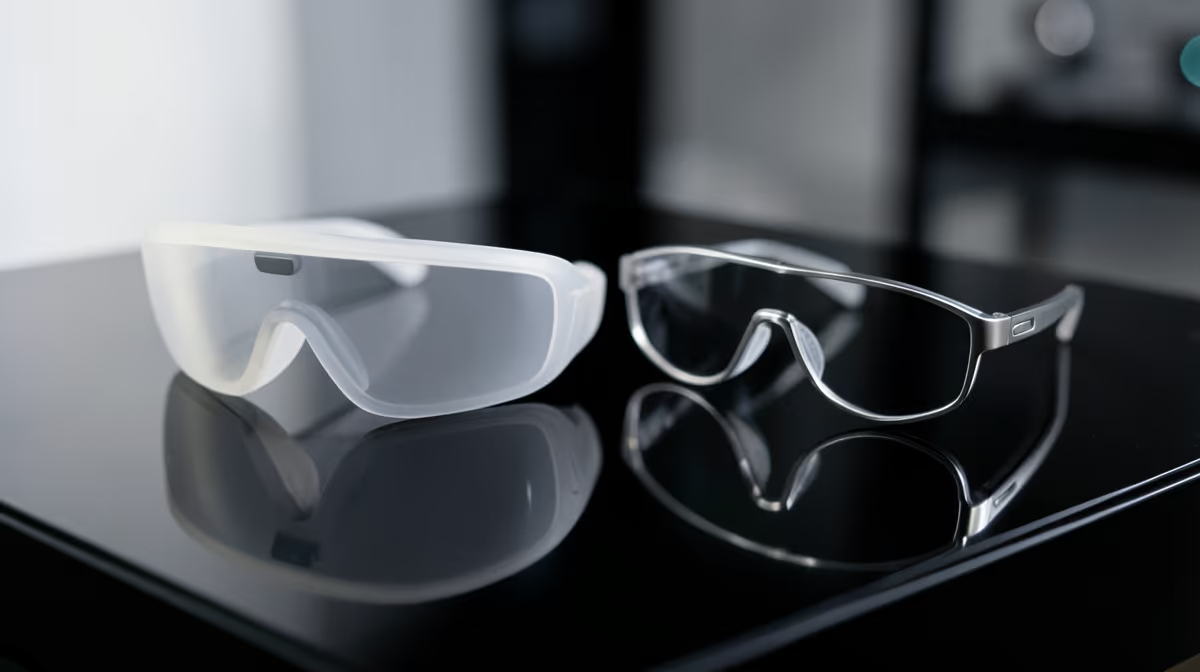
The era of bulky, intrusive wearable tech is facing an unexpected fork in the road as the industry pivots toward two extremes: ultimate digital immersion and total social invisibility. At the latest tech showcase, Meta lightweight virtual reality glasses took center stage alongside groundbreaking wearable devices that prioritize social discretion over raw recording power.
By offering a camera-free smart glass option alongside high-end VR hardware, Meta is directly addressing consumer pushback against always-on recording devices while simultaneously pushing the boundaries of lightweight virtual reality design.
The Future of Lightweight Virtual Reality Glasses
The centerpiece of the Meta Connect event was the formal unveiling of a new generation of immersive hardware designed to challenge the current heavyweights of the spatial computing market. These new Meta lightweight virtual reality glasses are positioned as a direct competitive challenge to premium headsets like Apple’s Vision Pro. Unlike previous iterations of virtual reality hardware that often suffered from weight and ergonomic issues, this new device emphasizes a sleek, lightweight form factor without sacrificing high-end performance.
Priced between $1,299 and $1,300, the glasses represent a significant investment in the premium consumer electronics tier. To justify this price point, Meta has leaned into strategic partnerships, most notably with IMAX, to deliver an immersive viewing experience that aims to replicate the scale of a cinema within a wearable frame. This move suggests a shift in focus toward high-quality media consumption and professional-grade spatial computing. While the announcement has generated immediate buzz, consumers will have to wait for the hardware to reach their homes, as the device is officially scheduled to begin shipping in the spring of 2027.
Addressing the 'Meta Creep' Through Camera-Free Hardware
While the VR glasses focus on immersion, Meta’s update to its smart eyewear line takes a sharp turn toward privacy and social acceptance. The company introduced its next-generation smart glasses, including the Meta Ray-Ban Gen 3 series, which features a notably unique addition: a camera-free variant. This design choice is a direct response to the phenomenon often dubbed "Meta creep," where the presence of recording equipment in everyday accessories sparks public discomfort and debates over surveillance.
By removing the camera, Meta is attempting to capture a segment of the market that desires tech-enabled features—such as audio connectivity or AI assistance—without the baggage of constant recording capabilities. This serves as a pivot toward making wearable technology more socially acceptable in public spaces. Privacy advocates and everyday consumers who were previously skeptical of "always-on" recording devices now have a hardware option that respects personal boundaries and public consent, potentially lowering the barrier for mass adoption.
Privacy and Social Integration
Strategic Positioning in the Spatial Computing Market
The root cause of Meta’s dual-track announcement lies in its strategic push to recapture hardware momentum. By diversifying its portfolio into both premium lightweight VR and privacy-focused smart glasses, the company is attempting to hedge its bets across different consumer needs. Analysts suggest that the high-end VR glasses are a necessary step to counter competitors like Apple, testing whether consumers are willing to pay a premium for lightweight ergonomics and high-fidelity displays.
The rapid pivot toward camera-free smart glasses may signal an industry-wide recognition that surveillance fatigue among consumers represents a major bottleneck for mass adoption of wearable tech.
This shift also reflects a historical parallel to the early rollout of smartphone ecosystems. Much like the early mobile market, high initial pricing and intense debates over usability and privacy are preceding what many expect to be widespread mainstream integration. Meta is navigating these waters by offering distinct solutions: one for the enthusiast seeking the pinnacle of virtual reality, and one for the everyday user seeking a more discreet, connected accessory.
The Economic and Geopolitical Stakes of Wearable Tech
The competition to define the next generation of spatial computing is not just a battle of brands, but a broader geopolitical struggle to set global hardware standards. As US-based tech giants like Meta and Apple race to dominate the wearable market, the hardware they produce will likely dictate how users interact with the digital world for the next decade. The $1,299–$1,300 price tag on the new VR glasses serves as a market test for the economic viability of high-end spatial computing.
From a regulatory perspective, Meta is navigating escalating scrutiny over consumer privacy and biometric data capture. By proactively introducing camera-free alternatives, the company is attempting to stay ahead of potential legislative hurdles that could target recording-capable wearables. This proactive shift toward privacy-focused hardware may serve as a blueprint for other tech companies facing similar regulatory pressures regarding data privacy and public surveillance.
Analyzing the Road to Spring 2027
The timeline for these developments is clear, yet the road to retail availability involves several critical phases. Following the unveiling at Meta Connect, the tech industry is now entering a period of manufacturing and supply chain ramp-up.
| Milestone | Expected Date |
|---|---|
| Meta Connect Official Unveil | September 2026 |
| Manufacturing and Supply Chain Ramp-up | Early 2027 |
| Official Commercial Shipping | Spring 2027 |
| Retail Availability of $1,300 VR Glasses | Spring 2027 |
During this lead-up to the Spring 2027 shipping date, tech analysts and media outlets will continue to dissect the specifications and pre-market traction of the devices. The next 24 to 72 hours are expected to be dominated by initial market sentiment and competitor reactions. How Apple and other players in the consumer electronics space respond to Meta’s price points and privacy-centric designs will likely shape the broader tech discourse for the coming months.
Market Sentiment and Potential Outcomes
Expert predictions suggest that the introduction of camera-free smart glasses could successfully alleviate long-standing privacy concerns, potentially opening the door to consumers who were previously "surveillance-shy." In the best-case scenario, this approach addresses the privacy backlash while the lightweight VR glasses gain strong pre-market momentum. The IMAX partnership and focus on lightweight design could position Meta as a leader in premium home entertainment hardware.
However, a worst-case scenario remains a possibility. High price points in a competitive market, combined with lingering skepticism over the utility of high-end VR, could dampen consumer enthusiasm. If the $1,300 price tag is perceived as too steep for the value provided, it may overshadow the privacy benefits of the camera-free smart glasses. The success of this hardware cycle depends heavily on Meta’s ability to prove that its lightweight designs offer a vastly superior experience to the bulkier headsets currently on the market.
Frequently Asked Questions
What did Meta recently announce at Meta Connect?
Meta unveiled new lightweight virtual reality glasses and innovative camera-free smart glasses during the Meta Connect event. The high-end VR glasses are positioned to compete directly with Apple's Vision Pro.
Why are Meta's new camera-free smart glasses significant?
The camera-free smart glasses serve as Meta's direct response to privacy concerns and the 'Meta creep' phenomenon associated with recording devices in public. By removing the camera, these glasses aim to ease surveillance worries for everyday wearers.
Who is affected by Meta's latest hardware releases?
Tech consumers, early adopters, and virtual reality enthusiasts looking for lighter alternatives to bulky headsets are directly impacted. Additionally, privacy-conscious individuals who previously avoided smart glasses may find the camera-free option appealing.
What happens next for the newly announced Meta VR glasses?
Following their official introduction, the new VR glasses are scheduled to officially ship in Spring 2027. Consumers can expect further demonstrations, pre-order details, and reviews leading up to the launch date.
What is the background of Meta's latest push into virtual reality?
Meta is continuing its ongoing hardware evolution by trying lightweight VR glasses again, this time integrating features like IMAX to enhance the viewing experience. This strategy aims to capture a larger share of the premium spatial computing market.
How much will the new Meta VR glasses cost?
The newly announced Meta VR glasses carry a price tag of $1,299, with shipping expected to begin in the spring of 2027. This positions them firmly in the high-end tier of consumer virtual reality hardware.
Conclusion
Meta’s latest announcements at Meta Connect 2026 represent a dual strategy designed to tackle the two biggest hurdles in wearable technology: ergonomic discomfort and privacy concerns. By introducing the $1,300 lightweight virtual reality glasses, Meta is making a play for the premium spatial computing market, leveraging high-end features and partnerships to compete with the likes of Apple. Simultaneously, the introduction of camera-free smart glasses marks a significant pivot toward social acceptability, directly addressing the "Meta creep" stigma that has long hindered the adoption of smart eyewear. As the company moves toward the Spring 2027 shipping window, the success of these devices will depend on whether consumers value lightweight immersion and privacy-first design enough to meet Meta's high-end pricing. The coming months will be critical as manufacturing ramps up and the industry waits to see if these innovations can truly reshape the landscape of consumer electronics.
Sources
- Meta unveils $1,299 VR Glasses, camera-less smart glasses at Meta Connect — Yahoo Finance
- Meta reveals next-gen smart glasses: Meta Ray-Ban Gen 3, VR glasses — Mashable
- Meta VR Glasses Officially Announced, Shipping Spring 2027 For $1300 — uploadvr.com
- Meta’s Answer to the ‘Meta Creep’? Camera-Free Smart Glasses — WIRED
- Meta is trying VR glasses (again), this time with more IMAX — TechCrunch
- Meta announces new lightweight virtual reality glasses to one-up Apple’s Vision Pro — Fortune


.webp)


