
Trump Iran Talks Spark High-Stakes UN Showdown Over War and Peace
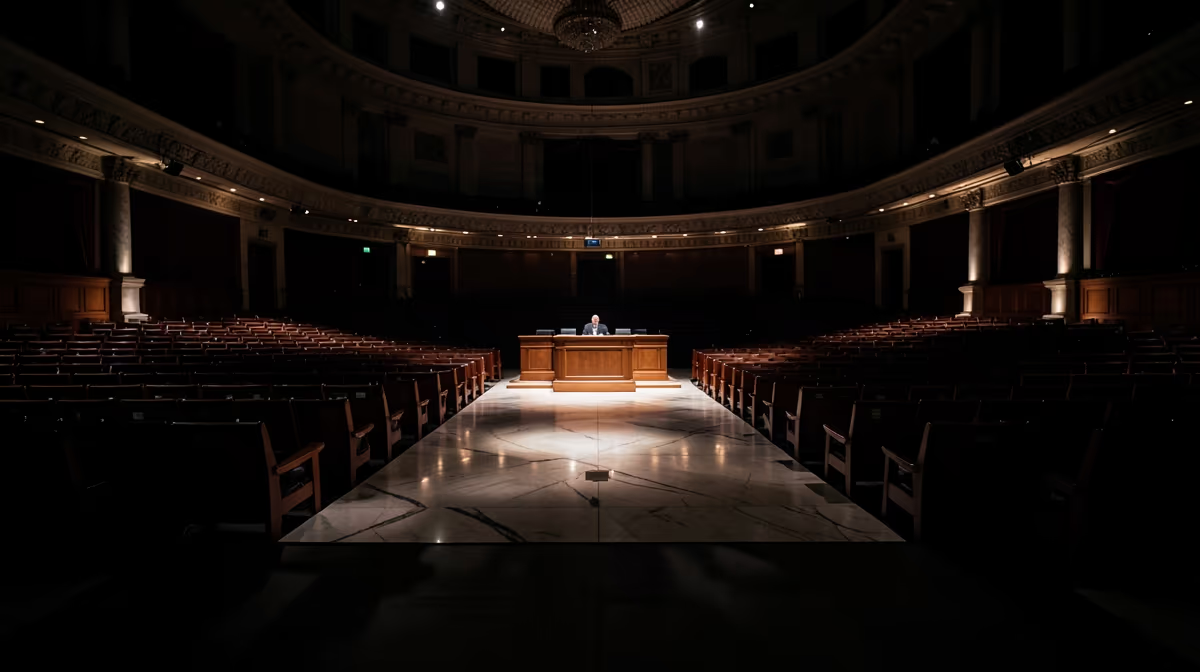
The shadow of "annihilation" threats has shifted into a marathon of high-stakes dialogue, leaving the international community to wonder if a breakthrough or a breakdown is finally at hand. Recent developments surrounding Trump Iran talks have sparked global discussions about the potential for renewed diplomacy or escalating conflict in the Middle East. For hours, representatives have navigated a razor-thin line between total war and a fragile peace, as the rhetoric of destruction meets the pragmatic requirements of international trade and security. This sudden pivot toward extended negotiation follows a period of extreme volatility, signaling a critical diplomatic juncture that could redefine the geopolitical landscape for years to come.
Diplomatic tensions and discussions regarding war and peace between the United States and Iran have unfolded following high-level remarks at the United Nations, amid ongoing debates in Washington over the legality of potential military conflict and strategic maneuvering regarding the Strait of Hormuz. While the public remains fixed on the aggressive posturing of leaders, the underlying reality reveals a complex web of economic sanctions, maritime security demands, and domestic political friction.
The standoff between the U.S. and Iran directly impacts global oil supplies, international shipping routes like the Strait of Hormuz, and overall stability in the Middle East, where any escalation could trigger severe economic consequences worldwide.
Defiance and Diplomacy at the United Nations
The atmosphere at the United Nations was charged as Iranian President Masoud Pezeshkian took the stage to deliver a clear message to the international community. Asserting that Iran will not be bullied by foreign pressure, Pezeshkian’s speech served as a formal rejection of what Tehran describes as "strategic desperation" from the United States. This public defiance, however, stood in stark contrast to the reports of what was happening away from the cameras. Behind closed doors, discussions between figures associated with Donald Trump and Iranian officials have centered on the contrasting paths of war and peace.
These talks, which reportedly lasted for hours, followed intense rhetoric and mutual threats. The shift from "annihilation" warnings to sustained dialogue suggests that both sides are weighing the heavy costs of direct confrontation. While Pezeshkian emphasized that his country refuses to capitulate under pressure, the very existence of these high-level talks indicates that a framework for a renewed agreement might be under consideration. Trump has indicated that a new deal may be nearing completion, though the path to a formal signature remains obstructed by long-standing disputes over nuclear programs and regional influence.
The Strait of Hormuz and Global Economic Stakes
At the heart of the current negotiations is the status of the Strait of Hormuz, one of the world's most vital maritime corridors. Tehran has recently floated specific conditions for resuming normal operations in this shipping lane, which is a primary artery for global petroleum trade. The threat of closure has historically been a powerful leverage point for Iran, and the current standoff is no different. The economic angle of this crisis cannot be understated; the closure and conditional reopening of the Strait threaten global energy supplies and maritime trade routes, forcing economic calculations into the center of high-stakes diplomatic talks.
Conditions for Reopening
The Iranian leadership has outlined precise operational conditions that must be met before it considers reopening the Strait to international shipping. These demands are tied directly to the broader diplomatic negotiations taking place around the UN summit. - Lifting of specific economic sanctions. - Guarantees of maritime security. - Recognition of regional sovereignty.
Historical Parallels in Maritime Security
Analysts point to the 1980s Tanker War during the Iran-Iraq conflict as a significant historical parallel. During that era, naval confrontations and threats to the Strait of Hormuz drew international powers into direct maritime security management. Today, a similar pattern is emerging, where the threat to shipping serves as a catalyst for involving global powers in what might otherwise be a localized dispute.
The Strait of Hormuz serves as a critical global trade route for petroleum, making any disruption there a matter of intense international concern.
Domestic Political Friction in Washington
While international diplomats haggle over terms, a separate conflict is brewing within the United States government regarding the legality of potential military action. Senator Tim Kaine has emerged as a vocal critic of the administration's posture, publicly calling a potential Iran war "triply illegal" and demanding that hostilities end immediately. This internal pushback highlights a significant divide in Washington over the executive branch’s authority to engage in conflict without explicit Congressional approval.
| Position | Key Figure/Entity | Stance/Action |
|---|---|---|
| Legislative Opposition | Senator Tim Kaine | Labels potential war 'triply illegal'; demands immediate halt to hostilities. |
| Diplomatic Lead | Donald Trump | Reports a deal is nearing; engaged in hours of talks regarding war/peace. |
| Iranian Executive | Masoud Pezeshkian | Declares Iran will not be bullied; sets conditions for maritime reopening. |
| Congressional GOP | Vocal Opponents | Keeping comments out of formal Congress sessions while navigating opposition. |
The political angle in Washington is further complicated by Republican opponents of the war who have chosen to keep their comments away from the floors of Congress, navigating a delicate path between party loyalty and a desire to avoid an expanded Middle Eastern conflict. This domestic pressure forces U.S. negotiators to consider the legal and political sustainability of any deal or military escalation they might pursue.
Root Causes and the Hidden Diplomatic Angle
The structural deadlock currently on display is a result of U.S. deterrence tactics clashing with Iran's refusal to capitulate under direct threats. This stalemate is compounded by the critical maritime choke points that hold the global economy hostage. However, there is evidence of a hidden angle at play. Behind the public dueling of threats and defiance, secondary state actors and maritime insurers may be quietly coordinating backchannel parameters to stabilize the Strait of Hormuz independently of formal diplomatic breakthroughs.
This backchannel coordination is essential because the risk of direct confrontation is high. High-level talks at the UN frame a tense standoff where rhetoric shifts between threats of "annihilation" and negotiations over a potential deal, altering diplomatic positioning across the Middle East. Analysts suggest that these quieter interactions between insurers and regional maritime authorities may provide a safety net that prevents minor skirmishes from escalating into full-scale war while the primary actors continue their public posturing.
Predicting the Next Moves
As the diplomatic friction continues, the next 24 to 72 hours are expected to be critical. Domestic political reactions and policy discussions will continue to unfold in both Washington and Tehran, with assessments of potential deal conditions and statements regarding the Strait of Hormuz dominating the foreign policy discourse.
- Best-Case Scenario: Continued dialogue leads toward a framework for a renewed agreement, easing tensions around the Strait of Hormuz and reducing the threat of expanded military conflict.
- Worst-Case Scenario: Talks collapse completely under the weight of reciprocal threats and demands, escalating geopolitical volatility and heightening the risk of direct confrontation.
Expert predictions suggest that analysts should expect continued diplomatic posturing mixed with tentative negotiations. Both sides are currently weighing the conditions for a potential deal against the risks of a failed diplomatic effort. The involvement of the United Nations as a backdrop for these talks provides a formal structure, but the ultimate outcome depends on whether both leaderships can reconcile their domestic pressures with their international goals.
The Human and Global Impact
The stakes of the Trump Iran talks extend far beyond the leadership in Washington and Tehran. Global consumers, international shipping industries, and citizens throughout the Middle East face the immediate fallout of heightened military rhetoric. For taxpayers and military families in the United States, the debate over the legality of war is not merely a legal abstraction but a matter of national security and economic stability.
The background of this conflict is rooted in decades of strained relations, marked by economic sanctions, proxy conflicts, and disputes over nuclear programs. This historical context informs the current "strategic desperation" and "bullying" narratives used by both sides. As the world watches the developments at the UN, the focus remains on whether these "hours of talks" will result in a sustainable peace or if the cycle of threats will eventually lead to the annihilation so often cited in recent rhetoric.
Frequently Asked Questions
What happened during the recent Trump and Iran talks at the UN?
Donald Trump and Iranian officials held extensive discussions regarding war and peace following mutual threats of annihilation and strategic desperation. The talks touched upon potential new agreements and the geopolitical tensions surrounding the region.
Why do the recent developments between Trump and Iran matter?
These discussions signal a critical diplomatic juncture that could either de-escalate hostilities or push the nations closer to open conflict. High-stakes negotiations directly impact global oil supply routes like the Strait of Hormuz and broader international security.
Who is affected by the escalating tensions and talks?
The situation heavily impacts international shipping lanes, global markets dependent on Middle Eastern energy, and lawmakers in the United States debating the legality of military action. Additionally, citizens in both nations face the immediate fallout of heightened military rhetoric.
What happens next regarding the potential Iran deal?
Trump indicated that a new deal might be nearing completion, though Tehran has laid out specific conditions for reopening the strategic Strait of Hormuz. Future outcomes depend heavily on whether both sides can reconcile these demands through ongoing diplomatic channels.
What is the background of the current conflict between the US and Iran?
The tension stems from long-standing disputes over Iran's nuclear program, severe economic sanctions, and recent aggressive rhetoric from both leaderships. Iranian President Masoud Pezeshkian emphasized during a UN speech that his country refuses to be bullied.
What specific conditions has Iran set regarding the Strait of Hormuz?
Tehran has floated precise operational conditions that must be met before it considers reopening the vital Strait of Hormuz to international shipping. These demands are tied directly to the broader diplomatic negotiations taking place around the UN summit.
Conclusion
The recent diplomatic engagement between the United States and Iran represents a volatile mix of high-stakes negotiation and aggressive military posturing. While Iranian President Masoud Pezeshkian has used the UN stage to assert national defiance, the hours of private discussions involving Trump-linked figures suggest a mutual recognition of the risks involved in total conflict. Confirmed reports indicate that conditions for the Strait of Hormuz and the legality of military action are now central to the discourse. Whether these talks result in a renewed framework for peace or a collapse into direct confrontation depends on the ability of both nations to navigate intense domestic opposition and the global economic necessity of a stable Middle East. Realistic next steps involve continued assessment of deal conditions and the possible stabilization of maritime routes through secondary channels.
Sources
- Trump, Iran talk war, peace for hours after 'annihilation' threat — Fox News
- Kaine calls Iran war ‘triply illegal,’ says it should ‘end immediately’ — The Hill
- Vocal Republican opponents to Iran war keep their comments out of Congress — KOMO
- Iran Will Not Be Bullied, President Masoud Pezeshkian Says in U.N. Speech — The New York Times
- Trump says Iran deal nearing after UN talks as Tehran sets conditions to reopen Strait of Hormuz — Fox News
- Iran says Trump’s threats a sign of ‘strategic desperation,’ floats conditions for Hormuz reopening — CNBC


.webp)


