
US Tanker Strikes Mark Unprecedented Shift in Persian Gulf Conflict
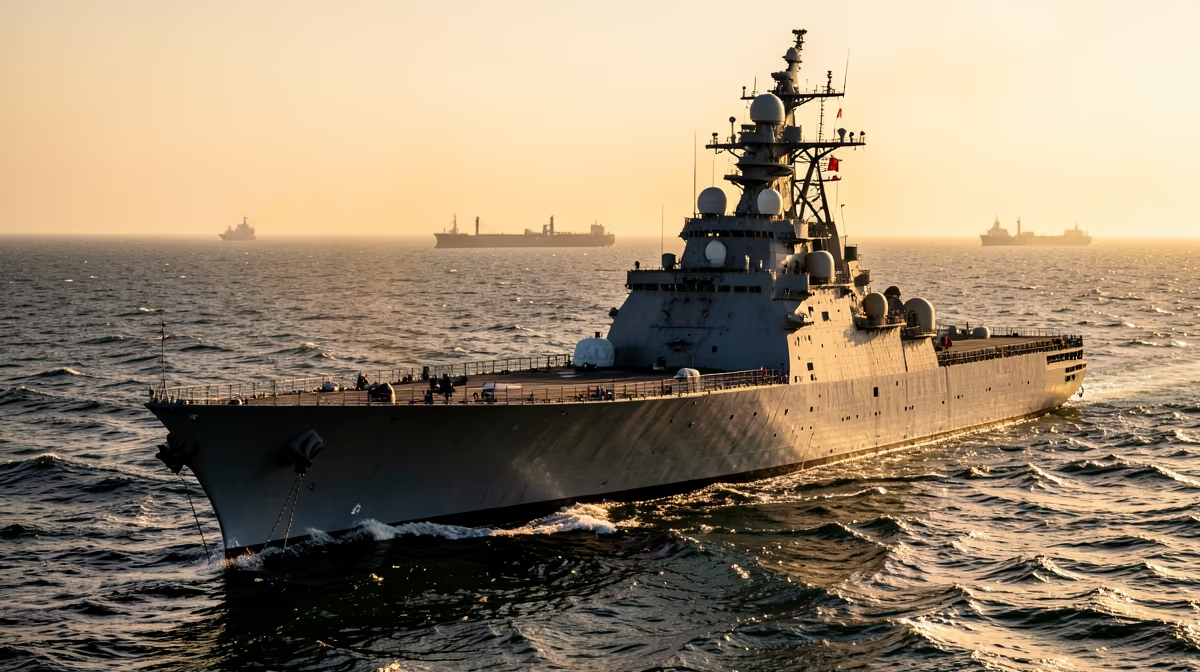
The United States has initiated military strikes against Iranian tankers under a newly implemented "tanker for tanker" policy, marking a profound shift in maritime engagement. This aggressive military posture directly addresses the Strait of Hormuz shipping crisis, where escalating security threats and attacks on commercial shipping have pushed regional stability to a critical juncture.
Understanding the New Tanker for Tanker Policy
The U.S. military has struck Iran tankers under a new tanker for tanker policy. This muscular shift in naval enforcement moves away from passive defense toward direct action. The root cause of this policy change stems from escalating maritime security threats and attacks on commercial shipping in the Strait of Hormuz, forcing a muscular shift in U.S. naval engagement.
The Trump administration faces mounting domestic pressure to project strength and protect global supply chains. It is leveraging an assertive military posture and reviving centuries-old maritime prize law to politically frame seized assets as legitimate state actions. Concurrently, the administration is reviving centuries-old maritime prize law to try to claim Iranian oil tankers.
The United States has initiated military strikes against Iranian tankers under a newly implemented tanker for tanker policy, escalating tensions following recent attacks on oil vessels in the Strait of Hormuz.
Global Energy Markets React to Strait of Hormuz Escalation
Global crude oil markets remain highly sensitive, holding near highs due to immediate supply risks, tanker insurance spikes, and the broader disruptions caused by military action and targeted vessel seizures. Oil prices are holding near highs after military action and tanker incidents.
Two more oil tankers were recently attacked in the Strait of Hormuz, resulting in tragic casualties including two Filipino seafarers. These attacks have severely disrupted vital energy shipping routes, drawing heightened international concern and military intervention.
- Global crude oil futures
- Naval blockade
- Geopolitical risk premium
A Shifting Regional and Maritime Landscape
The tanker for tanker policy drastically raises the stakes in the Persian Gulf, threatening to widen the conflict into open maritime warfare between the U.S. and Iran while straining diplomatic channels with European and Asian energy importers. This situation bears a historical parallel to the 1987-1988 Operation Earnest Will during the Iran-Iraq War, where the U.S. Navy reflagged and escorted Kuwaiti oil tankers through the Persian Gulf amidst attacks.
Meanwhile, international maritime security operations continue to monitor tanker movements. As evidenced by separate operations, European Union naval forces recently intercepted a suspected Russian shadow fleet tanker, suggesting a quiet convergence of Western maritime enforcement strategies against multiple sanctioned oil-exporting networks simultaneously.
The U.S. military has struck Iran tankers under a new tanker for tanker policy, significantly raising the risk of broader military conflict and impacting global energy supplies.
Security Assessment and Market Impact
Global energy consumers, international shipping companies, commercial sailors operating in the Middle East, and economies dependent on stable oil prices are directly affected by these developments. The Strait of Hormuz is one of the world's most strategic choke points for oil transit, making it a recurring flashpoint for geopolitical tensions between Iran and Western nations. Historically, nations have occasionally utilized antiquated legal frameworks like naval prize laws during conflicts to seize enemy vessels and cargo.
Military actions and oil tanker incidents in and around the Strait of Hormuz will continue to draw intense international focus over the next 24 hours, maintaining upward pressure on global oil prices following recent strikes and attacks. Over the next 72 hours, diplomatic and maritime security responses are expected to develop as the administration pursues its policy and revives prize law, while maritime agencies assess the ongoing safety of commercial shipping lanes. Analysts expect continued volatility in energy markets and heightened naval vigilance in the Persian Gulf as enforcement of the new tanker policy unfolds alongside ongoing security incidents.
Frequently Asked Questions
What is the new US tanker for tanker policy?
The US has begun striking Iranian tankers under a newly implemented 'tanker for tanker' policy amid escalating maritime tensions. This aggressive military action is designed to counter threats in critical shipping lanes like the Strait of Hormuz.
Why are oil tankers being attacked in the Strait of Hormuz?
Recent military strikes and tanker incidents in the Strait of Hormuz have directly disrupted vital energy shipping routes. These escalations include attacks on multiple oil tankers, drawing heightened international concern and military intervention.
Who is affected by the recent oil tanker attacks?
Global energy markets, shipping companies, and international crews are severely impacted by the ongoing conflict in the Middle East. Tragically, incidents like the recent tanker attack near the Strait of Hormuz have resulted in the deaths of crew members, including Filipino seafarers.
What happens next for seized Iranian oil tankers?
The Trump administration is reportedly reviving centuries-old prize law mechanisms to legally claim and manage seized Iranian oil tankers. This novel legal approach could lead to ongoing international disputes over ownership and maritime rights.
What is the background of the US actions against Iranian shipping?
The recent military engagements follow a pattern of rising tensions and attacks on commercial vessels navigating Middle Eastern waters. The US response has evolved into a more direct policy of targeting Iranian tankers in an effort to deter further hostilities.
How are oil prices reacting to the tanker incidents?
Global crude oil prices have held near recent highs in response to the military actions and ongoing tanker incidents in vital chokepoints. Markets remain sensitive to any further disruptions in the Middle East energy supply chain.
Conclusion
The United States has executed military strikes against Iranian tankers under the newly enacted tanker for tanker policy following a series of attacks on oil vessels in the Strait of Hormuz that resulted in casualties, including two Filipino seafarers. Alongside these military actions, the administration is reviving maritime prize law to claim Iranian oil tankers, while global crude oil prices hold near recent highs amid ongoing security and interception operations. International maritime forces, commercial operators, and energy markets continue to navigate these heightened risks as enforcement measures unfold in the Persian Gulf.
Sources
- U.S. strikes Iran tankers under new "tanker for tanker" policy — Axios
- Two More Oil Tankers Are Attacked in the Strait of Hormuz — nytimes.com
- Trump administration reviving centuries-old prize law to try to claim Iranian oil tankers — CBS News
- European Union Naval Force Intercepts Suspected Russian Shadow Fleet Tanker — news.usni.org
- Oil prices hold near highs after military action and tanker incidents — Yahoo Finance
- 2 Filipino seafarers killed in oil tanker attack near Strait of Hormuz—DMW — ABS-CBN


