
Google Fitbit Air Launched in India With a Radical Screenless Shift
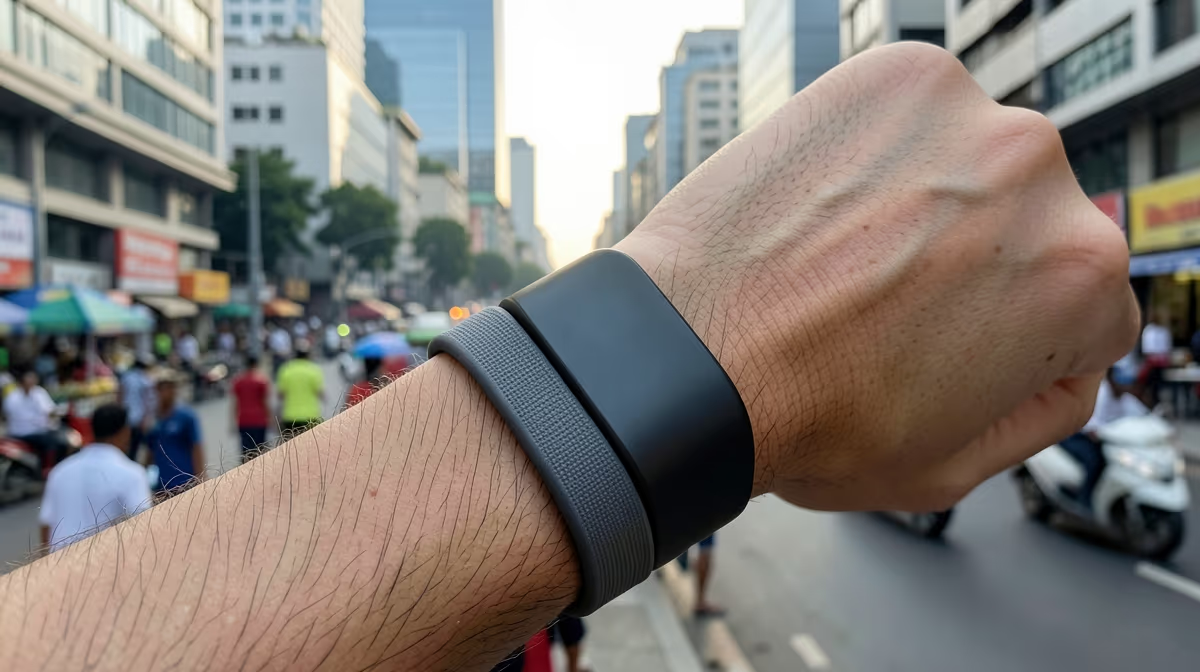
The era of the glowing wrist-bound notification center may be facing its first serious challenge in the Indian market as digital wellness priorities begin to shift. With the official arrival of the **Google Fitbit Air launched in India**, the wearable landscape is pivoting toward a philosophy where silence and data take precedence over constant connectivity.
This move marks a departure from the traditional smartwatch trajectory, signaling a strategic bet on a niche but growing segment of the population. By stripping away the display, Google is not just launching a new gadget; it is attempting to redefine the relationship between the user and their biometric data. The Google Fitbit Air launched in India brings a fresh approach to health monitoring, catering to those who find the modern smartwatch more of a distraction than a tool.
Google has introduced the Fitbit Air in India as a screenless, minimalist fitness tracker priced at Rs 13,999, focusing on continuous heart rate monitoring and a 7-day battery life to compete in the high-end wellness segment.
The Minimalist Design Philosophy
This minimalist approach is intended to bridge the gap between high-end fitness tracking and lightweight daily wear. Without a display to power, Google has been able to focus the device’s internal resources on sensor accuracy and longevity. The result is a device that functions more like a biometric "black box" for the human body rather than a secondary smartphone screen. For the Indian consumer, this represents a significant shift toward "distraction-free" fitness wearables that prioritize uninterrupted data collection over smart notifications and visual displays.
Pricing and Market Positioning in India
The economic logic behind this pricing suggests that Google is banking on the value of the Fitbit ecosystem and the specific "screen-free" utility of the hardware. While consumers accustomed to traditional smartwatches or fitness bands with displays may initially hesitate at this price point, the target audience remains the dedicated fitness enthusiast. These are users who likely already own a premium smartphone and are looking for a secondary, less intrusive way to track their health metrics 24/7.
Competitive Landscape
| Feature | Google Fitbit Air | Traditional Smartwatch |
|---|---|---|
| Display | None (Screenless) | OLED / LCD Touchscreen |
| Battery Life | 7 Days | 1-2 Days |
| Price | Rs 13,999 | Rs 5,000 - Rs 45,000 |
| Primary Focus | Continuous Biometrics | Notifications & Apps |
Technical Specifications and Battery Performance
The device relies entirely on its companion app to relay information to the user. This means that while the tracking happens on the wrist, the analysis happens on the phone. This separation of "collection" and "review" is a deliberate design choice aimed at reducing the "wrist-checking" habit that many smartwatch users develop. It encourages users to check their progress at intentional times rather than being interrupted by their pulse rate or step count throughout the day.
Analyst View: Strategic Entry and Root Causes
This launch offers Indian consumers a fresh approach to digital wellness, prioritizing uninterrupted data collection over smart notifications and glowing screens.
From an economic perspective, the shift toward screenless wearables may reduce certain manufacturing complexities while allowing for higher margins on specialized sensors. Furthermore, the geopolitical subtext of this launch cannot be ignored. The battle between US technology giants for dominance in emerging Asian consumer hardware markets is intensifying. As health data becomes a more valuable asset within tech ecosystems, securing a "permanent" spot on the user's wrist with a comfortable, long-lasting device is a top priority for Google's wearable portfolio.
Historical Parallel and The Hidden Angle
A hidden advantage of the screenless format is the potential for improved device durability. Without a glass screen to crack or a touch interface to malfunction, the Fitbit Air is inherently more rugged than its counterparts. This makes it particularly suitable for high-intensity sports and 24/7 wear, which is essential for the continuous biometric monitoring it promises.
Predicting the Market Impact
The Timeline of Development
The best-case scenario for Google is that the Fitbit Air becomes the de facto choice for fitness enthusiasts who want a distraction-free experience. However, the worst-case scenario involves a slow adoption rate if consumers find it difficult to justify a high price for a device that lacks the visual utility of a traditional watch.
Frequently Asked Questions
What is the Google Fitbit Air and when was it launched in India?
The Google Fitbit Air is a new screenless fitness tracker that officially debuted in the Indian market at the end of September 2026. Priced at Rs 13,999, it serves as Google's entry into the minimalist, screen-free wearable category.
How much does the Fitbit Air cost in India?
The Fitbit Air is available in India with a launch price of Rs 13,999. This positions it competitively against other lightweight fitness bands and wellness wearables currently on the market.
What are the key design features of the Fitbit Air?
The Fitbit Air stands out as a Whoop-like, screen-free fitness tracker designed for continuous health monitoring without visual distractions. Despite lacking a display, it delivers up to 7 days of battery life on a single charge.
What health tracking capabilities does the Fitbit Air offer?
This new wearable features continuous heart rate monitoring and comprehensive fitness tracking designed to support daily wellness goals. Without a screen, users rely on companion apps to view their detailed health and activity metrics.
Who is affected by the launch of the Fitbit Air in India?
Fitness enthusiasts and consumers in India looking for a subtle, display-free health band are directly impacted by this release. It provides a fresh alternative for buyers who prefer continuous biometric tracking over smartwatches with traditional screens.
How does the Fitbit Air compare to other fitness trackers?
Unlike traditional smartwatches and fitness bands that feature bright digital displays, the Fitbit Air adopts a screenless approach similar to popular devices like the Whoop band. This focus on minimalism allows it to emphasize extended battery life and uninterrupted, 24/7 wear.
Conclusion
The launch of the Google Fitbit Air in India represents a significant moment in the evolution of the wearable market. By introducing its first screenless tracker at Rs 13,999, Google is challenging the notion that a fitness device must also be a communication hub. With a focus on a 7-day battery life and continuous heart rate monitoring, the Fitbit Air appeals to a specific audience that values deep health insights over digital notifications. As the device becomes more widely available in October 2026, its success will depend on whether Indian consumers are ready to embrace a "distraction-free" approach to their personal wellness journey. For now, the Fitbit Air stands as a bold statement in Google's ongoing effort to dominate the high-end fitness tracking segment in emerging markets.
Sources
- The all-new Fitbit Air comes to India — blog.google
- Google brings Fitbit Air, a Whoop-like screen-free fitness tracker, to India — The Indian Express
- Google Fitbit Air launched at Rs13,999: Screenless fitness tracker with 7-day battery life — India TV News
- Google Fitbit Air Launched in India as Firm's First Screenless Fitness Tracker With Continuous Heart Rate... — Gadgets 360
- Google launches the screenless Fitbit Air in India for Rs. 13,999 — Gizmochina
- Garmin Cirqa Versus Fitbit Air: How These Two Fitness Trackers Compare — Engadget


.webp)

