
Getty Images Shares Suspended in Major Market Shock
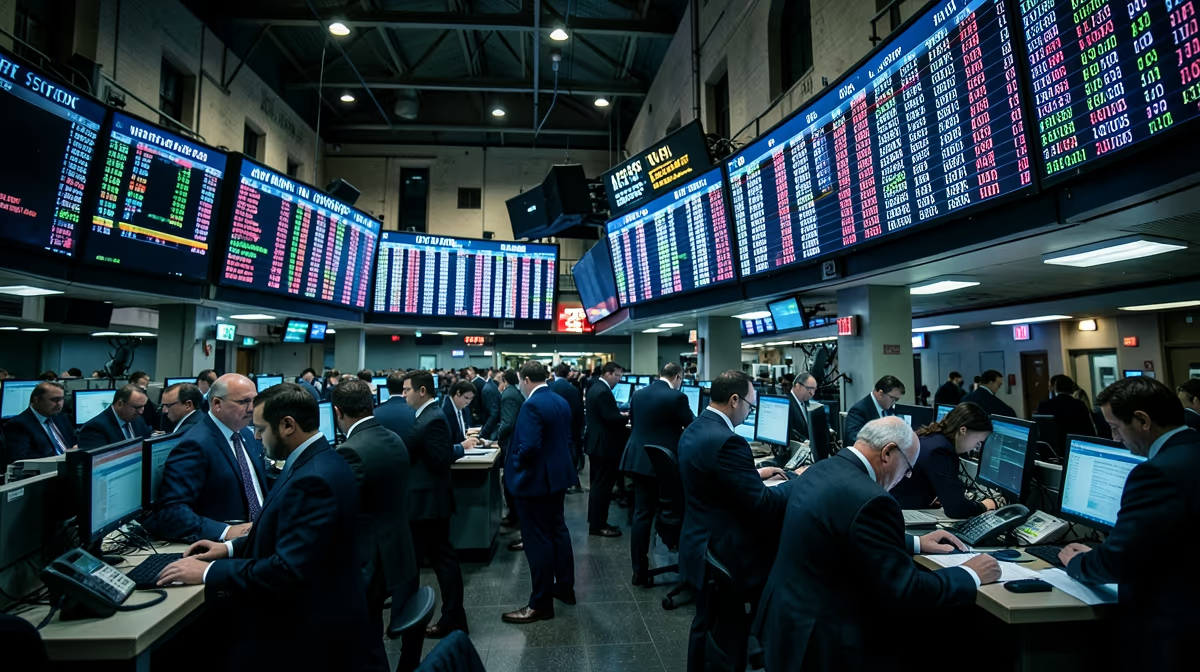
The familiar ticker that once represented the visual pulse of global media has gone quiet on the floor of the New York Stock Exchange. For a company that owns the rights to some of the most iconic moments in human history, the current financial picture is anything but picture-perfect. Getty Images Shares Suspended as NYSE begins proceedings to remove the company from the exchange following severe financial distress. This transition marks a critical turning point for the visual media giant as it moves from the prestige of a primary exchange to the uncertainty of over-the-counter trading.
The suspension of Getty Images from the NYSE signals a profound shift in the creative licensing industry, as the company grapples with mounting debt and the disruptive emergence of generative AI technologies.
The Mechanics of Market Removal
The New York Stock Exchange initiated formal proceedings for the removal of Getty Images common stock from listing and registration. This regulatory move follows a period of severe market devaluation that saw the company fail to maintain the minimum financial and market capitalization requirements necessary for a public listing on a major exchange. While the stock had previously traded under the symbol GETY, the immediate suspension has pushed the equity into the over-the-counter (OTC) markets.
Transition to OTC Trading
Following the NYSE notice, market participants are now adjusting to a new reality. The transition to OTC trading typically limits the liquidity available to common stockholders and heightens the volatility of the share price. Investors who once traded Getty Images with the ease of a high-volume exchange now find themselves in a more fragmented market environment. This shift is a direct consequence of the company's inability to meet listing standards, a situation often viewed by analysts as a precursor to deeper corporate restructuring.
Financial Foundations and the Search for Liquidity
The root cause of this market exit is a combination of persistent financial distress and an increasingly unsustainable debt burden. Reports from Bloomberg have indicated that Getty Images has been in active discussions with lenders regarding a potential bankruptcy loan. These talks are aimed at securing the necessary capital to stabilize operations as the company navigates its current crisis. The search for debtor-in-possession or emergency financing highlights the urgency of the situation, as the company requires a lifeline to maintain its vast digital infrastructure.
A corporate failure at this scale disrupts the ecosystem for millions of freelance photographers, media outlets, and corporate clients who rely on its vast archive.
The economic angle of this development is particularly stark for shareholders. The erosion of value has been swift, leading to a breakdown in investor confidence that preceded the NYSE’s decision. By moving toward a bankruptcy loan, the company is attempting to find a path toward financial recovery, though the terms of such an agreement will likely involve significant concessions to creditors and further uncertainty for existing equity holders.
The Structural Pressure of Generative AI
While debt is the immediate trigger for the NYSE delisting, analysts point to a deeper, more structural "hidden angle" affecting the company. The rapid rise of generative AI tools is fundamentally altering the monetization model of traditional photography archives. As AI-generated imagery becomes more sophisticated and accessible, the demand for traditional stock photography has faced unprecedented pressure. Getty Images, long a foundational pillar for stock imagery and news licensing, is now forced to defend its business model against a technology that can create visual content at a fraction of the traditional cost.
This shift has created a dual challenge: the company must service its legacy debt while simultaneously investing in new strategies to compete with AI-driven content aggregators. The failure to pivot quickly enough in a rapidly evolving digital landscape appears to have contributed to the financial strain that eventually led to the suspension of its shares.
Global Implications for News and Intellectual Property
As a global visual content provider, the financial instability of Getty Images introduces significant uncertainty into the international digital infrastructure. The company’s archives are not merely commercial assets; they are essential repositories for news distribution and historical documentation. Media outlets across the globe depend on Getty’s editorial photos to illustrate current events, and corporate clients rely on its licensing agreements to secure intellectual property for advertising and marketing.
Stakeholders and the Content Ecosystem
- Freelance Photographers: Thousands of creators who license their work through Getty now face uncertainty regarding their future royalty streams and the long-term stability of their primary distribution platform.
- Media Corporations: News organizations that have integrated Getty’s API into their workflows may need to prepare for potential service disruptions or changes in licensing terms during a restructuring.
- Institutional Investors: The delisting complicates the exit strategy for major shareholders and increases the complexity of valuing the company's remaining assets.
The geopolitical angle of this crisis suggests that the potential collapse or restructuring of such a dominant media repository could disrupt the flow of visual information across borders. Regulatory frameworks and exchange oversight mechanisms are currently enforcing strict financial compliance, holding Getty accountable to the same capitalization thresholds as any other public entity, regardless of its cultural or media significance.
A Timeline of Market Devaluation
The events leading to the current suspension unfolded rapidly during the latter half of 2026. The transition from a stable public entity to a delisted firm occurred over a matter of weeks as liquidity pressures reached a breaking point.
| Date | Event |
|---|---|
| Late September 2026 | Getty Images engages in talks with lenders for potential bankruptcy loans. |
| September 29, 2026 | The NYSE moves to suspend and delist Getty Images shares (GETY). |
| October 2, 2026 | Formal NYSE notice issued covering the removal of common stock from registration. |
| Early October 2026 | Trading of Getty Images common stock transitions fully to OTC markets. |
The Road Ahead: Restructuring and Recovery
The next 24 to 72 hours are expected to be a period of high volatility as market participants process the delisting notice and the transition to OTC trading. Analysts are looking for further details regarding the ongoing talks with lenders, as the terms of a bankruptcy loan will dictate the company's ability to avoid a total insolvency process.
In the best-case scenario, Getty Images successfully secures a restructuring agreement that stabilizes its operations and allows it to maintain its core services for photographers and media clients. This would involve a significant haircut for current lenders but could provide a pathway for the company to emerge as a leaner, more AI-competitive entity. In the worst-case scenario, the failure to reach terms with creditors could lead to a deeper liquidation process, creating a vacuum in the global visual media market and heightened uncertainty for all stakeholders involved.
For now, the core service of finding and licensing photos continues, but the corporate future of Getty Images hangs in a precarious balance. The shift from the Big Board to the OTC markets is a sobering reminder of how quickly even the most established giants can be upended by financial distress and technological evolution.
Frequently Asked Questions
Why were Getty Images shares suspended by the NYSE?
The New York Stock Exchange moved to suspend trading and delist Getty Images common stock, issuing a formal notice regarding its removal from listing and registration. This regulatory action follows significant financial distress and market challenges faced by the company.
What is happening to Getty Images financially?
Reports indicate that Getty Images has been in active talks with lenders regarding a potential bankruptcy loan. These financial negotiations come as the company navigates severe operational hurdles and pressures on its capital structure.
What does the NYSE delisting mean for Getty Images stock?
With the NYSE moving to delist the company, Getty Images shares face suspension from the major exchange. Following such actions, affected stocks often transition to over-the-counter (OTC) markets, where they may continue to trade under alternative ticker symbols like GETY.
Who is affected by the Getty Images share suspension?
Shareholders, investors, and creditors are directly impacted by the suspension and impending delisting of Getty Images. The sudden shift limits liquidity for common stockholders and heightens uncertainty surrounding the company's ultimate financial recovery.
What are the next steps for Getty Images after the delisting notice?
Getty Images will continue working through its ongoing discussions with lenders to secure necessary financing or restructuring options. Meanwhile, the formal delisting process from the NYSE will proceed in accordance with exchange regulations.
Where can investors trade Getty Images stock now?
Following the NYSE's notice covering the removal of its common stock from listing and registration, Getty Images shares (often tracked under the ticker GETY) may trade on over-the-counter markets. Investors should monitor official regulatory filings and financial news updates for precise trading venues.
Conclusion
The suspension and impending delisting of Getty Images from the New York Stock Exchange mark a defining moment for the company and the broader digital media industry. By transitioning to OTC markets and engaging in high-stakes negotiations for bankruptcy financing, the company is fighting to maintain its status as a foundational pillar of visual content. While the immediate focus remains on securing a restructuring agreement with lenders, the long-term challenge involves adapting to the structural pressures of a market increasingly dominated by generative AI. As the formal delisting process proceeds, the global media ecosystem remains on high alert, watching to see how this archive of human history navigates its own period of financial crisis. Regardless of the immediate outcome of the lender talks, the landscape of creative licensing has been fundamentally altered by the erosion of value in one of its most prominent players.


.webp)
