
RAF Mystery Drones Over Britain Trigger Unprecedented Airspace Crisis
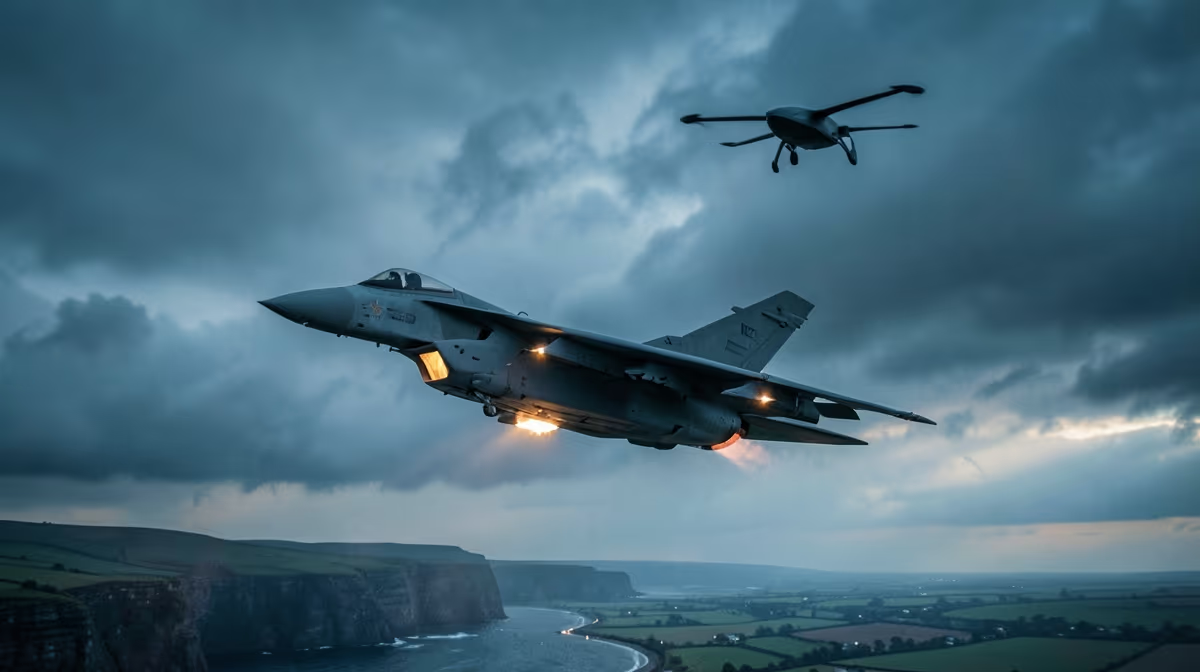
Operating silently in flight corridors long reserved for front-line military aircraft, unidentified aerial platforms have triggered high-level security scrutiny across the United Kingdom. Recent updates show that RAF reports mystery drones over Britain have sparked urgent security reviews across the region, following encounters where Royal Air Force jets faced near-misses with unauthorized craft at significant altitudes.
Royal Air Force personnel have confirmed encounters with unidentified mystery drones in UK skies, with reports documenting high-altitude near-misses reaching 17,000 feet.
Major news outlets, including The Telegraph, The Independent, and the BBC, have detailed these unexpected aerial intrusions. While commercial and hobbyist drones have occasionally caused disruptions near airfields, the operating profiles documented in these encounters indicate a distinct shift in scale and operational ceiling, directly challenging domestic aviation management and conventional air defense infrastructure.
Unprecedented Drone Sightings Near UK Military Bases
The confirmed incidents involve Royal Air Force fighter jets encountering mystery drones over Britain at altitudes far exceeding standard civilian recreation thresholds. Reports document incursions reaching up to 17,000 feet, placing these unmanned systems directly into controlled airspace used by operational military aircraft.
- RAF personnel and fast jets have recorded direct encounters and near-misses with unidentified drones.
- Encounters have occurred at altitudes as high as 17,000 feet, encroaching upon military flight paths.
- Defense authorities and aviation safety regulators are actively monitoring tracking data to establish the flight profiles.
- Comprehensive investigations remain underway to identify the origin, operators, and baseline intent of the aircraft.
The physical presence of unknown objects at these elevations represents an immediate hazard to flight safety. At 17,000 feet, any mid-air proximity event forces rapid evasive assessment from military pilots, elevating the issue from a local nuisance to a critical operational challenge.
Government Response to British Skies Drone Incursion
The emergence of mystery drones UK sightings has triggered growing political and operational pressure within the British defense apparatus. Domestic scrutiny is mounting on the UK government and the Ministry of Defence to address apparent capability gaps concerning the detection and interception of low-radar-cross-section, high-altitude unmanned aerial vehicles operating near critical national assets.
The sudden proliferation of high-altitude unidentified aerial incursions over sensitive British airspace highlights vulnerabilities in conventional military air defense and domestic surveillance infrastructure.
From an economic perspective, addressing this exposure carries significant resource implications. Analysts note that potential long-term costs could involve accelerating multi-billion-pound investments in counter-drone technology, advanced radar upgrades, and integrated air defense systems designed to secure British skies against non-traditional aerial threats.
Geopolitical Pressures and Historical Parallels
The drone incursions coincide with broader military activity across Europe, arriving in the same news cycle as British troops deploying to Poland for war games. This convergence underscores an operational climate characterized by heightened military vigilance and enhanced regional defense readiness.
| Event Factor | Operational Context | Impact Area |
|---|---|---|
| Incursion Altitude | Reaching up to 17,000 feet | Controlled flight levels and pilot safety |
| Primary Reporting | Royal Air Force (RAF) personnel | Domestic defense and military operations |
| Parallel Developments | British troops heading to Poland for war games | Broader European theater readiness |
| Core Threat Profile | Low-radar-cross-section, unmanned platforms | Integrated air surveillance and national security |
The scenario presents strong geopolitical ramifications, raising regional security anxieties across NATO airspace. Analysts evaluate these incursions through the lens of state-sponsored hybrid warfare, reconnaissance probes, and the ongoing blurring of civilian and military airspace boundaries. Furthermore, the incident may expose a broader intelligence-sharing blind spot among European allies regarding the rapid adaptation of high-altitude commercial drone platforms into military surveillance roles.
Historically, this dynamic mirrors the 1960 U-2 spy plane incident, which fundamentally exposed systemic vulnerabilities in high-altitude airspace sovereignty and intelligence gathering during a period of acute strategic competition.
Near-Term Trajectory and Scenario Modeling
Over the next 24 hours, defense authorities are expected to maintain active operational reporting and release further official statements regarding the unidentified drone activity over British skies. Within a 72-hour window, the Royal Air Force and the Ministry of Defence will advance deeper technical assessments concerning the nature, origin, and defense implications of the high-altitude near-misses.
Defense analysts anticipate sustained domestic scrutiny over military base security UK protocols and a systemic review of airspace monitoring mechanisms. The operational outlook hinges on several potential outcomes:
- Best-case scenario: The mystery drones are identified as authorized or non-threatening commercial or research aircraft, prompting modernized airspace coordination protocols without uncovering a national security breach.
- Worst-case scenario: The drones represent unauthorized foreign reconnaissance incursions or hostile hybrid warfare operations, triggering emergency airspace restrictions, enhanced counter-UAS deployment, and elevated geopolitical tensions.
Frequently Asked Questions
What happened with the mystery drones over Britain?
RAF jets and reports revealed that unidentified drones invaded British skies, with incidents including near-misses at high altitudes reaching up to 17,000 feet. Major news outlets like The Telegraph, The Independent, and the BBC have covered these incursions.
Why do the mystery drone sightings over the UK matter?
These unauthorized drone flights pose serious security and aviation safety risks, especially when operating at high altitudes near military aircraft. Such near-misses force defense officials to take the intrusions seriously to protect British airspace.
Who is affected by the drone incursions in British skies?
The RAF and military pilots are directly affected, facing dangerous near-misses while flying missions. Additionally, the general public and commercial aviation authorities are impacted as questions mount regarding airspace security.
What specific detail was reported about the altitude of the drones?
Reports highlighted that the mystery drones invaded British skies at an extraordinary altitude of 17,000 feet. This height puts them well into airspace normally utilized by various aircraft, increasing the hazard level for the RAF.
What happens next regarding the unidentified drones?
Defense officials and the RAF are expected to continue investigating the origins and operators of these mystery drones. Authorities will likely review radar data and enhance monitoring protocols to prevent future security breaches.
Are there any broader military contexts linked to these reports?
Alongside the coverage of mystery drones over the UK, recent news cycles have also featured reports on related defense matters, such as British troops heading to Poland for war games. This highlights a period of heightened military vigilance and activity across Europe.
Conclusion
Verified developments confirm that Royal Air Force personnel and fighter jets have recorded multiple encounters and near-misses with unidentified drones operating at altitudes reaching 17,000 feet over Britain. These occurrences have highlighted specific operational vulnerabilities in conventional low-radar-cross-section detection and placed domestic airspace management under immediate review. Moving forward, the Ministry of Defence and military officials are focusing on technical radar evaluations, inter-agency data reviews, and updated tracking protocols to identify the platforms responsible and secure British skies.
Sources
- RAF reports mystery drones over Britain — The Telegraph
- RAF jets report ‘unidentified drones over UK’ — The Independent
- 'Mystery drones over UK' and 'Troops heading to Poland for war games' — BBC
- RAF Jets Face Near-Misses as Mystery Drones Invade British Skies at 17,000 Feet — cristinaiglesias.com


.webp)