
Revolutionary Cancer Treatments Face Access Barriers Across the US
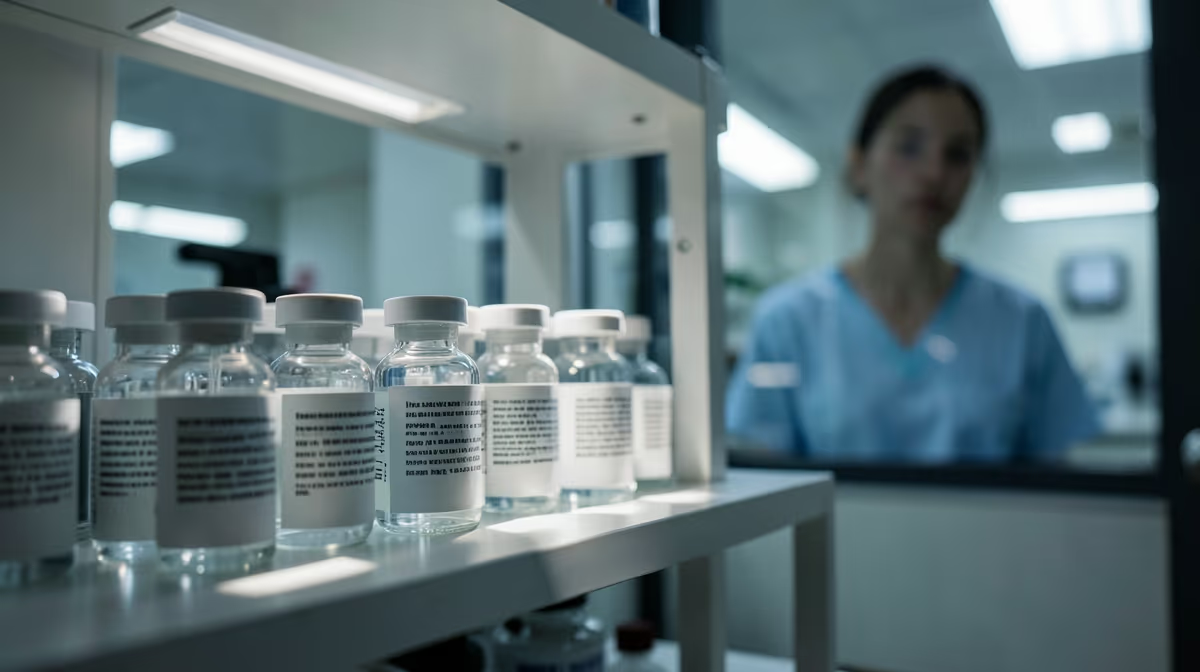
The most sophisticated medicine in human history is currently sitting on clinical shelves while the patients it was designed to save watch from the other side of a financial and bureaucratic divide. As groundbreaking medical research continues to advance, patients across the nation are left wondering why revolutionary cancer treatments access remains limited due to complex policy and financial hurdles. The paradox of modern oncology is stark: we have never been closer to turning terminal diagnoses into manageable conditions, yet the systemic friction between pharmacological innovation and healthcare delivery infrastructure has never been more restrictive.
While researchers continue to discover innovative ways to detect and treat cancer—ranging from identifying subtle early symptoms to targeting specialized genetic markers—the gap between the existence of a revolutionary drug and getting it into a patient's hands remains a critical challenge. This bottleneck is not merely a matter of scientific validation but is increasingly defined by the mechanisms of insurance coverage, prior authorizations, and the commercial logistics of the American healthcare landscape.
Ensuring equitable access to revolutionary medicines is critical for improving overall survival rates and reducing preventable cancer mortality, as the true potential of medical science cannot be realized if life-saving therapies remain out of reach for the public.
The Rising Tide of Oncology Breakthroughs
Medical science has made incredible strides in developing new cancer drugs that act as revolutionary breakthroughs for treating various types of the disease. These advancements are not limited to the therapies themselves but extend to the diagnostic methods used to identify the disease at its earliest, most treatable stages. For instance, research published in Nature has highlighted the potential of using urine cell-free RNA for bladder cancer detection and treatment response prediction. This type of non-invasive diagnostic tool represents the vanguard of medical research development, offering a glimpse into a future where cancer is caught long before it becomes aggressive.
Public Awareness and Early Detection
The importance of early detection has been amplified by high-profile public accounts of cancer journeys. Actress Amanda Peet recently shared her experience with breast cancer, revealing that her first "weird" sign was not the traditional lump most patients are taught to look for, but a symptom she experienced months before her official diagnosis. Such stories underscore the reality that while revolutionary cancer treatments access is a primary concern, the diagnostic pipeline is equally vital. When public figures bring attention to the nuanced symptoms of the disease, it drives a necessary conversation about the vigilance required from both patients and healthcare providers.
The Challenge of Aggressive Strains
The urgency for better access is further intensified by the changing demographics of cancer. Recent data indicates that when teenagers are diagnosed with colorectal cancer, it is often an aggressive form of the disease. This trend highlights a troubling shift in oncology where younger populations are facing high-stakes medical battles, requiring immediate access to the most advanced therapeutic modalities available. Without a streamlined path to treatment, these patients face significantly diminished outcomes despite the existence of effective science.
Structural Barriers to Patient Care
The root cause of the current crisis lies in the systemic friction between rapid pharmacological innovation and the restrictive mechanisms of the modern healthcare system. Reports from major publications like The New York Times have brought to light a growing disconnect between cutting-edge medical innovation and the practical ability of ordinary patients to actually receive these treatments. Even when the FDA approves a revolutionary therapy, the journey to the bedside is fraught with obstacles.
- High out-of-pocket costs that exceed the financial capacity of average households.
- Insurance coverage denials and complex prior authorization requirements.
- Systemic inequalities that leave underinsured and low-income patients behind.
- Logistical hurdles in the distribution of complex, novel therapeutic modalities.
The Role of Healthcare Policy
The current oncology healthcare policy environment in the United States often prioritizes cost-containment strategies that, while designed to manage spending, create significant hurdles for patient access. The commercialization of these therapies creates a severe cost burden on both healthcare payers and the patients themselves. This has led to a tiered access system where advanced treatments are predominantly available to those with superior financial resources or comprehensive, high-tier insurance plans.
Economic and Political Dimensions of Access
The economic angle of this crisis is defined by the high price tags associated with precision medicines. Pharmaceutical manufacturers defend these pricing structures as necessary to recoup the massive investments required for research and development. However, these prices create an immediate barrier for the healthcare sector. Domestic political pressure is mounting on regulatory bodies and legislators to address skyrocketing drug costs and ensure equitable access across the population.
| Factor | Impact on Access |
|---|---|
| R&D Costs | Drives high initial pricing of revolutionary drugs |
| Insurance Approval | Creates delays through "prior authorization" loops |
| Regional Disparity | Limits availability of specialized care in rural areas |
| Patient Financials | High out-of-pocket costs lead to treatment abandonment |
Geopolitical Context and Leadership
The disparities in domestic drug access also have a geopolitical dimension. As a global leader in medical research, the United States' projection of healthcare leadership is often contrasted with its internal distribution struggles. This stands in sharp contrast to some centralized national health systems in other countries that can negotiate bulk access or implement broader population-level distribution strategies. The inability to bridge the gap between innovation and delivery undermines the broader impact of American medical breakthroughs on the world stage.
The Human Cost and Geographic Concerns
Beyond the broad policy discussions, the impact of access barriers is felt most acutely at the local level. In a tiny town in New York, families are demanding answers after six cases of a rare form of cancer were identified in a small cluster. For residents in such areas, the question is not just about the existence of a drug, but the geographic and logistical capacity of regional facilities to safely administer complex, novel treatments.
When groundbreaking medical treatments are locked behind access barriers, patients suffer needlessly despite the existence of life-saving science.
The bottleneck is often found in secondary healthcare markets. Even if a patient can afford a drug, they may live hundreds of miles from a facility equipped to handle the administration and monitoring of a high-tech oncology regimen. This geographic lottery further complicates the pursuit of equitable treatment distribution.
Historical Parallels
Analysts point to a historical parallel in the rollout of early antiretroviral therapies for HIV/AIDS in the 1990s. That era similarly featured breakthrough scientific efficacy coupled with severe cost barriers and distribution bottlenecks. It was only through fierce political activism and systemic reforms that those life-saving treatments became widely accessible. The current oncology landscape appears to be reaching a similar tipping point of public and political pressure.
Future Outlook and Predictions
Over the next 24 to 72 hours, discussions and reporting are expected to continue highlighting the paradox between medical advancements and systemic roadblocks. Public health advocates and medical analysts will likely expand on the economic roadblocks, focusing on the widening disparities within the healthcare system.
Best and Worst-Case Scenarios
In a best-case scenario, heightened awareness leads to collaborative policy proposals aimed at streamlining distribution and reducing financial barriers, allowing a broader segment of the population to benefit from revolutionary treatments. Conversely, the worst-case scenario involves persistent structural hurdles that continue to restrict access, deepening health inequities and leaving vulnerable populations without recourse.
Expert Projections
Analysts expect increased scrutiny on drug pricing frameworks and healthcare delivery models as the gap between what science can do and what the system allows continues to widen. Policymakers, healthcare advocates, and medical professionals are predicted to push for:
- Increased pricing transparency from pharmaceutical manufacturers.
- Expanded insurance mandates to cover novel diagnostic and therapeutic methods.
- Systemic reforms to the prior authorization process to prevent treatment delays.
- Strategic investments in regional healthcare infrastructure to improve geographic access.
Frequently Asked Questions
Why do patients struggle to access revolutionary new cancer drugs?
Despite breakthroughs in oncology, many patients face significant barriers including high out-of-pocket costs, insurance coverage denials, and systemic inequalities in healthcare delivery. These obstacles prevent life-saving therapies from reaching the individuals who need them most.
Who is most affected by access barriers to advanced cancer treatments?
Underinsured patients, low-income individuals, and those living in rural or medically underserved areas are disproportionately impacted by these access hurdles. Structural disparities often leave marginalized communities without timely care for aggressive or rare forms of the disease.
What background factors contribute to high costs in modern cancer therapies?
The complex research, development, and manufacturing processes required for precision medicines and targeted therapies drive up initial price tags. Pharmaceutical pricing strategies and fragmented healthcare reimbursement models further complicate affordability for everyday patients.
What specific detail highlights the ongoing challenges in oncology care?
Reports from major publications like The New York Times highlight a growing disconnect between cutting-edge medical innovation and the practical ability of ordinary patients to actually receive these treatments.
Why does overcoming these treatment barriers matter for public health?
Ensuring equitable access to revolutionary medicines is critical for improving overall survival rates and reducing preventable cancer mortality. When breakthrough therapies remain out of reach, the true potential of medical science cannot be fully realized across the population.
What happens next in the effort to make cancer drugs more accessible?
Policymakers, healthcare advocates, and medical professionals continue to push for systemic reforms, pricing transparency, and expanded insurance mandates. Future efforts will likely focus on streamlining approval pathways and lowering financial hurdles to improve patient outcomes.
Conclusion
The landscape of oncology is characterized by a high-stakes race between scientific discovery and systemic reform. While new cancer drugs represent a revolutionary breakthrough in medical science, the critical gap in patient access remains a defining challenge for the United States healthcare system. Verified reports confirm that from early detection methods like urine cell-free RNA to the treatment of aggressive adolescent colorectal cancer, the science is ready, yet the delivery mechanisms are lagging. Whether future policy adjustments and pricing reforms can successfully bridge this gap remains the most urgent question for patients, providers, and lawmakers alike. Moving forward, the focus must remain on ensuring that the revolutionary potential of modern medicine is not a privilege reserved for the few, but a standard of care accessible to all.
Sources
- New Cancer Drugs Are Revolutionary. Why Don’t More Patients Get Them? — The New York Times
- Amanda Peet Reveals First ‘Weird’ Sign of Breast Cancer. It Wasn’t a Lump — TODAY.com
- Amanda Peet Reveals First ‘Weird’ Symptom She Had Months Before Breast Cancer Diagnosis — people.com
- A tiny NY town has six cases of a rare form of cancer. Families want to know why — Spectrum News
- Urine cell-free RNA for bladder cancer detection and treatment response prediction — Nature
- When teens get colorectal cancer, it’s often an aggressive form of the disease — NBC News


.webp)

