
Russia Ukraine War Infrastructure Faces Massive Strikes to Freeze Capital
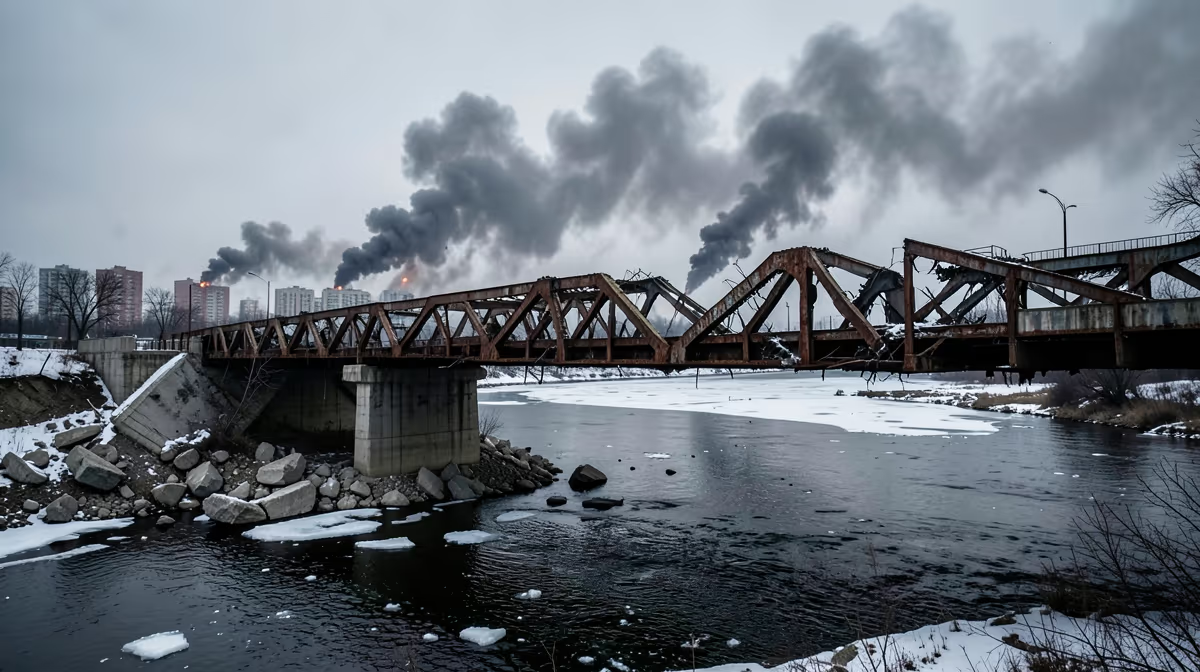
The steel and concrete spans across the Dnieper River have transformed into a theatre of systematic disruption where the architecture of transit meets the chilling precision of a winter-weighted strategy. As the Russia Ukraine war infrastructure faces renewed threats, recent developments indicate an escalation in regional tensions that seeks to weaponize the impending drop in temperature against millions of civilians.
The escalation of attacks on vital urban infrastructure seeks to weaponize the upcoming winter cold against the general population, making survival and daily commerce significantly harder.
Intelligence assessments and recent tactical shifts on the ground suggest that the conflict has entered a period of intensified aerial pressure. Reports from major international monitors and news outlets confirm that Russian forces are orchestrating what is described as their most powerful blow yet, specifically designed to degrade the functionality of the Ukrainian capital. The dual focus on crippling transportation arteries and threatening the energy grid signals a calculated move to isolate urban centers and undermine national resilience as the seasonal transition approaches.
The Siege of Kyiv Transit Arteries
Recent aerial assaults have introduced a new disruption tactic targeting the internal connectivity of the capital. Fatal Russian drone strikes have directly impacted three major bridges in Kyiv, leading to their immediate shutdown and causing catastrophic traffic snarls across the city. These transit routes are vital for the movement of emergency services, the delivery of essential goods, and the daily commute of thousands of residents who now find themselves cut off from central logistics.
The impact of these strikes extends beyond physical damage. The mayor of Kyiv has issued a stark warning, noting that these intensified aerial campaigns are actively tearing the capital apart. By shutting down these key bridges, the offensive hinders the city's internal response mechanisms and complicates the efforts of emergency workers to navigate the urban landscape during active air raid alerts.
Tactical Implications of Bridge Closures
The shutdown of these bridges represents a significant shift in Russian offensive campaigns. According to observations from the Institute for the Study of War, the coordinated pressure on transportation hubs is likely intended to:
- Snarl-up traffic and create major bottlenecks for urban transit.
- Hinder the movement of military and emergency logistics within the capital region.
- Fracture the municipal crisis management networks.
- Test the speed and efficiency of localized civil defense teams in a high-pressure environment.
The fatal nature of the recent drone assaults has heightened the sense of urgency among municipal authorities. Sky News and DW have confirmed that the shutdowns followed incidents that resulted in civilian casualties, adding a severe human cost to the logistical paralysis.
Strategic Intent: The Plan to Freeze Ukraine
Beyond the immediate disruption of traffic, there is a broader, more ominous objective behind the recent surge in aerial activity. Reports indicate that Russia is planning its most powerful strikes yet with the explicit goal of trying to freeze Ukraine. This campaign targets the intersections of energy and logistics, seeking to exploit the vulnerability of the general population to sub-zero temperatures.
These military tactics are designed to break civilian morale and disrupt supply lines by making daily life and transit increasingly difficult.
The strategy hinges on degrading the energy grid to the point where heating and power become intermittent or non-existent in urban centers. By simultaneously hitting bridges and transport routes, the campaign ensures that even if repairs are possible, the logistics required to implement them are severely hampered. This multi-layered approach to infrastructure degradation marks a deteriorating security situation for the millions residing in Kyiv and other major cities.
Institutional and Political Fallout
The intensification of strikes places severe political pressure on Kyiv's leadership. Managing mounting infrastructure failures while maintaining public order during a humanitarian crisis requires immense resources. Furthermore, this tactical shift serves as a test of endurance for the Western political coalitions that have sustained their support for Ukraine throughout the conflict.
The Geopolitical Dimension
From a geopolitical perspective, the coordinated aerial campaign signals Moscow's intent to sustain a war of attrition. By targeting the Kyiv bridge strike impact and the broader energy security of the nation, the offensive seeks to:
- Erode the confidence of international donors by demonstrating a sustained capability to inflict damage.
- Force strategic concessions by exploiting the imminent humanitarian crisis.
- Disrupt the economic stability of urban centers as reconstruction costs escalate.
- Distract the Ukrainian military from frontline operations to prioritize urban defense.
A notable international ripple occurred during this period when South Korea demanded an apology from Ukraine, adding a layer of diplomatic complexity to an already volatile regional situation. This development highlights how the effects of the conflict continue to resonate across the global political landscape.
Economic and Humanitarian Consequences
The attacks on vital transportation hubs and energy grids do more than just stop traffic; they paralyze the economic lifeblood of the city. Supply chains that rely on the free movement across Kyiv's bridges are now facing significant delays, which in turn escalates the costs of basic goods and services. The Russian aerial assault winter campaign threatens to make these disruptions permanent if the infrastructure cannot be fortified or repaired in time.
| Date | Key Event |
|---|---|
| September 28, 2026 | Key bridge struck in Kyiv; South Korea demands apology from Ukraine |
| October 1, 2026 | ISW assessment notes Russian offensive campaign targeting urban logistics |
| October 2, 2026 | Fatal drone assaults shut down three bridges; reports emerge of plan to freeze Ukraine |
The human cost is perhaps the most critical factor. Families facing disruptions to heating and security are preparing for a winter where survival becomes a daily struggle. The systematic targeting of urban transit bridges may also serve as a psychological wedge, designed to test the mental resilience of the civilian population and the efficiency of the city's emergency response teams.
Analyst Perspective and Shifting Strategies
Root-cause analysis suggests that Russia is escalating its strategic aerial campaigns specifically to undermine national resilience ahead of the winter months. Analysts expect Moscow to sustain this pressure on critical infrastructure to degrade logistics and demoralize the population. This historical parallel can be drawn to strategic bombing campaigns of the 20th century that targeted civilian infrastructure and transport networks during winter phases to force a collapse in morale.
The hidden angle of these strikes involves the municipal crisis management networks. By creating simultaneous failures in transport and energy, the offensive forces city officials to make difficult choices regarding resource allocation. This creates a friction point between local governance and the immediate needs of a distressed public.
What Lies Ahead: A 72-Hour Outlook
The next 24 hours are expected to see continued air raid alerts and emergency infrastructure assessments across Kyiv. Municipal authorities and residents will be working under high alert to evaluate the structural integrity of the bridges hit during the fatal drone assaults.
Within the next 72 hours, authorities will attempt to repair damaged transit routes while preparing for further anticipated escalations. The broader Ukraine conflict update energy status remains precarious, as the potential for a massive blow to the power grid remains high.
Potential Scenarios
In the best-case scenario, Ukrainian air defense systems will successfully intercept the majority of incoming strikes, minimizing further structural damage to bridges and allowing for rapid infrastructure repairs. This would prevent severe civilian casualties and keep the logistics of the city functional.
Conversely, the worst-case scenario involves intensified and sustained strikes that severely cripple both transport links and energy grids. This would result in widespread freezing conditions and critical humanitarian challenges across urban centers as winter takes hold, potentially leading to a massive crisis that tests the limits of both local and international response capabilities.
Frequently Asked Questions
What is Russia planning regarding Ukraine's infrastructure?
Reports indicate that Russia is planning its most powerful strikes yet aimed at freezing Ukraine. This escalation focuses heavily on degrading critical infrastructure and disrupting daily life as winter approaches.
Why are Kyiv bridges being targeted by Russian strikes?
Russian aerial and drone strikes recently targeted major Kyiv bridges as part of a new disruption tactic. These attacks are designed to severely snarl traffic, hinder emergency logistics, and fracture the city's internal connectivity.
Who is most affected by the recent attacks in Kyiv?
Civilians and commuters in the Ukrainian capital are bearing the brunt of these intensified assaults. The sudden bridge closures and infrastructure damage have complicated daily movement and heightened security concerns across the region.
What happens next as the attacks on Kyiv intensify?
Ukrainian officials and municipal leaders are racing to assess the damage and restore functionality to critical transit routes. Meanwhile, defense forces remain on high alert for further aerial bombardments targeting energy grids and transportation.
What is the background of the recent aerial strikes on Ukraine's capital?
The recent escalation follows a pattern of sustained aerial assaults combining drone and missile strikes. Mayor warnings highlight that these intensified campaigns are actively tearing at the city's vital urban infrastructure.
Which specific Kyiv infrastructure was impacted in the latest drone assault?
Fatal Russian drone assaults led to the immediate shutdown of key bridges in Kyiv. These disruptions have snarled traffic significantly, creating major bottlenecks for urban transit and communication.
Conclusion
The current phase of the conflict in Ukraine has moved toward a high-stakes campaign against the very infrastructure that sustains civilian life in the capital. The fatal strikes on Kyiv’s bridges, coupled with the reported plan to use the winter as a weapon, mark a significant escalation in the war of attrition. While emergency services and municipal leaders are working to restore functionality to transit routes, the threat of more powerful strikes looms. The resilience of Ukraine's air defenses and its ability to repair critical logistics will likely determine the severity of the humanitarian situation in the months to come. As the situation develops, the global community is watching how these infrastructure attacks will influence both the local civilian morale and the broader geopolitical landscape.
***
Sources
- Russia Is Planning Its Most Powerful Blow Yet to Try to Freeze Ukraine — The New York Times
- Russian Offensive Campaign Assessment, October 1, 2026 — Institute for the Study of War
- Russian aerial strikes snarl traffic on 3 Kyiv bridges in a new disruption tactic — NBC News
- Ukraine: Kyiv bridges shut after fatal Russian drone assault — DW.com
- Intensified Russian strikes are tearing Kyiv apart, warns mayor — BBC
- Ukraine war latest: Russia strikes key bridge in Kyiv - as South Korea demands apology from Ukraine — Sky News