
Spain Housing Crisis Protests Reaching a Breaking Point Nationwide
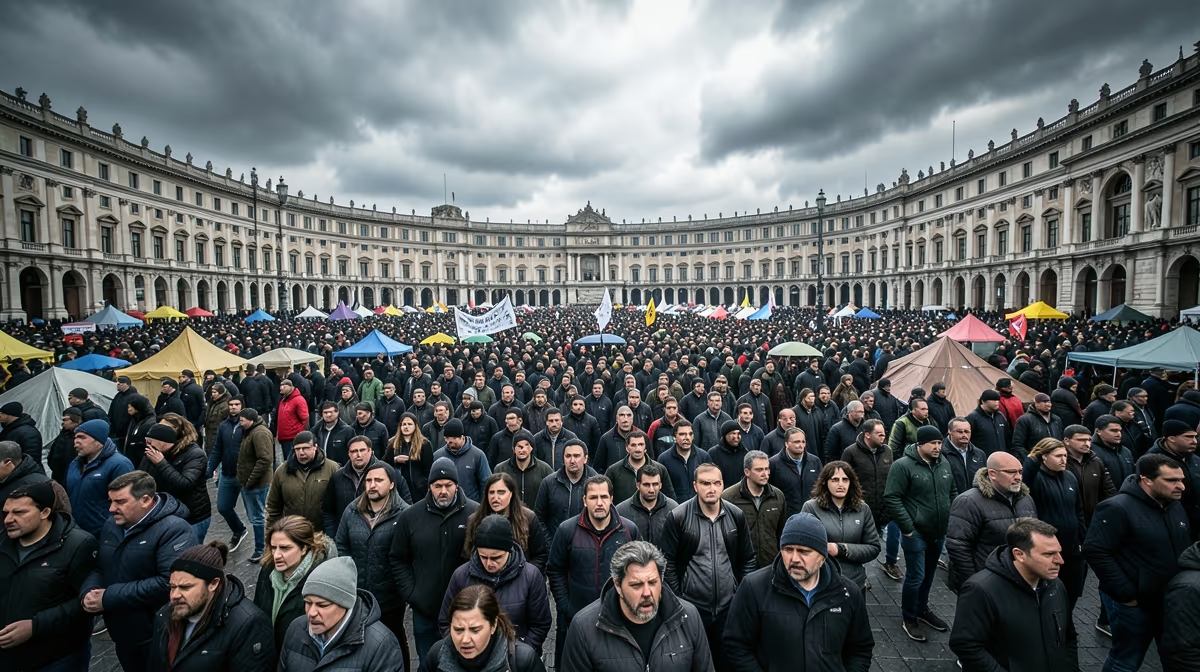
The squares of major Spanish cities have been transformed into permanent encampments as the **Spain housing crisis protests** escalate from single-day rallies into a sustained national movement. Citizens across the country are expressing a profound sense of outrage, as the fundamental right to shelter becomes increasingly secondary to speculative investment and tourism-driven real estate models.
The sustained encampments and protests signal a broader erosion of trust in traditional representative politics, potentially leading to a permanent shift toward direct action and grassroots civic mobilization across Southern Europe.
Massive Mobilization and the Occupation of Public Spaces
The scale of the current unrest has captured international attention, with tens of thousands of people taking to the streets to voice their frustration over an environment where finding an affordable home has become nearly impossible. This is not merely a series of marches; it has evolved into a physical occupation of urban centers. In multiple cities, demonstrators have remained camped out in public areas, signaling their intent to maintain pressure on government officials until tangible legislative reforms are enacted.
Reports from major global outlets, including the BBC and NBC News, confirm that the atmosphere in the streets is one of deep-seated anger. The demonstrators are not just protesting high prices; they are protesting a system they feel has priced them out of their own neighborhoods. These encampments serve as highly visible reminders of the ongoing crisis, forcing local authorities to confront the reality of public discontent on a daily basis.
The Structural Drivers of Urban Unrest
The root cause of this massive social friction is a severe structural mismatch that has been developing for years. On one side, there is a surge in urban housing costs driven by intense tourism pressure and speculative investment. On the other, stagnant local wage growth has left the average resident unable to keep pace with real estate inflation.
The Economic Divide
This economic divergence has created a landscape of socio-economic polarization. High rents and property prices disproportionately impact the younger demographics and middle-income families. The financial strain is not just a personal burden; it has broader economic implications:
- It squeezes disposable incomes, reducing spending in other sectors of the economy.
- It stalls household formation, as young adults find it impossible to move out of their family homes.
- It drives working-class families out of major urban centers, threatening the social fabric of historic neighborhoods.
Tourism and Market Speculation
A significant factor in the current crisis is the rise of short-term vacation rentals. This trend has incentivized property owners to prioritize tourists over long-term residents, further shrinking the available housing stock. When combined with strict zoning laws and limited new construction, the result is a market where demand far outstrips supply, leading to the skyrocketing costs that have triggered the current demonstrations.
| Timeline of Key Developments | Event Description |
|---|---|
| Initial Rallies | Tens of thousands of demonstrators take to the streets across Spain to protest the deepening housing affordability crisis. |
| Transition to Camps | Protesters transition from rallies to sustained encampments, demanding immediate legislative action on rents and tourism regulation. |
| Sustained Pressure | Demonstrators remain camped out, maintaining pressure on policymakers as the crisis captures international media attention. |
Historical Parallels and Political Pressure
Analysts looking at the current situation see a strong historical parallel to the 2011 Indignados (15-M) movement. Like that previous wave of unrest, today’s Spain housing crisis protests utilize public plazas and encampments to highlight economic inequality and a perceived disconnect between the political class and the citizenry.
The current demonstrations serve as a powerful signal that the cost-of-living crunch has reached a boiling point, potentially forcing governments to implement drastic policy changes.
Regional and national governments now face intense pressure from populist movements and citizen assemblies. Policymakers are being forced to navigate a difficult balance: maintaining pro-tourism and investment policies that bolster the national economy, while addressing the urgent demands of voters for immediate market intervention, such as rent controls and increased public housing investments.
The National Landscape: Beyond the Housing Crisis
While the housing crisis dominates the social and political discourse, it is unfolding against a backdrop of other significant national events. These developments highlight the complexity of the current moment in Spain:
- Environmental Challenges: Severe weather has recently impacted the country, with CNN reporting at least one death and scores of rescues following significant flooding.
- Sports and Culture: Even as the nation grapples with social unrest, cultural and athletic life continues. The Spanish national football squad has seen changes, with Torres being forced out due to injury and Madrid's Espí receiving a first call-up. Meanwhile, there is ongoing public interest in the nation's athletic performance as fans look for ways to watch upcoming matches against teams like Czechia.
- Traditional News: National media also continues to cover lighter fare, such as analysis of Queen Letizia’s non-traditional engagement ring, providing a sharp contrast to the "anger in the streets" found at the protest sites.
A Shifting Geopolitical and European Context
The situation in Spain is not an isolated incident; it reflects a broader Western European urban affordability crisis. The outcome of these protests could influence how other European Union member states approach the regulation of short-term rentals and foreign property acquisition.
The pressure on the Spanish government may lead to a permanent shift in how urban policy is managed across the EU. If Spain implements aggressive rent controls or limits on speculative buying, it could serve as a template for other nations facing similar public discontent. This highlights the geopolitical importance of the current demonstrations, as they test the limits of market-led housing policies in democratic societies.
Outlook for the Next 72 Hours and Beyond
The immediate future suggests a continuation of the current tension. According to the EarthInsider predictor, the following developments are expected:
Short-Term Projections
In the next 24 hours, protesters are expected to maintain their encampments across Spanish cities. Public anger remains high, and the visibility of these camps ensures the housing crisis stays at the top of the national agenda. Within the next 72 hours, authorities and housing advocates will likely face mounting pressure to address affordability concerns as the protests remain a prominent fixture in national discourse.
Expert Predictions and Scenarios
Analysts expect that sustained demonstrations will increase the political pressure on government officials to introduce near-term measures addressing rental costs.
- Best-Case Scenario: A constructive dialogue opens between protesters and government officials, leading to a commitment toward comprehensive housing reforms and rent control measures.
- Worst-Case Scenario: Demonstrations escalate into prolonged civil unrest, straining local resources and deepening the polarization between the citizenry and housing authorities.
Frequently Asked Questions
What caused the recent housing crisis protests in Spain?
Tens of thousands of people took to the streets in Spain to express deep anger over the escalating housing crisis. Protesters are demanding urgent action to address soaring housing costs and affordability issues that are gripping the nation.
Why does the Spanish housing crisis matter right now?
The crisis has escalated to a point where public frustration has boiled over into mass demonstrations and ongoing campouts in major cities. It highlights severe socio-economic pressures facing residents who are increasingly priced out of stable living conditions.
Who is affected by the housing crisis in Spain?
Urban residents, renters, and everyday citizens across Spain are heavily impacted by skyrocketing rents and property prices. The widespread protests indicate that the burden of the housing shortage is affecting a broad cross-section of the population, particularly lower- and middle-income families.
What happens next as protesters remain camped out in Spain?
With demonstrators remaining camped out in public spaces, pressure is mounting on officials to address housing demands. Public mobilization is likely to continue as long as affordable housing solutions remain out of reach for many citizens.
What is the background of the housing protests in Spain?
The demonstrations follow years of growing economic strain related to housing availability, tourism pressures, and stagnant wages relative to real estate costs. These underlying issues have culminated in some of the largest demonstrations seen recently regarding urban affordability.
How large were the demonstrations during the Spain housing protests?
The protests drew massive crowds, with tens of thousands of demonstrators turning out in cities across Spain to voice their outrage. Major international news outlets like the BBC and NBC News reported significant numbers of angry citizens participating in the rallies and subsequent campouts.
Conclusion
The mass protests and ongoing encampments across Spain represent a significant escalation in the struggle for housing affordability. With tens of thousands of citizens demanding intervention, the movement has highlighted deep structural flaws in the urban real estate market, exacerbated by tourism and speculation. As the government faces increasing pressure to act, the world is watching to see if Spain will pioneer new models for urban policy or if the crisis will deepen the existing socioeconomic divide. The coming days will be critical in determining whether a dialogue for reform can emerge from the "anger in the streets."
Sources
- 'Anger in the streets': Tens of thousands protest in Spain over housing crisis — BBC
- Protesters in Spain remain camped out over housing crisis — NBC News
- One dead and scores rescued in floods in Spain — CNN
- Torres forced out of Spain squad; Madrid's Espí gets first call-up — ESPN
- Queen Letizia of Spain’s Engagement Ring Is Perfect for the Non-Traditional Bride — Vogue
- How to Watch Spain vs. Czechia on TV, Live Stream — Sports Illustrated


.webp)