
Tesla Roadster 2028 Timeline Sparks Severe Doubts Across Regulators
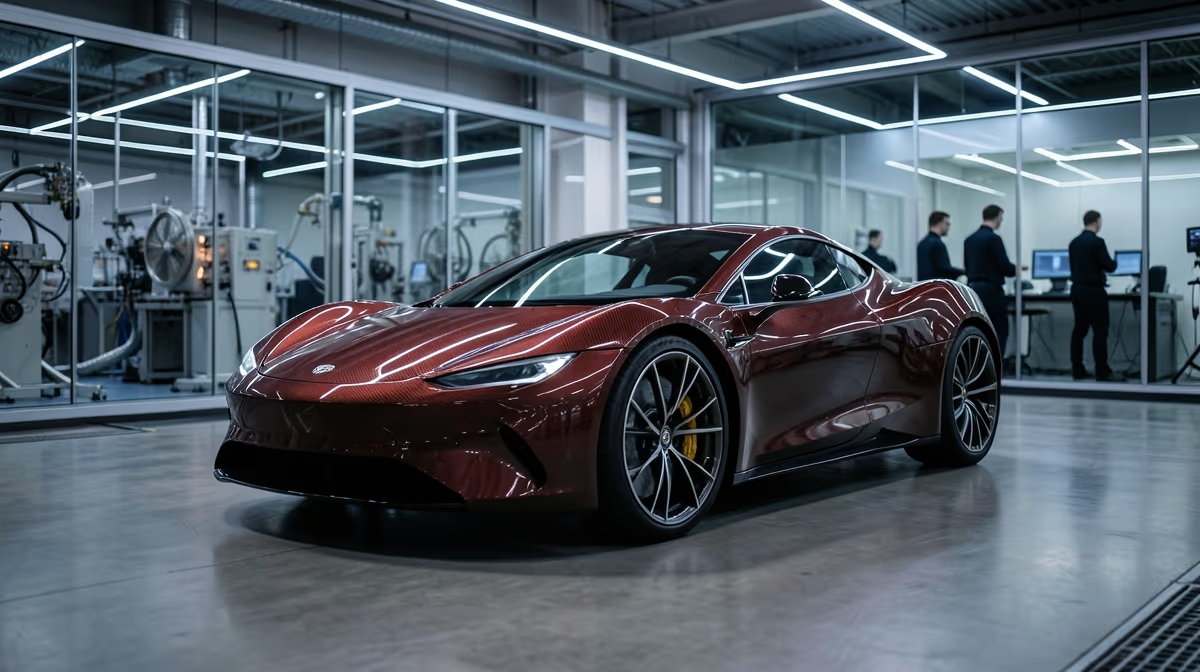
Few vehicles in modern automotive history have spent as much time suspended between pure technological fantasy and assembly-line reality. The automotive industry continues to watch closely as fresh details emerge regarding the long-delayed Tesla Roadster 2028, a machine whose escalating promises now test the outer limits of engineering, road safety law, and consumer endurance.
A targeted 2028 release date positions the next-generation Tesla Roadster at the intersection of unprecedented 1,500-horsepower engineering claims and severe federal regulatory barriers regarding experimental flight technology.
Unprecedented Power and the Promise of Flight
Fresh reporting across major automotive outlets has reignited public debate over what the production version of the next-generation hypercar will actually deliver. Detailed first-look assessments from Driving and MotorTrend outline an electric platform engineered to produce an astounding 1,500 horsepower. This output places the platform at the extreme pinnacle of the high-performance electric vehicle sector, surpassing conventional supercar benchmarks through radical advances in powertrain technology, aerodynamic design, and high-discharge battery range systems.
Yet the specification drawing the fiercest scrutiny is not the vehicle's massive output, but the reiteration of claims that the vehicle will possess the capability to fly. Automotive analyses indicate that while the vehicle is being designed with short-hop hovering or flight-assisting capabilities derived from aerospace cross-overs, such functionality will face strict operational limits. Any such flight capability will be prohibited on public roads, restricting experimental airborne maneuvers strictly to specialized private facilities or off-street testing grounds. The gap between an unrestrained design concept and a street-legal consumer automobile remains wide, bringing regulatory reality to the forefront of the vehicle's technical profile.
The Chronic Tension of Protracted Production Timelines
While technological specifications have captured consumer imagination, technical publications such as Engadget caution enthusiasts against unreserved optimism regarding the projected 2028 Tesla release date. The narrative surrounding the hypercar has been characterized by repeated scheduling pushbacks since its initial unveiling as a prototype concept years ago.
| Project Phase | Status and Operational Context |
|---|---|
| Initial Concept Prototype | Unveiled with ambitious acceleration benchmarks and pre-order deposits |
| Interim Engineering Phase | Marked by successive timeline adjustments and technical redesigns |
| Current Production Target | Projected for 2028, subject to regulatory approvals and flight restrictions |
This history of postponement highlights the structural difficulty of transitioning a boundary-pushing halo concept into a standardized manufacturing workflow. Bringing revolutionary hypercars to market traditionally involves complex technical iterations, where theoretical benchmarks clash directly with component durability, weight management, and supply chain readiness. For early reservation holders who submitted substantial deposits years ago, the updated 2028 window represents both a renewed commitment from Tesla and a reminder of how long their capital has remained tethered to an evolving blueprint.
The Engineering Dilemma: Powertrain vs. Aero-Mechanics
The core root cause behind the machine's extended development trajectory lies in the mechanical friction between extreme performance targets and vehicular viability. Integrating a 1,500-horsepower electric powertrain requires massive energy density, rigorous thermal dissipation mechanisms, and advanced structural integrity to manage intense kinetic forces. When engineers layer speculative flight mechanics onto that chassis, the physical constraints multiply exponentially.
The protracted delays in bringing the hypercar to market reflect persistent tensions between ambitious engineering goals and the practical realities of automotive manufacturing and regulatory approval.
Reconciling aerodynamic downforce—essential for keeping a 1,500-horsepower vehicle safely grounded at high speeds—with short-hop aerial lift poses an unprecedented challenge in consumer vehicle design. Balancing heavy battery architecture against the thrust requirements of airborne capability demands unprecedented aerospace integration. As automotive analysts observe, solving these engineering trade-offs requires fundamentally new manufacturing solutions rather than iterative adjustments to existing electric vehicle platforms.
Regulatory Scrutiny and the Public Road Boundary
Even if manufacturing hurdles are overcome, the vehicle faces an equally formidable gauntlet in the regulatory arena. Federal regulatory agencies responsible for highway safety and vehicle standards in the United States operate under stringent mandates designed around predictable road dynamics. Introducing experimental features such as hovering or flight into consumer products disrupts existing statutory categories.
- Federal road safety mandates restrict non-standard propulsion systems and aerial capabilities from public streets.
- Experimental flight systems require distinct verification procedures outside typical consumer automotive certification.
- Street-legal homologation demands strict adherence to collision resilience, pedestrian safety, and weight distribution standards.
- Autonomous and advanced performance controls face intensified oversight from transportation safety boards.
Because federal authorities will not permit uncertified flight technology to operate across standard municipal and highway infrastructure, the production car must essentially function as two separate entities: a certified street-legal road vehicle under traditional highway codes, and a restricted experimental platform when engaging specialized aerospace systems. Navigating these bifurcated requirements guarantees that regulatory evaluation will remain a critical bottleneck right up to the targeted production year.
Economic Strategy and Market Distraction
Beyond the purely mechanical and legal aspects, financial and automotive analysts highlight a distinct economic calculus driving the vehicle's continued prominence. A high-margin halo vehicle serves a powerful dual purpose: it reinforces the brand's reputation for cutting-edge electric vehicle innovation, while locking in brand prestige across consumer demographics.
However, skepticism persists regarding whether high-profile claims about flight features serve an underlying commercial strategy. With global competition across core consumer electric vehicle segments intensifying, maintaining public fascination through dramatic hypercar claims allows the company to preserve consumer mindshare and retain interest among prospective supercar buyers. Delaying commercial release also delays capital returns on the hypercar project, leaving financial markets to weigh the promotional value of long-term halo buzz against the capital expenditures required to solve unique manufacturing problems.
Geopolitical Realities and Industrial Positioning
The development of top-tier electric hypercars has evolved into a broader theater of technological competition. The race for technological supremacy in high-performance electric vehicles directly reinforces the industrial positioning of the United States in next-generation advanced mobility.
Demonstrating mastery over hyper-dense battery packs, high-output electric powertrains, and experimental aerospace cross-overs elevates domestic manufacturing standing on the global stage. By bridging automotive assembly with aerospace-grade technologies, the project seeks to establish a high-water mark for domestic engineering capabilities. Yet this geopolitical advantage relies entirely on whether these theoretical innovations can successfully materialize as viable consumer products rather than permanent research prototypes.
Near-Term Trajectory and Analytical Forecasts
As automotive and technology media digest the latest revelations, the conversation over the next 24 to 72 hours is expected to trace distinct analytical phases. In the immediate 24-hour window, automotive publications and technical analysts continue to scrutinize the feasibility of the 1,500-horsepower powertrain alongside the operational limits of its airborne features. Over the subsequent 72 hours, industry focus will inevitably swing toward realistic production roadmaps, regulatory friction, and persistent consumer skepticism born of past delays.
Looking toward the wider horizon, market outcomes will largely diverge along two explicit pathways:
- Best-Case Scenario: Tesla successfully surmounts complex manufacturing and regulatory obstacles, delivering the 1,500-horsepower vehicle to production in 2028 with its core performance targets and specialized systems intact, cementing consumer trust in the brand's long-term technical roadmap.
- Worst-Case Scenario: Chronic technical hurdles and regulatory impasses trigger additional scheduling postponements past 2028, steadily eroding buyer confidence, fatiguing early reservation holders, and heightening market skepticism regarding the commercial viability of its unconventional claims.
For automotive analysts, prospective supercar buyers, and the broader electric mobility market, the next phase will depend not on dramatic announcements, but on verifiable manufacturing milestones and official regulatory compliance filings.
Frequently Asked Questions
What is the expected release window for the new Tesla Roadster?
Reports indicate the Tesla Roadster could potentially go into production around 2028, though automotive experts advise enthusiasts not to get their hopes up given past delays. The long-awaited supercar has faced numerous setbacks since its initial announcement.
Will the 2028 Tesla Roadster really be able to fly?
Recent automotive coverage highlights that the upcoming Roadster may feature capabilities allowing it to "fly," though these features are expected to be restricted from use on public roads. This futuristic capability builds on Elon Musk's previous bold claims about the supercar's design.
What performance specs are expected for the Tesla Roadster?
Industry sources point to an impressive 1,500-horsepower powertrain for the 2028 Tesla Roadster. This level of performance positions it as a top-tier contender in the electric supercar market.
Why does the production timeline of the Tesla Roadster matter?
The prolonged development cycle of the Roadster matters because it tests consumer patience and highlights the challenges Tesla faces in balancing futuristic engineering concepts with actual manufacturing realities. Delays also give competitors more time to launch rival electric supercars.
Who is affected by the ongoing delays of the Tesla Roadster?
Early reservation holders and automotive enthusiasts who put down deposits years ago are the primary group affected by the delayed production timeline. Additionally, investors closely watch the vehicle's progress as a benchmark for Tesla's high-end engineering execution.
What happens next in the development of the Tesla Roadster?
As the targeted 2028 window approaches, automotive analysts will be watching for official prototype updates, regulatory approvals regarding any advanced flight-package features, and concrete manufacturing announcements from Tesla.
Conclusion
The projected 2028 arrival of the Tesla Roadster encapsulates both the extraordinary promise and the structural friction of bleeding-edge electric mobility. Verified reporting confirms that automotive specialists anticipate an immense 1,500-horsepower powertrain accompanied by radical, flight-capable technology, yet those same features remain legally confined away from public roadways. As the targeted production window approaches, the critical next steps will center on whether the company can translate experimental aerospace concepts into compliant production assembly lines, validate its regulatory standing with highway safety agencies, and finally deliver a finished hypercar to reservation holders who have waited years for concept to become reality.
Sources
- New York City Moves to End a Popular Tourist Experience in 2028 — Fodors Travel Guide
- Kamala Harris faces Democratic doubts over 2028 as allies push back on claims she’s squandered her chance — Fox News
- Why is NH guaranteed to vote first in the 2028 presidential primary? | The Trail — WMUR
- Tesla's 1,500-hp 2028 Roadster can fly—just not on public roads — Driving
- 2028 Tesla Roadster First Look: Everything to Know About Tesla’s New Supercar That Can Actually Fly — MotorTrend
- The Tesla Roadster Should Go Into Production In 2028, But Don't Get Your Hopes Up — Engadget


.webp)