
Tesla Roadster Unveiled With SpaceX Thrusters And Flying Capabilities
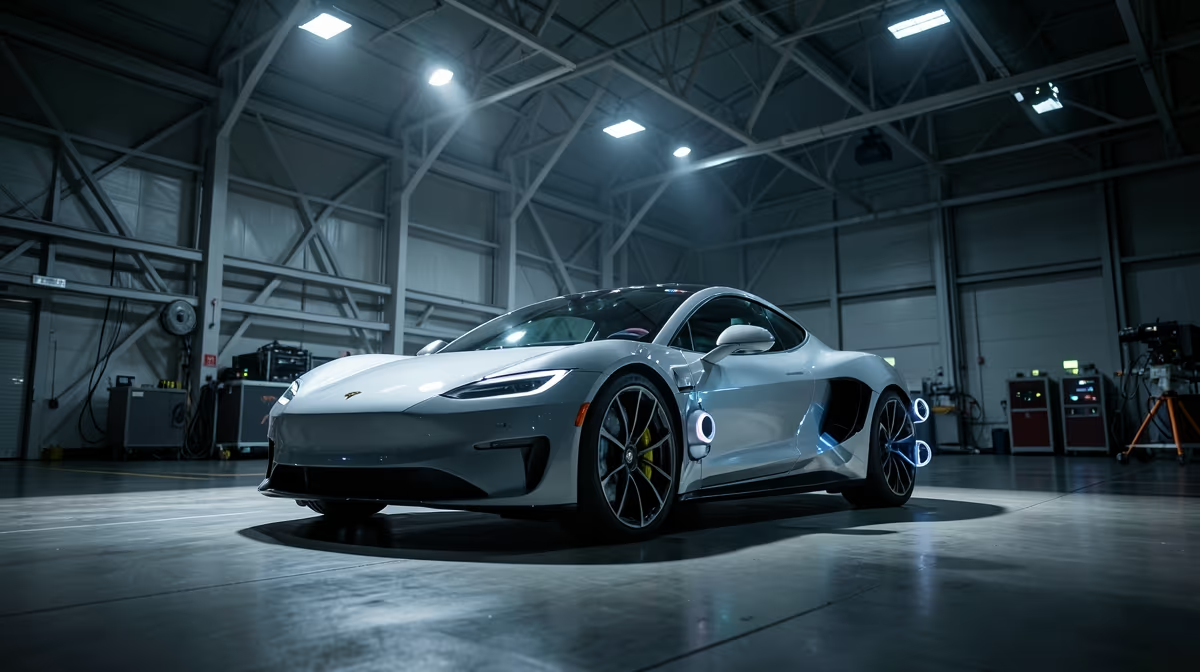
The boundary between terrestrial transport and aerospace propulsion has been fundamentally breached at a SpaceX facility. This shift signifies more than just a performance upgrade; it represents the formal introduction of the Tesla Roadster SpaceX thrusters package, a technology aimed at redefining the limits of consumer mobility.
As the lines between science fiction and automotive engineering continue to blur, this reveal suggests that the next generation of transport may no longer be confined to the pavement. By integrating rocket-derived hardware into a commercial electric vehicle, the project challenges the very definition of what a car is intended to do in the twenty-first century.
The integration of SpaceX cold gas thrusters into the Tesla Roadster represents a pivot from traditional automotive performance to aerospace-integrated mobility, enabling maneuvers such as mid-air turns and short-duration flight.
The Reveal at the SpaceX Facility
The official unveiling of the new Roadster took place at a dedicated SpaceX facility, where Elon Musk showcased the vehicle’s unprecedented capabilities. This choice of venue underscores the deep technical synergy between the two companies, moving beyond mere branding into the realm of shared hardware. During the demonstration, the vehicle exhibited features that push the limits of traditional electric vehicles, including the use of specialized thrusters to assist with positioning and movement.
Reports from the event indicate that the Roadster is equipped with a suite of up to 10 distinct features designed to maximize performance through aerospace integration. These features are not merely aesthetic; they are functional components derived from rocket engineering intended to provide a driving—and occasionally flying—experience that has no current market equivalent. The presentation served as a proof of concept for a vehicle that can theoretically drive upside down and perform maneuvers previously reserved for aircraft.
Aerospace Engineering in a Consumer Platform
At the heart of this innovation is the implementation of SpaceX cold gas thrusters. Unlike traditional internal combustion engines or even standard electric motors that rely solely on tire-to-road friction for movement, these thrusters provide active attitude control. This allows the vehicle to turn in the air and maintain stability during high-intensity maneuvers.
The technical reality of this system involves leveraging high-pressure air to generate thrust, a method commonly used in spacecraft for small-scale orbital adjustments. When applied to a car, this technology creates a hybrid of automotive and aerospace propulsion.
- Mid-air Maneuverability: The thrusters allow the car to adjust its orientation while airborne, providing a level of control never before seen in a consumer vehicle.
- Inverted Driving Potential: Engineering reports suggest the downforce or thrust vectoring could theoretically allow the vehicle to drive on inverted surfaces.
- Propulsion Synergy: The system bridges the gap between battery-electric power and compressed gas propulsion.
This announcement blurs the lines between science fiction and automotive engineering, potentially redefining consumer expectations for electric vehicles and aerospace integration.
Economic and Market Repercussions
The introduction of "flying car" capabilities is expected to cause a significant shift in high-end luxury EV valuations. As Tesla moves into this extreme performance frontier, speculative manufacturing investments are likely to follow, with competitors forced to decide whether to pursue similar aerospace-integrated designs. This creates a new sub-sector within the automotive market: the extreme performance aerospace-terrestrial hybrid.
For investors and industry observers, the Roadster serves as a high-stakes technological showcase. While its primary role may not be mass-market adoption, its influence on brand prestige and future design languages is substantial. The economic impact extends to the supply chain, where the demand for specialized components capable of withstanding the stresses of both high-speed road travel and short-duration flight will likely drive new manufacturing standards.
| Milestone | Development Phase |
|---|---|
| Initial Concept | Elon Musk teases next-generation performance and rocket tech integration |
| Official Unveiling | Tesla showcases Roadster with SpaceX thrusters at a SpaceX facility |
| Regulatory Debate | Global agencies begin evaluating safety and classification of thruster-equipped vehicles |
Regulatory and Political Challenges
As consumer-grade vehicles begin to operate as low-altitude aircraft, regulatory bodies such as the Federal Aviation Administration (FAA) and the National Highway Traffic Safety Administration (NHTSA) face unprecedented oversight challenges. The current legal framework for automobiles does not account for vehicles equipped with rocket thrusters or those capable of sustained flight maneuvers.
Political lobbying is expected to intensify as the industry seeks to define these new transport categories. Regulators must grapple with several complex issues: 1. Safety Standards: How to crash-test a vehicle that carries high-pressure gas thrusters. 2. Airspace Management: Determining where and how a "flying car" can utilize its aerial capabilities without interfering with existing air traffic. 3. Licensing: Whether operators of such vehicles require specialized pilot training in addition to a standard driver’s license.
Geopolitical Prestige and the Hidden Angle
Beyond the consumer market, the development of such advanced technology has significant geopolitical implications. Technological supremacy in aerospace-derived consumer applications strengthens national prestige and signals a high level of engineering maturity. However, it also invites scrutiny from global trade authorities regarding export controls. Because the Tesla Roadster SpaceX thrusters utilize technology closely related to rocket propulsion, they may be viewed as dual-use technologies with potential defense applications.
There is a growing consensus among analysts that the Roadster may serve as a public testbed for advanced attitude-control algorithms and micro-propulsion systems. These technologies, while showcased in a luxury car, are critical for the development of small-scale defense systems and satellite positioning. By masking these tests in a commercial product, the developers can gather vast amounts of real-world data on how these systems perform in various environments.
The Road Ahead: Immediate Predictions
The next 24 to 72 hours are expected to be dominated by a cycle of media breakdown and technical skepticism. While tech enthusiasts and investors are largely focused on the potential for market disruption, automotive engineers and safety experts are already raising questions about the commercial viability of the "flying" features.
In the short term, we can expect: - Next 24 Hours: Continuous media coverage and social platform discussions as analysts deconstruct the footage from the SpaceX facility. - Next 72 Hours: A shift toward technical scrutiny. Initial skepticism regarding the practical implementation of upside-down driving and mid-air turning will likely prompt calls for further public demonstrations. - Long-term Outlook: Expert predictions suggest the Roadster will face intense regulatory hurdles. The best-case scenario involves the vehicle successfully redefining the boundaries of electric vehicles and inspiring a new era of mobility. Conversely, the worst-case scenario could see the project stalled by safety concerns or dismissed as a marketing stunt rather than a viable transport solution.
This historical parallel to the post-WWII aerospace boom—where military aviation advancements rapidly spilled over into consumer concepts—suggests that while the path to production is difficult, the technological spillover is inevitable.
Frequently Asked Questions
What is the new Tesla Roadster?
Tesla has unveiled its new Roadster featuring SpaceX thruster technology and flying car capabilities. Elon Musk showcased the vehicle at a SpaceX facility, demonstrating features that push the limits of traditional electric vehicles.
Can the new Tesla Roadster actually fly?
Reports indicate that the vehicle incorporates SpaceX thrusters designed to turn in the air and provide unprecedented movement capabilities. While marketed as a flying car, the exact mechanics and operational realities continue to be analyzed by industry experts.
How do the SpaceX thrusters work on the Tesla Roadster?
The integrated SpaceX thrusters are utilized to assist with dynamic movements, including turning while airborne. This unprecedented design concept bridges aerospace engineering with consumer electric vehicles.
Why is the Tesla Roadster unveiling significant for the automotive industry?
This announcement pushes the boundaries of what electric vehicles can achieve by combining traditional automotive design with aerospace technology. It challenges competitors to rethink performance limits and the potential integration of flight-assisted features.
Who is affected by the introduction of Tesla's flying car concept?
Electric vehicle enthusiasts, aerospace industries, and future consumers looking for cutting-edge transportation options are directly impacted by this bold reveal. Regulatory bodies may also need to adapt as concepts blurring the line between cars and aircraft emerge.
What happens next for the Tesla Roadster and its flying capabilities?
Following the initial unveiling at the SpaceX facility, automotive analysts and fans are eagerly awaiting further demonstrations, safety testing, and official production timelines. It remains to be seen how regulatory frameworks will approach consumer vehicles featuring thrusters.
Conclusion
The unveiling of the new Tesla Roadster with SpaceX thrusters marks a definitive attempt to merge automotive performance with aerospace utility. By demonstrating features such as mid-air turning and the potential for short-duration flight, the project has transitioned from a conceptual tease to a tangible engineering challenge. While the demonstration at the SpaceX facility has generated immense interest among enthusiasts and investors, the road to commercial availability is paved with significant regulatory and technical hurdles. Future developments will depend on how successfully the vehicle can navigate safety standards and airspace regulations, but for now, it remains a powerful showcase of the potential future of extreme mobility.
Sources
- Tesla unveils what it says is a flying car — CNN
- Flying cars: Tesla's new Roadster uses SpaceX thrusters to turn in the air, can drive upside down — The Jerusalem Post
- Inside Tesla's Roadster: 10 features of Elon Musk's 'flying car' that push the limits of electric vehicles | In Pics — WION
- ‘Flying cars are real’: Elon Musk unveils Tesla Roadster 2 that takes flight. Watch | Trending — Hindustan Times
- Elon Musk showcases 'flying car' Tesla Roadster at SpaceX facility — Interesting Engineering
- A Tesla Flying Car? I Don’t Know, Man — WIRED


.webp)