
US Troop Redeployment From Europe Signals Major Shift in Strategy
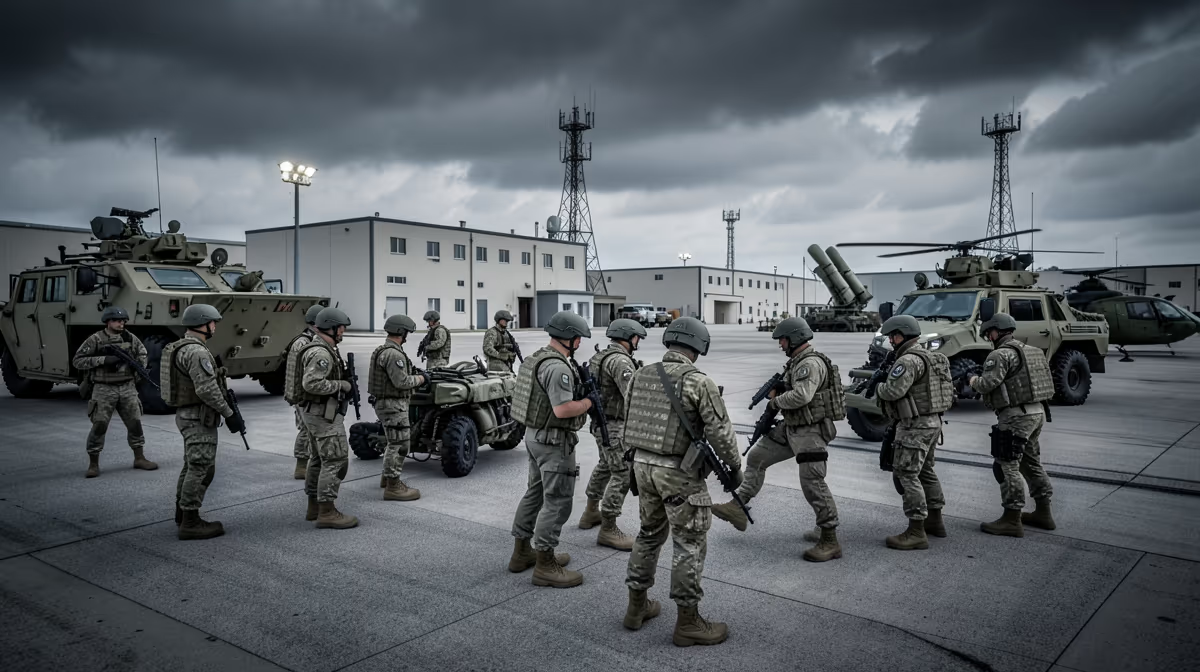
The geographical distribution of American military strength is facing its most significant realignment in decades as the Pentagon signals a departure from traditional overseas posturing. Recent announcements regarding US troop redeployment from Europe have sparked intense global debate over the future of international defense policy and the role of American forces in stabilizing the Western Hemisphere.
This strategic pivot, articulated by Pete Hegseth, suggests that the United States is moving toward a defense posture that prioritizes homeland and regional security over long-standing continental commitments. By shifting focus toward the Western Hemisphere, the administration is signaling a fundamental re-evaluation of where American boots are most effective in countering modern threats.
The potential movement of military personnel from European theaters to the Western Hemisphere represents a strategic recalibration that could alter international alliances and reshape regional security balances for years to come.
Pete Hegseth outlines Western Hemisphere military priorities
The core of this developing strategy involves the relocation of military resources that have historically been stationed overseas, particularly within the European theater. Pete Hegseth has indicated that some US troops could be redeployed from Europe to the Western Hemisphere, reflecting a move to bring forces closer to the American mainland. This potential military shift is not merely about troop numbers; it represents a broader reassessment of national security priorities and global military positioning.
While the specific units and timelines remain under evaluation, the intent is clear: to align military assets with the administration’s focus on domestic and hemispheric deterrence. This involves moving personnel and hardware that are currently stationed with European allies back to areas where they can support regional stability and border security initiatives. The announcement has already prompted high-level discussions within the Department of Defense regarding the implementation of these administrative priorities.
Strategic Deterrence and Regional Focus
Beyond the European shift, the broader defense strategy includes a firm stance on regional adversaries. Hegseth has emphasized that Iran will never be permitted to obtain a nuclear bomb, further touting the strategic possibility of a blockade in the Strait of Hormuz. These comments suggest that while the US may be drawing down presence in some traditional theaters, it remains committed to aggressive deterrence in specific strategic corridors. The intersection of these policies—drawing down in Europe while ramping up hemispheric focus and maintaining pressure on Iran—paints a picture of a defense apparatus in a state of rapid transition.
How European security reacts to shifting US defense policy
The indication of a troop withdrawal from Europe has sent ripples through the NATO alliance and among traditional security partners. For decades, the presence of American forces in Europe has served as a cornerstone of the regional security architecture. Any tangible plans to downscale this force presence are expected to face intense diplomatic scrutiny from European partners who rely on American personnel for deterrence and logistical support.
Allied Concerns and Burden Sharing
The debate over this redeployment often circles back to the concept of burden-sharing within international alliances. The current administration’s direction aligns with a stated agenda to prioritize domestic security, often arguing that European nations must take a more active role in their own regional defense. This political angle views the move as carrying out a duly elected mandate. However, the potential for heightened diplomatic friction is significant, as allies navigate the uncertainty of shifting American defense resource allocations.
- European security partners are expected to seek clarification on the scope of the drawdown.
- NATO readiness levels could be impacted by the loss of specific American logistical and combat capabilities.
- Regional neighbors in the Western Hemisphere are preparing for an increased American military footprint and closer security cooperation.
The Geopolitical Chessboard: Root Causes of the Shift
The root cause of this strategic shift lies in a transition toward homeland security and regional deterrence within the Western Hemisphere. Defense analysts point to a reassessment of resource allocation away from European theaters as a response to mounting asymmetric challenges. These challenges include drug trafficking, regional instability, and the need for enhanced maritime security closer to American shores.
| Impact Area | Strategic Consideration |
|---|---|
| U.S. Foreign Policy | Re-evaluation of global footprints and alliance commitments |
| European Security | Potential reduction in NATO readiness and localized deterrence |
| Western Hemisphere | Increased focus on border security and regional stability |
| Defense Economics | Reallocation of expenditures from overseas infrastructure to domestic logistics |
Historically, such strategic adjustments are not without precedent. Post-Cold War eras have often seen a gradual draw-down of US force postures in Europe as the military recalibrates to accommodate emerging regional priorities and defense budget realignments. The current move reflects a similar historical parallel, albeit driven by a modern emphasis on hemispheric integrity.
Political Mandate and Public Implementation
The policy direction is being framed by administration supporters as a necessary step in fulfilling promises to the electorate. Scott Jennings recently noted that a duly elected president appointed Hegseth to carry out these specific policies, suggesting that critics of the shift can voice their opposition in future election cycles. This highlights the domestic political dimension of Pete Hegseth defense policy, which seeks to prioritize national interests as defined by the current executive mandate.
A duly elected president appointed Hegseth to carry out his policies; you can run against it in 2028.
Hegseth’s public presence has also been a focal point of this transition. From handling the Air Force-Navy coin toss to demonstrating skills at the Academy, the visibility of the defense leadership is part of a broader effort to maintain morale and public support during a period of significant institutional change. This human element of the defense apparatus remains crucial as service members and their families prepare for the logistical realities of redeployment.
Economic Realignment and Logistics
The reallocation of defense expenditures is expected to alter the current landscape of logistics, supply chains, and procurement. Moving a significant number of troops from Europe to the Western Hemisphere involves more than just transportation; it requires a shift in infrastructure spending. Long-term costs associated with European stationing and infrastructure may be diverted toward hemispheric operations and regional defense markets.
PROCUREMENT AND SUPPLY CHAINS
A pivot toward the Western Hemisphere necessitates a different set of logistical requirements. The defense industry may see a shift in demand from heavy European-based equipment to assets more suited for regional stability and maritime security operations. This economic angle suggests that the defense budget will be increasingly scrutinized for how it supports the new hemispheric focus, potentially impacting regional defense markets and local economies that have long benefited from American military presence.
Future Outlook and Security Assessment
As the Department of Defense evaluates its strategic priorities, the next 24 to 72 hours are expected to see continued media analysis and political reactions. European allies and domestic lawmakers will likely demand more granular details on the strategic implications of shifting military resources away from traditional theaters.
Expert Predictions and Possible Scenarios
Analysts suggest that the best-case scenario involves a measured, transparent reassessment of global defense postures that addresses security concerns in both hemispheres without undermining regional stability. Conversely, the worst-case scenario could involve heightened diplomatic friction with European allies and a perceived weakening of US security commitments, leading to uncertainty in international defense resource allocations.
- Administration officials will continue to outline evolving defense priorities and hemispheric strategies.
- Debates will likely intensify regarding the impact of force posture changes on traditional NATO alliances.
- Military leadership will begin the complex task of evaluating operational capabilities during the transition period.
The transition remains a developing situation, with service members and defense planners navigating the complexities of any official redeployment. The shift toward a Western Hemisphere military strategy signals a new era in American foreign policy, where the proximity of a threat is as significant as its magnitude.
Frequently Asked Questions
What did Pete Hegseth indicate regarding US troop redeployments?
Pete Hegseth indicated that some US troops could potentially be redeployed from Europe to the Western Hemisphere. This strategic shift points toward a reconfiguration of American military positioning.
Why is a potential US troop redeployment from Europe to the Western Hemisphere significant?
This potential shift matters because it signals a re-prioritization of defense and strategic focus closer to home. Moving forces away from long-standing European commitments could reshape regional security dynamics.
Who is affected by Hegseth's indicated troop movements?
Allied nations in Europe and partners within the Western Hemisphere are directly impacted by these discussions. Service members and defense planners will also navigate the logistical changes of any official redeployment.
What happens next following Hegseth's statements on troop redistribution?
Defense officials and military leadership are expected to evaluate strategic priorities and operational capabilities. Further policy announcements will clarify the scope and timeline of any future relocations.
What is the background behind the discussions on US military positioning?
Current defense discussions often revolve around balancing global commitments with domestic and hemispheric security priorities. Appointed leaders like Hegseth are tasked with carrying out specific administrative policies regarding national defense.
Which specific regions are involved in the proposed troop shift?
The discussions specifically contrast European deployments with the Western Hemisphere. According to reports from sources like The Hill, these potential shifts are part of broader ongoing military evaluations.
Conclusion
The indicated shift of US troops from Europe to the Western Hemisphere marks a defining moment in contemporary defense policy. By prioritizing regional stability and domestic security, the administration is challenging decades of established military doctrine. While the move aligns with a political mandate to recalibrate global footprints, the logistical and diplomatic hurdles remain substantial. As the Pentagon moves forward with these evaluations, the impact on the NATO alliance and **European security implications** will remain a primary focus for analysts and world leaders alike. The coming months will likely reveal the true scope of this redeployment and its long-term effects on global stability.
Sources
- Hegseth indicates some US troops could be redeployed from Europe to Western Hemisphere — The Hill
- Pete Hegseth warns Iran will 'never' get nuclear bomb, touts Hormuz blockade — jpost.com
- Scott Jennings: A Duly Elected President Appointed Hegseth To Carry Out His Policies, "You Can Run Against It In 2028" — Yahoo
- Pete Hegseth handles Air Force-Navy coin toss after showing off basketball skills at Academy — Fox News


.webp)
