
China Bloomberg Reporter Ban Signals A Major Shift In Media Access
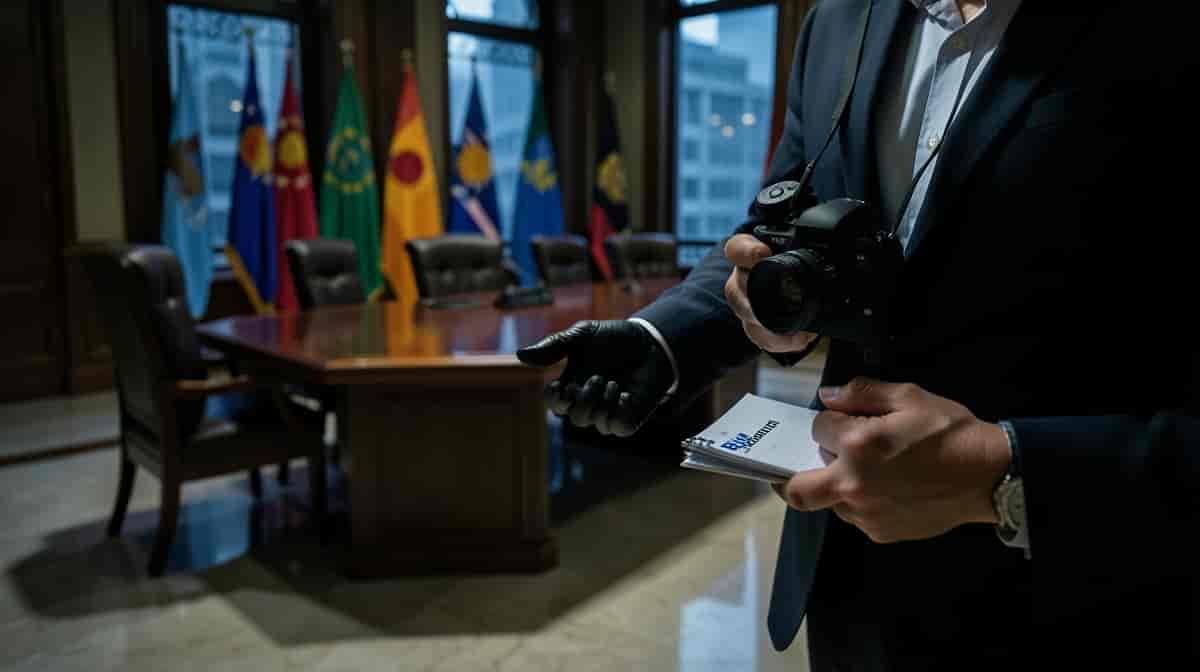
The carefully choreographed theater of global diplomacy recently collided with the reality of independent journalism when a Bloomberg reporter was abruptly blocked from a high-stakes meeting. This exclusion, orchestrated by Chinese authorities, underscores the precarious nature of foreign media access during summits involving the world’s most powerful leaders, specifically as China bars Bloomberg reporter from covering crucial international discussions.
The incident occurred during a critical diplomatic gathering involving U.S. President Donald Trump, Russian President Vladimir Putin, and Chinese President Xi Jinping. What was intended to be a high-level trilateral talk became a flashpoint for press freedom after a journalist was denied entry as a direct consequence of posing an unscripted question. This development highlights the ongoing friction between international media organizations attempting to fulfill their roles and the rigid government controls that often dominate such high-stakes environments.
The exclusion of a journalist from a trilateral summit for simply posing a question marks a significant escalation in the weaponization of diplomatic protocols against the free press.
The Breach of Protocol and Subsequent Exclusion
The diplomatic fallout began during an interaction where a Bloomberg journalist directed a specific question to Donald Trump. While journalists are trained to seek transparency and hold powerful figures accountable, this spontaneous engagement reportedly displeased Chinese authorities. As a result, the reporter was barred from attending the subsequent trilateral meeting, a high-profile gathering that serves as a cornerstone for superpower diplomacy.
This restriction was not merely an administrative hurdle but a deliberate move to control the narrative of the summit. High-level engagements involving figures like Trump, Putin, and Xi are traditionally heavily choreographed events where every movement and word is subject to intense scrutiny. By blocking an accredited journalist, the host authorities enforced a boundary that many analysts see as a hardening of stances regarding press credentials and access to international political events.
Verified Facts of the Incident
- Chinese authorities officially barred the Bloomberg reporter from the trilateral talks.
- The restriction was a direct reaction to a question the journalist previously posed to U.S. leadership.
- The meeting in question involved key global figures, including Presidents Xi Jinping, Vladimir Putin, and Donald Trump.
- Major news outlets, including The New York Times and Fox News, confirmed the diplomatic access dispute.
- The incident underscores a tightening grip on information control during multilateral gatherings.
Roots of the Restriction and Geopolitical Friction
The root cause of this exclusion lies in Beijing's strict intolerance for unscripted media engagement and political questioning during high-stakes diplomatic summits. For the host government, the presence of an independent press corps represents a variable that cannot always be controlled. When a reporter asks a question that falls outside the pre-approved script, it is often viewed by authorities as a breach of protocol rather than a standard journalistic practice.
When journalists are blocked from covering high-level diplomatic meetings simply for asking questions, the public loses vital independent oversight.
This action demonstrates the tightening grip of authoritarian information control and the deliberate shielding of leaders like Xi Jinping from spontaneous scrutiny. The exclusion may reflect a deeper internal anxiety within the host government regarding how spontaneous dialogue between Western leaders and the press could derail carefully choreographed diplomatic narratives. In the world of superpower diplomacy, the image of absolute control is often as important as the negotiations themselves.
Historical and Political Context
- Historical Parallel: This incident follows a long-standing practice of authoritarian regimes restricting accredited foreign press pools from attending sensitive bilateral or trilateral photo-ops following unauthorized questioning.
- Political Angle: The move highlights the friction between Western journalistic norms—which prioritize questioning and transparency—and the rigid security and media protocols enforced during superpower meetings.
- Economic Angle: This incident also emphasizes the precarious operating environment for international financial news organizations, such as Bloomberg, and journalists reporting from within restrictive jurisdictions.
The Shifting Landscape of Media Access
The barring of the reporter occurs against a backdrop of significant global shifts. Reporters covering these summits are often the same individuals tracking major economic and corporate developments. For instance, recent reports from Bloomberg journalists have covered high-stakes events such as the voluntary resignation of Nvidia’s chair, Jensen Huang, and the startling statistic that the top 1% of U.S. households now hold more wealth than the bottom 90% combined as of the second quarter of 2026.
When journalists who are accustomed to analyzing complex economic and tech data are suddenly silenced in a diplomatic setting, it signals a broader challenge for the flow of unvarnished information. The ability to report on wealth gaps or corporate leadership is intrinsically linked to the ability to question political leaders at the highest levels of government.
| Event Phase | Action Taken | Involved Parties |
|---|---|---|
| Initial Engagement | Unscripted question posed to U.S. leadership | Bloomberg Reporter, Donald Trump |
| Escalation | Exclusion from high-level trilateral talks | Chinese Authorities, Bloomberg News |
| Summit Meeting | Trilateral discussion proceeds without reporter | Xi Jinping, Vladimir Putin, Donald Trump |
| Aftermath | International reports and condemnation | The New York Times, Fox News, Media Advocacy Groups |
Implications for International Relations
The decision to block a reporter from a Trump-Putin-Xi meeting has immediate implications for international relations and diplomatic protocol. Press freedom organizations and international bodies are expected to monitor these developments closely, as they set a troubling precedent for how future summits will be handled. If asking a question is grounds for expulsion, the "pool" system of journalism—where a small group of reporters shares information with the wider press—becomes fundamentally compromised.
Analysts expect that this incident will lead to heightened scrutiny on media access protocols during future high-profile diplomatic summits. This could potentially lead to increased friction between foreign press corps and host governments, as journalists push for the right to perform their duties without arbitrary restrictions.
Why This Matters for the General Public
- Loss of Oversight: Without independent journalists in the room, the public is forced to rely solely on state-issued press releases.
- Reduced Transparency: Unscripted questions often lead to the most revealing moments in diplomacy; their absence limits public understanding of leader interactions.
- Precedent Setting: If one nation successfully restricts access without consequence, other governments may adopt similar restrictive guidelines.
Predictor: The Next 72 Hours and Beyond
The immediate future following this exclusion is likely to be defined by diplomatic fallout and media-led discussions regarding the status of the Bloomberg reporter. Within the next 24 hours, international news cycles will likely be dominated by the details of the exclusion and the response from Bloomberg News.
In the next 72 hours, press freedom organizations and international bodies may issue formal statements addressing these access restrictions. These organizations routinely push back against such measures to safeguard reporting rights at future global summits. However, host countries often retain ultimate control over venue access and accreditation, leading to a potential stalemate between journalistic demands and state security protocols.
- Best-Case Scenario: A clarification of press access rules for future trilateral meetings, allowing journalists to perform their duties without arbitrary restrictions based on the content of their questions.
- Worst-Case Scenario: Further retaliatory measures or a general hardening of stances regarding press credentials, leading to the systematic exclusion of foreign media from sensitive sessions involving major world powers.
Expert predictions suggest that we are entering a phase of increased friction. Analysts would likely expect heightened scrutiny on media access protocols, which could further complicate the already delicate diplomatic relations between the U.S., China, and Russia.
Frequently Asked Questions
Why did China bar a Bloomberg reporter from trilateral talks?
China barred a Bloomberg reporter from attending the trilateral meeting involving Trump, Putin, and Xi because of a question the journalist previously asked Trump. The incident highlights ongoing tensions regarding press freedom and access at high-level international summits.
What specifically triggered the decision to block the reporter?
The restriction was enforced after the reporter posed a specific question to Donald Trump, which displeased Chinese authorities. Consequently, access to the subsequent Trump-Putin-Xi meeting was denied.
Who was the journalist affected by China's decision?
The reporter barred from the trilateral talks belongs to Bloomberg News. Such restrictions directly impact journalists attempting to cover diplomatic engagements and hold leaders accountable through questioning.
Why does barring journalists from high-level talks matter?
Blocking accredited journalists from covering major geopolitical events undermines transparency and freedom of the press. It restricts the public's ability to receive independent reporting on interactions between world leaders.
What is the background of media access during trilateral summits?
International summits involving major global powers like the US, China, and Russia typically involve strict protocols regarding media credentials. Incidents where reporters are blocked or expelled underscore the fragile nature of press access under authoritarian or restrictive guidelines.
What happens next regarding press restrictions at international meetings?
Media organizations and press freedom advocates routinely push back against such restrictions to safeguard reporting rights at future global summits. However, host countries often retain control over venue access and accreditation.
Conclusion
The exclusion of a Bloomberg reporter from the trilateral talks between Presidents Trump, Putin, and Xi represents a significant moment of tension in the intersection of journalism and global diplomacy. Verified reports confirm that the restriction was a direct response to a question asked by the journalist, highlighting a strict intolerance for unscripted media engagement by the host authorities. While the meeting proceeded with the world's most powerful leaders, the absence of independent media oversight sets a concerning precedent for future international summits. As media organizations and press freedom advocates monitor the situation, the focus remains on whether future diplomatic protocols will prioritize transparency or continue to favor the rigid control of information. Realistic next steps involve formal responses from international press bodies and potential negotiations over media access rules for upcoming multilateral gatherings.
Sources
- China Bars Bloomberg Reporter From Trilateral Talks for Asking a Question — The New York Times
- American Reporter Kicked Out of Dictator Party for Asking Trump a Question — The Daily Beast
- China blocks Bloomberg reporter from Trump-Putin-Xi meeting over question to Trump — Fox News
- Annmarie Hordern: Nvidia chair says Jensen Huang voluntarily resigned, board will not reinstate him as CEO — Traders Union
- Rubio says recent US tech outages unrelated, not hostile acts — Moneyweb
- Annmarie Hordern: Top 1% of U.S. households now hold more wealth than bottom 90% combined in Q2 2026 — Traders Union


