
Dadar Railway Station Renaming Move Addressed by Devendra Fadnavis
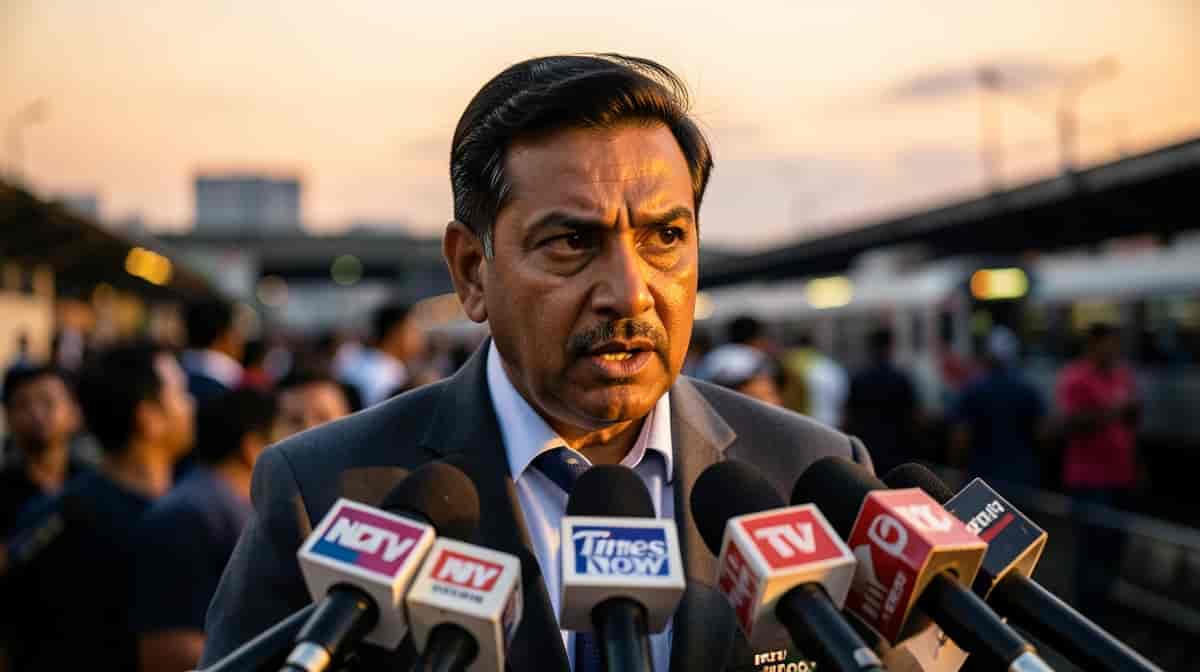
The announcement that one of Mumbai’s most critical transit hubs would undergo a name change sent ripples of confusion through the city's political and commuter circles. What began as a sweeping administrative declaration quickly morphed into a case study of communication breakdown within the state government, forcing the highest level of leadership to intervene. Recent confusion surrounding the Dadar station renaming prompted a direct response from the state leadership, ensuring that public discourse did not veer further into misinformation.
The clarification by Chief Minister Devendra Fadnavis confirms that the renaming to 'Chaityabhoomi' applies strictly to the Dadar Metro Station, leaving the identity of the historic Dadar Railway Station unchanged.
Understanding the Dadar station renaming controversy
The incident began when initial reports and government communications suggested a plan to rename the major Dadar Railway Station. This sparked an immediate and widespread public discussion, as Dadar serves as a vital artery for millions of daily commuters in the Mumbai suburban railway network. The prospect of such a massive change to a colonial-era landmark triggered a mixture of cultural pride and administrative concern.
However, the Maharashtra Chief Minister’s Office (CMO) was forced to issue a rapid correction to settle the growing misunderstanding. Chief Minister Devendra Fadnavis stepped in to clarify the administrative mix-up, specifying that the proposed designation of "Chaityabhoomi" was never intended for the railway terminal itself. Instead, the name change is slated for the Dadar Metro Station. This distinction is critical for urban governance, as the metro and railway systems operate under different transit authorities, though they often share the same geographic proximity.
The Scope of the Administrative Clarification
The CMO clarified that the official decision pertained specifically to the Dadar Metro Station receiving the Chaityabhoomi designation. This correction was necessary to address widespread media confusion that stemmed from the initial government communications. By narrowing the scope of the renaming to the metro infrastructure, the administration sought to preserve the legacy of the railway station while still honoring the intended cultural memorial.
- Initial reports falsely claimed the main railway terminal would be renamed.
- Devendra Fadnavis personally addressed the faux pas to restore administrative clarity.
- The renaming specifically targets the metro facility linked to the local transit network.
Political Friction and the 'Rename Nagpur' Demand
The administrative faux pas provided significant ammunition for opposition factions, leading to a sharp political exchange. Figures within Uddhav Thackeray’s camp, most notably Sanjay Raut, seized on the confusion to critique the government’s priorities. Raut responded to the initial reports with sarcasm, suggesting that if the government were so intent on renaming major landmarks, they should consider renaming the city of Nagpur as well.
This reaction highlights the ongoing identity politics and sub-national competition that define Maharashtra’s political landscape. The incident triggered friction between the ruling alliance and the opposition, with critics using the naming developments to question the consistency of civic nomenclature policies. For the opposition, the mix-up was not just a clerical error but a reflection of how infrastructure naming remains a contentious and symbolic battleground.
Regional Identity and Symbolism
The demand to rename Nagpur, while presented sarcastically, underscores the tensions regarding regional pride and the influence of different cities within the state's power structure. Analysts suggest this reflects a domestic competition for symbolism in India’s financial capital. The use of names is rarely just about navigation; it is about which historical narratives and political figures are prioritized in the public eye.
The Cultural Significance of Chaityabhoomi
The choice of the name "Chaityabhoomi" is deeply rooted in the history of Maharashtra and the broader social fabric of India. Chaityabhoomi is famously known as the cremation place of Dr. B.R. Ambedkar, the architect of the Indian Constitution and a towering figure in the movement for social justice.
Naming the nearby metro station after the memorial connects public transit directly with this vital landmark. The site draws millions of followers every year, particularly on Mahaparinirvan Din, when people travel from across the country to pay their respects. By designating the Dadar Metro Station as Chaityabhoomi, the state acknowledges the immense historical and cultural significance the site holds for the community and the state.
Chaityabhoomi serves as a vital landmark of historical and cultural significance, drawing millions of followers annually to honor Dr. B.R. Ambedkar’s legacy.
Economic and Infrastructure Implications
Beyond the political and cultural debate, the renaming process involves tangible administrative and economic steps. Even though the change is limited to the metro station, it requires a synchronized update across various platforms. The costs associated with updating station infrastructure, signage, and digital transit networks are significant factors in any nomenclature change.
| Phase | Action Item | Responsibility |
|---|---|---|
| Infrastructure | Physical replacement of station signage | Metro Authority |
| Digital Systems | Updating transit apps and ticketing software | IT and Transit Dept |
| Public Information | Communication to commuters and map updates | CMO / Transit PR |
While these costs are mitigated by clarifying that the facility designation applies only to the metro rather than the entire Dadar Railway Station terminal, the logistics remain complex. Every digital map, physical sign, and automated announcement system must be updated to ensure that commuters do not face confusion while navigating the network.
Analyst Perspective: The 'Trial Balloon' Theory
From an investigative standpoint, the root cause of the incident appears to be a miscommunication within the state administration regarding urban nomenclature changes. However, some analysts view the situation through a more strategic lens. There is a possibility that the faux pas served as an intentional "trial balloon" by political actors to gauge public and opposition sentiment regarding the renaming of major colonial-era transit hubs.
By observing the reaction to the potential renaming of the main railway station, the administration could assess the level of resistance or support for such a move before committing to official policy. This follows a historical parallel in the region, such as the transformation of Victoria Terminus into Chhatrapati Shivaji Maharaj Terminus, a move that redefined the symbolic landscape of Mumbai’s railways.
Predicting the Political and Administrative Fallout
As the state moves forward with the clarified renaming plan, several developments are expected in the short term. The Chief Minister's office will likely continue managing communications to ensure the distinction between the metro and railway stations is understood, while opposition leaders are expected to press for further reactions.
- Next 24 Hours: Continued communication from the CMO to solidify the clarification and minimize further confusion in the press.
- Next 72 Hours: Public discussions and political debates will likely center on the distinction between the two stations and the broader symbolic politics of memorials.
- Long Term: The administration will likely move to finalize the signage updates for the metro station to complete the transition to the name Chaityabhoomi.
The expert prediction suggests that this communication mix-up will continue to fuel political sparring. In the best-case scenario, the administration smoothly implements the correct nomenclature, diffusing confusion without escalating friction. In the worst-case scenario, the initial error could lead to protracted demands for renaming other major cities and transit hubs, deepening regional polarization.
Frequently Asked Questions
What was the faux pas regarding the Dadar railway station renaming?
The Maharashtra government initially announced that Dadar railway station would be renamed, but the Chief Minister's Office later clarified there was a mistake in the announcement. It turned out to be a mix-up regarding which specific transport hub was actually being renamed.
Which station is actually being renamed according to CM Devendra Fadnavis?
Maharashtra Chief Minister Devendra Fadnavis clarified that the Dadar Metro Station, rather than the Dadar Railway Station, is the one being renamed. The metro station will be given the new name Chaityabhoomi to honor Dr. B.R. Ambedkar's memorial.
Why is the renaming significant for the area?
The naming honors Dr. B.R. Ambedkar's memorial, Chaityabhoomi, which holds immense historical and cultural significance for followers and the state. Such naming decisions often carry deep political and social symbolism in Maharashtra.
Who pointed out political reactions to the announcement?
Opposition leaders, including Team Uddhav and Sanjay Raut, reacted strongly to the naming developments, with some humorously or critically demanding further renamings like Nagpur. These political reactions highlight how infrastructure naming conventions remain a contentious subject in state politics.
What did the CMO clarify following the initial reports?
The CMO clarified that the official decision pertained specifically to the Dadar Metro Station receiving the Chaityabhoomi designation. This correction corrected widespread media confusion stemming from the initial government communications.
What is the background behind the Chaityabhoomi name choice?
Chaityabhoomi is famously known as the cremation place of Dr. B.R. Ambedkar and draws millions of followers every year, especially on Mahaparinirvan Din. Naming the nearby metro station after the memorial connects public transit directly with this vital landmark.
Conclusion
The clarification provided by **Devendra Fadnavis** has effectively narrowed the scope of the renaming project, ensuring that the legacy of Dadar Railway Station remains intact while the Dadar Metro Station evolves to honor Dr. B.R. Ambedkar. This administrative correction was essential to prevent long-term confusion for Mumbai's massive commuter base and to stabilize a volatile political narrative. While the correction has been made, the incident underscores the sensitive nature of urban nomenclature in Maharashtra. The next steps will involve the physical and digital transition of the metro station's identity, a process that will likely be watched closely by both supporters and political opponents. Moving forward, the administration faces the task of ensuring that such significant cultural designations are communicated with precision to avoid future administrative faux pas.
Sources
- 'Rename Nagpur Too': Team Uddhav On Move To Change Mumbai's Dadar Metro Station Name — NDTV
- Why Dadar station could soon be renamed after Dr B R Ambedkar’s memorial — The Indian Express
- Maharashtra govt's announcement to rename Dadar railway station turns out to be a faux pas, CMO clarifies — The Times of India
- Dadar Metro Station to Be Renamed Chaityabhoomi, Not Dadar Railway Station: Maharashtra CM Devendra Fadnavis — Mumbai Live
- Dadar station to be renamed Chaityabhoomi, says CM Devendra Fadnavis — The Times of India
- As Dadar station gets a new name, Sanjay Raut wants Nagpur renamed too — The Indian Express


