
Kerch Bridge Strike Signals a Massive Shift in the Ukraine Russia War
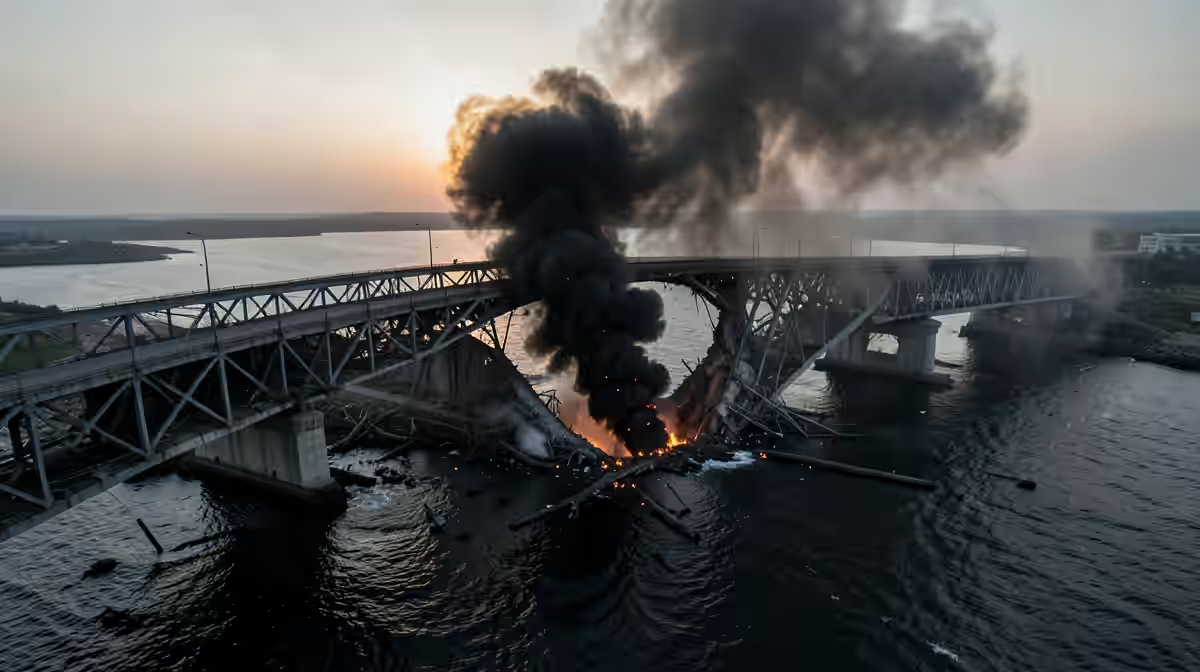
The structural integrity of the main artery connecting the Russian mainland to the occupied Crimean Peninsula faces a new and profound challenge following reports of a successful kinetic engagement. This strategic Kerch bridge struck again marks a critical turning point in the ongoing Ukraine Russia war, forcing a re-evaluation of the security of Moscow’s most vital logistical corridors.
The repeated targeting of the Kerch bridge underscores the ongoing vulnerability of critical supply lines and infrastructure in the Russia-Ukraine war, potentially influencing military strategies and regional stability.
The Mechanics of the Renewed Strike
The incident, which targeted the bridge connecting Russia to occupied Crimea, was first acknowledged by the Russian-installed regional governor before being confirmed by major international news outlets. Reports from CNN and The Guardian indicate that the Kerch Strait bridge—a project of immense symbolic and practical importance to the Kremlin—has been hit once more, disrupting the flow of resources to the front lines.
This latest strike is not an isolated event but part of a sustained campaign to compromise the bridge infrastructure. Throughout the prolonged conflict, this specific bridge has served as a primary focal point for military actions, representing the ongoing vulnerability of static, high-profile mega-projects in the face of modern warfare tactics. Russian authorities are now tasked with assessing the structural damage, a process that is expected to dominate the immediate 24-hour response cycle.
| Stage of Conflict | Bridge Status and Strategic Activity |
|---|---|
| Initial Strategic Campaigns | Launch of targeted operations against bridge infrastructure |
| Recovery Phases | Subsequent repairs and renewed fortification by Russian authorities |
| Current Development | Latest confirmed strike impacting the link to occupied Crimea |
Strategic and Symbolic Ramifications
The Kerch Strait bridge holds immense value for Moscow’s military operations, serving as a primary logistical lifeline for Russian forces stationed in the region. Since the annexation of Crimea in 2014, the bridge has functioned as a physical manifestation of Russian control over the peninsula. However, the repeated ability of Ukrainian forces to strike this infrastructure challenges the narrative of Russian regional dominance and forces a shift in military resource allocation.
Logistical Disruptions
From a tactical perspective, the hit on the Crimea bridge creates an immediate bottleneck for military supply lines. The bridge is the most direct route for moving heavy equipment, fuel, and personnel from the Russian mainland into the southern theater of the war. By successfully targeting this chokepoint, the strategic imperative for Ukraine is to sever these lines, compelling Russian forces to reconsider the security of their transport corridors.
Economic and Regional Stability
Beyond the immediate military impact, the strike carries significant economic weight. The disruption of critical infrastructure connecting Russia to Crimea increases logistical costs and strains the stability of regional supplies. This impact is felt not only by military planners but also by civilian populations in both Russia and the occupied Crimean Peninsula who rely on the bridge for transit and the delivery of essential goods.
Geopolitical Friction and International Alignments
The diplomatic fallout following the bridge strike has been swift and marked by sharp rhetoric from Moscow. In the wake of the incident, Russian officials have raised questions regarding international involvement, specifically inquiring whether the Netherlands has joined the conflict following the strike on the bridge. This reflects the intense diplomatic scrutiny and the heightened sensitivity surrounding Western support for Ukraine’s military efforts.
The ongoing strikes on the Kerch bridge escalate tensions between Russia and Western-backed Ukraine, drawing diplomatic reactions and raising questions about international alignments.
The conflict continues to draw high-profile commentary from figures outside the immediate military theater. Prince Harry has recently stated that he would return to the military to face Russia if needed, signaling the broad international resonance of the war. Such statements, while not directly linked to the bridge strike itself, highlight the global atmosphere of readiness and the perceived threat that the ongoing escalation poses to international security.
Analytical Assessment of Modern Warfare
The root cause of these repeated attacks is the strategic necessity to degrade the logistics supporting occupied Crimea. Geopolitical analysts suggest that the vulnerability of the Kerch bridge may force a broader reconsideration of military strategy on both sides. The political angle is equally complex, as domestic and international pressures mount on Russian-installed authorities to provide security for infrastructure that has proven difficult to defend.
The Hidden Costs of Static Defense
One of the more nuanced aspects of this development is the "hidden angle" regarding military resource allocation. Repeated attacks on a single piece of infrastructure compel the defending side to divert air defense systems, surveillance technology, and engineering units away from the front lines to protect a static target. This resource drain can create vulnerabilities elsewhere, a factor that is likely central to the strategic planning behind the strike.
Historical Parallels in European Conflict
Analysts have noted the historical parallel between this campaign and the strategic targeting of critical supply chokepoints during major European conflicts of the 20th century. The destruction or disruption of logistical bridges has historically been a prerequisite for shifting the momentum of large-scale territorial wars. The Kerch bridge, in this context, has become the modern equivalent of the vital rail and road hubs that defined the logistical battles of previous eras.
Future Outlook and Potential Escalations
The next 72 hours are expected to be characterized by heightened security briefings and official assessments of the damage. While the best-case scenario involves the management of repairs without a broader international escalation, the worst-case scenario remains a significant concern for global observers.
- Next 24 Hours: Russian authorities will conduct detailed structural assessments while continuing to manage the immediate diplomatic fallout.
- Next 72 Hours: Anticipation of further geopolitical reactions and possible military shifts as both sides respond to the new reality of the bridge’s vulnerability.
- Long-term Outlook: Heightened security measures and intensified diplomatic friction are likely to follow, as the bridge remains a permanent target in the Ukrainian strategic playbook.
Expert predictions suggest that we are entering a period of intensified diplomatic fallout. The questioning of the Netherlands' role indicates that Moscow may use these infrastructure strikes as a pretext for broader political accusations against European nations. Furthermore, the vulnerability of the bridge suggests that sustained Ukrainian targeting of key logistics hubs will remain a centerpiece of their military strategy for the foreseeable future.
Frequently Asked Questions
What happened to the Kerch bridge recently?
The Kerch bridge, which connects Russia to occupied Crimea, has been struck and hit again in the ongoing Ukraine-Russia conflict. This latest incident was confirmed by both international media reports and Russian-installed authorities in the region.
Why is the Kerch bridge attack significant in the Ukraine-Russia conflict?
The bridge serves as a critical logistical and symbolic lifeline connecting mainland Russia to the Crimean Peninsula, which was annexed in 2014. Repeated strikes on this infrastructure disrupt military supply lines and challenge Russian control over the occupied territory.
Who is affected by the latest strike on the Crimea bridge?
The ongoing attacks directly impact Russian military supply routes, civilian transit between Russia and Crimea, and the broader security situation in the region. Additionally, diplomatic tensions continue to ripple outward, with Russian officials raising questions regarding international involvement.
What might happen next following the bridge strike?
While immediate military responses or repair efforts by Russian forces are anticipated, the continued vulnerability of the bridge signals sustained Ukrainian targeting of key logistics hubs. Observers will be watching to see how Moscow adjusts its defense and supply strategies in occupied Crimea.
What is the background of the Kerch bridge in this war?
The Kerch bridge has been a high-profile target multiple times since the full-scale Russian invasion of Ukraine began. It holds immense strategic value for Moscow's military operations and represents a major flashpoint in the territorial dispute over Crimea.
What specific diplomatic reaction followed the recent Crimea bridge strike?
Following the latest strike, Russian authorities raised questions over whether the Netherlands had somehow joined the conflict. This reflects the intense diplomatic scrutiny and paranoia surrounding international support for Ukraine's military actions.
Conclusion
The renewed strike on the Kerch bridge marks a significant moment in the tactical evolution of the Ukraine-Russia war. By targeting this vital logistical and symbolic link for the third time, the vulnerability of Russian-controlled infrastructure has been laid bare, prompting immediate diplomatic friction and questioning of international alignments. As Russian-installed authorities begin the difficult task of damage assessment and repair, the broader conflict appears poised for further escalation. The international community remains on high alert, monitoring how this disruption to Moscow's supply lines will influence the strategic maneuvers of both nations in the coming days. The bridge, once seen as a permanent fixture of Russian regional integration, now stands as a primary symbol of the precarious nature of military occupation in a modern, high-intensity conflict.
Sources
- Russia's Putin says he expects 'big potential benefit' from meeting with Trump and Xi — Reuters
- Kerch attack: Bridge connecting Russia to occupied Crimea has been hit again — CNN
- Crimea bridge has been attacked again, says Russian-installed governor — The Guardian
- Ukraine war briefing: Russia asks if Netherlands has joined conflict after Crimea bridge strike — The Guardian
- Prince Harry says he’d return to the military to face Russia if needed — CNN
- Prince Harry says he’s ready to rejoin the military to fight Russia if needed — CNN


