
Delta Air Lines Operations Shift at Hartsfield-Jackson as Ripple Effects Mount
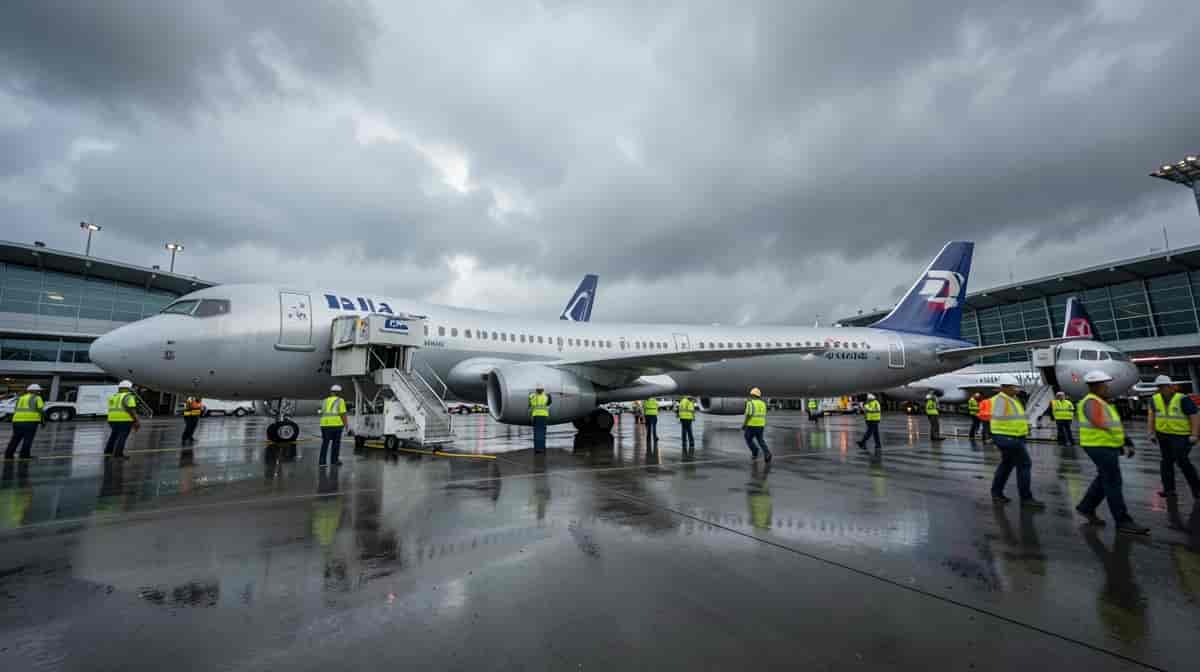
The world’s busiest airport suddenly went silent for arriving Delta flights on Sunday, leaving thousands of passengers suspended in a state of regulatory limbo across the national airspace. Travelers facing delays should note that the recent Delta Air Lines ground stop at Hartsfield-Jackson Atlanta International Airport has now been downgraded to a ground delay, though the operational reset is far from instantaneous.
This shift in status, mandated by the Federal Aviation Administration (FAA), reflects a transition from a total halt of inbound traffic to a regulated, staggered flow. However, for an airline that treats Atlanta as its primary global nerve center, even a temporary pause triggers a logistical shockwave that can be felt from local boarding gates to international arrival halls. As air traffic management works to regulate the surge of incoming aircraft, the focus now shifts to how quickly the industry’s most densely packed schedule can recover from a morning of enforced stillness.
The transition from a ground stop to a ground delay indicates that while immediate safety or congestion triggers are subsiding, the operational recovery for a mega-hub like Atlanta remains a complex, multi-hour endeavor that often leads to cascading schedule adjustments.
What Unfolded at Hartsfield-Jackson
The operational status at Hartsfield-Jackson Atlanta International Airport shifted dramatically on Sunday, November 22, 2026, as the FAA adjusted restrictions affecting incoming Delta Air Lines flights. Early reports from local news outlets, including Atlanta News First and WSB-TV, confirmed that a ground stop had been initially put in place for all flights heading to the major hub. This high-level intervention by air traffic control is one of the most restrictive tools available, effectively freezing departures at originating airports to prevent further saturation of the destination's airspace.
Shortly after the initial halt, officials downgraded the order to a ground delay. This adjustment allowed flights to resume their journeys toward Atlanta, albeit under strictly controlled pacing. While the move from a "stop" to a "delay" is a positive sign for recovery, it does not mean a return to normal operations. Instead, it creates a "metered" flow where aircraft are permitted to take off only at specific intervals to ensure the airport terminal operations and air traffic control can manage the volume safely.
Key Timeline of the Disruption
The timeline of events on Sunday illustrates the rapid nature of aviation decision-making: - Early Sunday morning: A ground stop was issued for Delta flights en route to Atlanta, halting departures nationwide. - Mid-morning: The FAA downgraded the status from a ground stop to a ground delay program. - Midday: Operations began a slow resumption, with Delta and airport officials warning of lingering schedule adjustments.
Reports from 11Alive.com and FOX 5 Atlanta highlighted that while the "stop" was lifted, the "delay" status continues to manage the backlog of aircraft. Travelers and those tracking incoming flights have been advised to monitor carrier updates and flight status boards continuously, as the ripple effect of the morning’s pause is expected to persist through the day.
Understanding the Mechanics of Air Traffic Control
To appreciate the impact of this event, it is necessary to distinguish between the two primary air traffic management tools used by the FAA. A ground stop is typically implemented during severe weather, heavy congestion, or unexpected operational emergencies. It prohibits aircraft headed to a specific airport from taking off until further notice. It is a "hard reset" intended to stop a situation from worsening.
In contrast, a ground delay program allows flights to continue under controlled spacing. It is often used when the demand for arrivals exceeds the airport's capacity for a sustained period but does not require a total halt. While a ground stop is more severe, the subsequent ground delay often leads to a more prolonged "rolling" disruption as the airline attempts to slot delayed flights into an already full afternoon schedule.
Hartsfield-Jackson is one of the busiest airports in the world, and a disruption at this critical transit point can cascade across the national airspace system, affecting thousands of travelers' connecting flights and personal schedules.
| Operational Status | FAA Designation | Impact Level |
|---|---|---|
| Initial Restriction | Ground Stop | Total halt of inbound departures toward Atlanta |
| Updated Restriction | Ground Delay | Staggered arrivals with regulated spacing |
| Current Phase | Operational Reset | Slow recovery with residual scheduling gaps and backlogs |
The Analytical Perspective: Root Causes and Regulatory Oversight
Industry analysts point to operational strain and air traffic management protocols as the root causes of the temporary restrictions for Delta Air Lines flights at Hartsfield-Jackson. The FAA’s role involves a delicate balance of passenger safety with aviation efficiency, particularly during major disruptions at critical transport hubs. When a hub as large as Atlanta experiences a bottleneck, the regulatory body must act decisively to prevent "gridlock in the sky," where holding patterns become too numerous for air traffic controllers to manage safely.
Political and Economic Angles
There is a significant political dimension to these events, centered on the regulatory oversight of the FAA. Maintaining the resilience of domestic infrastructure is a priority for federal transport authorities, as major hub failures can be seen as a reflection of broader systemic vulnerabilities. Economically, the implications for Delta Air Lines are substantial. Ground stops and delays trigger a chain reaction of costs, ranging from increased fuel consumption for idling aircraft to potential passenger compensation and the logistical expense of repositioning crews and planes that are out of sequence.
Beyond the immediate financial hit to the carrier, there is a geopolitical angle to consider. Hartsfield-Jackson serves as a vital corridor for international travel. A domestic disruption in Atlanta can indirectly affect international flight corridors, influencing global travel reliability and the perception of U.S. infrastructure resilience.
Systemic Vulnerability and the Mega-Hub Model
The situation on Sunday reveals what some analysts call a "hidden angle" in modern aviation: the growing systemic vulnerability of mega-hubs to cascading delays. Hartsfield-Jackson’s efficiency is built on high-density scheduling, where planes arrive and depart in rapid-fire "banks." When a ground stop breaks the rhythm of these banks, the entire system struggles to regain its tempo.
This suggests that schedule density management may require structural adjustments beyond reactive air traffic controls. History provides parallels, with past FAA ground stops and technology-induced network resets at major US aviation hubs like Chicago O'Hare or Atlanta showing that once a system of this scale is disrupted, the "slow reset" often takes days, not hours, to fully resolve.
Future Outlook: What to Expect in the Next 72 Hours
As the situation transitions from a crisis to a recovery phase, the FAA and Delta Air Lines are entering a critical monitoring period. The next 24 to 72 hours will determine how effectively the airline can mitigate the "knock-on" effects of the Sunday morning disruption.
The Next 24 Hours
The FAA is expected to monitor the transition from the ground delay program very closely. During this window, travelers should expect lingering schedule adjustments. Even if a flight is cleared to depart, the repositioning of flight crews who were timed out or stuck at other airports will likely cause additional cancellations or delays.
The Next 72 Hours
Operations at Hartsfield-Jackson should gradually normalize as Delta works through the passenger backlog. The success of this period depends on the airline’s ability to reposition its fleet efficiently. Expert predictions suggest that while the downgrading of the ground stop indicates easing conditions, a slow operational reset is the most likely reality for the immediate term.
Best-case scenario: The ground delay is lifted quickly with minimal further disruption, allowing Delta to clear incoming traffic and rapidly stabilize hub operations. Worst-case scenario: The ground delay leads to extended congestion and rolling flight delays throughout the network, compounding operational stress for Delta and inconveniencing a large volume of passengers into the start of the work week.
Frequently Asked Questions
What happened to the Delta Air Lines ground stop at Hartsfield-Jackson?
The Federal Aviation Administration (FAA) downgraded the initial ground stop for Delta Air Lines flights at Hartsfield-Jackson Atlanta International Airport to a ground delay. This adjustment allows flights to continue arriving and departing under regulated pacing rather than a complete halt.
Why does a ground stop get downgraded to a ground delay?
A ground stop is typically downgraded when immediate safety or congestion concerns begin to ease, allowing air traffic controllers to manage inbound traffic flow more smoothly. Instead of keeping planes completely grounded at their origins, a ground delay staggers arrivals to prevent overwhelming the airport.
Who is affected by the Hartsfield-Jackson ground delay?
Passengers traveling on Delta Air Lines flights en route to or scheduled through Atlanta's Hartsfield-Jackson airport are directly impacted by these schedule adjustments. Travelers should expect potential residual delays as the airline and airport work to normalize operations.
What happens next for travelers after the ground stop is lifted?
Even after ground stops and delays are lifted, airlines often experience a slow operational reset as aircraft and crews get back on schedule. Affected passengers should monitor their flight status closely through Delta's official channels for the most up-to-date itinerary changes.
What is a ground stop in aviation terms?
A ground stop is an air traffic management measure that prohibits aircraft headed to a specific airport from taking off until further notice. It is typically implemented during severe weather, heavy congestion, or unexpected operational emergencies.
How did local media report on the Atlanta airport Delta situation?
Local news outlets in Atlanta, including WSB-TV, Atlanta News First, 11Alive, and FOX 5 Atlanta, provided real-time updates tracking the transition from the initial ground stop to the updated ground delay status. They also advised travelers to check directly with Delta for individual flight impacts.
Conclusion
The downgrade of the FAA’s ground stop to a ground delay at Hartsfield-Jackson Atlanta International Airport marks a critical turning point in Sunday’s operational disruption for Delta Air Lines. While the move signals that the most restrictive phase of the air traffic intervention has passed, the "slow reset" of the world’s busiest airport is just beginning. Travelers remain at the mercy of cascading schedule adjustments, and the airline faces a complex logistical challenge in repositioning its fleet and crews. As operations gradually normalize over the next 72 hours, the event serves as a stark reminder of the systemic vulnerabilities inherent in high-density aviation hubs and the vital role of federal oversight in maintaining national airspace safety. All affected passengers are encouraged to maintain close contact with their carrier as the system works to clear the residual backlog.
Sources
- Delta Air Lines ground stop at Hartsfield-Jackson downgraded to ‘ground delay,’ FAA says — WSB-TV
- Ground stop issued for Delta flights en route to Atlanta — Atlanta News First
- Delta cuts 10 international routes, including two from Atlanta — FOX 5 Atlanta
- "Ground delay" issued for Delta Flights set to arrive at Hartsfield Airport — 11Alive.com
- Delta resumes departures after FAA ground stop, warns of slow reset — FOX 5 Atlanta
- Ground stop issued for Delta flights — Atlanta News First


