
US Flight Ground Stop Ends As Nationwide Aviation Systems Face Major Changes
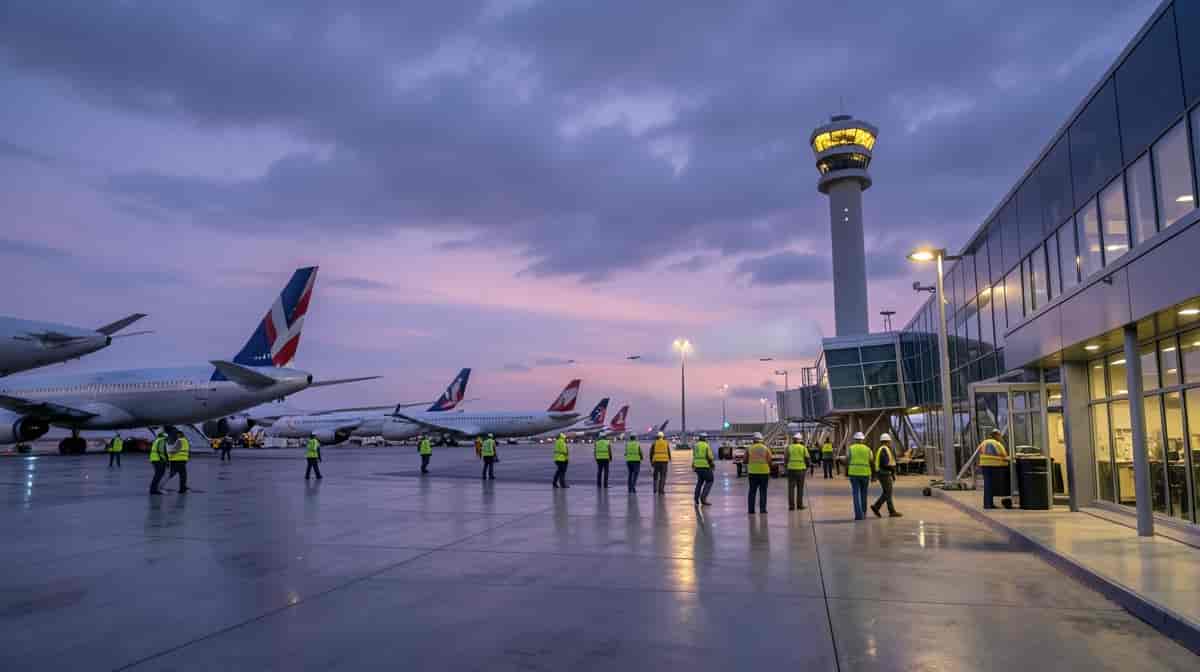
The invisible veins of communication that hold the American sky together proved unexpectedly fragile this week when a routine physical upgrade to the nation’s aviation skeleton triggered a cascade of failures. A nationwide US flight ground stop brought the world’s most complex airspace to a standstill, reminding passengers and policymakers alike that even the most advanced digital systems remain tethered to the physical reliability of copper and cable.
Passengers across the country faced major delays following a nationwide US flight ground stop initiated during routine maintenance. The suspension, which halted departures for several hours, was traced back to scheduled copper wire upgrade work that inadvertently impacted critical aviation systems. While the Federal Aviation Administration (FAA) and airline operators have since begun the arduous process of clearing the backlog, the event has exposed deep-seated vulnerabilities in the infrastructure that supports millions of travelers.
The nationwide ground stop highlights how heavily modern transportation relies on delicate physical and digital infrastructure, where routine maintenance on legacy systems can trigger massive delays that strand passengers and disrupt commerce nationwide.
The Anatomy of a System-Wide Halt
The disruption began on November 13, 2026, when a total suspension of domestic flight departures was ordered across the United States. For several hours, the national airspace system experienced a rare and total "ground stop," a regulatory tool used by aviation authorities only when safety-critical communication, navigation, or computer systems experience widespread failure. This specific halt was not the result of a cyberattack or a weather event, but rather the unintended consequence of physical infrastructure work.
According to the US transport secretary, the nationwide flight suspension was caused by copper wire upgrade work. This essential maintenance was intended to modernize the physical connections that facilitate communication and data transfer within the FAA infrastructure. However, the upgrade process led to a system-wide pause as critical components were taken offline or experienced unexpected technical friction during the transition.
| Date | Event | Status |
|---|---|---|
| November 13, 2026 | Copper wire upgrade work triggers nationwide ground stop | Operations Suspended |
| November 13-14, 2026 | Systems stabilized; flights gradually resume | Partial Resumption |
| Late November 2026 | Airlines manage residual delays and Thanksgiving surge | Monitoring |
By the morning of November 14, 2026, some US flights began to resume. Aviation authorities worked through the night to ensure the stability of the newly upgraded wiring and to verify that the communication systems used by air traffic control were fully operational. Despite the resumption of service, the hours-long halt created a massive logistical bottleneck that ripple-effected through every major hub in the country.
The Copper Wire Catalyst
The reliance on copper wiring in an era of satellite navigation and fiber optics may seem antiquated to the casual observer, but it remains a foundational element of the legacy aviation communication systems. These physical networks are the literal "ground" for the digital clouds of air traffic control. When maintenance teams began the scheduled FAA infrastructure update, the objective was to improve reliability; instead, the work exposed the fragility of the transition between legacy hardware and modern requirements.
Critical communication and navigation infrastructure rely heavily on secure and modern wiring networks. Upgrading these components often requires temporary system shutdowns to ensure long-term safety and reliability for air traffic control. In this instance, the "temporary" nature of the shutdown expanded into a nationwide crisis, suggesting that the protocols for isolating maintenance work from active flight operations may need urgent revision.
Operational Consequences and Pilot Reports
While the ground stop was the primary headline, the week was further complicated by other safety incidents that heightened the sense of tension within the aviation sector. During the period surrounding the ground stop, an American Airlines pilot was forced to declare a "mayday" after flames were reportedly spotted coming from an engine. While separate from the infrastructure failure, such incidents underscore the high-stakes environment in which airlines operate when technical systems—whether in the air or on the ground—begin to show signs of strain.
Analyzing the Infrastructure Vulnerability
Industry analysts and technical experts are pointing to this incident as evidence of systemic deferred maintenance issues across legacy aviation communication systems. This was not merely an isolated mishap during a routine upgrade, but a reflection of the challenges involved in maintaining a massive, aging infrastructure. The copper wire upgrade delay suggests that the margin for error in these projects is razor-thin.
The incident may reflect systemic deferred maintenance issues across legacy aviation communication systems rather than an isolated mishap during an upgrade.
Historical parallels are already being drawn to the 2023 FAA Notice to Air Missions (NOTAM) system outage. That event also led to a nationwide ground stop, highlighting recurrent software and hardware vulnerabilities in US air traffic control infrastructure. The recurring nature of these system-wide failures points to a need for a more resilient architecture that can withstand routine maintenance without collapsing the entire network.
Political and Economic Friction
The political fallout from the ground stop has been immediate. There is increased scrutiny on the Department of Transportation and the US transport secretary regarding oversight of critical aviation infrastructure upgrades. Lawmakers are questioning why a scheduled maintenance project lacked the necessary redundancies to prevent a nationwide shutdown.
Economically, the impact is significant. The immediate disruption to the commercial airline industry has led to: - Increased airline operational costs due to crew rescheduling and aircraft repositioning. - Significant passenger scheduling conflicts. - A backlog of cargo and commercial shipments. - Cascading delays heading into the peak Thanksgiving holiday travel season.
The Road to Recovery
As the aviation system attempts to return to a state of normalcy, the focus has shifted to the next 24 to 72 hours. Airlines and airports are currently managing the post-ground stop rescheduling, clearing passenger backlogs, and providing rebooking support. This recovery phase is particularly critical as it coincides with the lead-up to the Thanksgiving travel surge, one of the busiest periods of the year.
Immediate and Long-Term Outlook
Analysts expect increased oversight and cautious scheduling from transport authorities in the coming days. The best-case scenario involves the upgraded copper wiring systems proving stable, allowing flight schedules to normalize smoothly without further technical disruptions. However, the worst-case scenario remains a concern: hidden infrastructure vulnerabilities could surface during the peak holiday travel season, leading to recurring system failures and prolonged ground stops.
Transportation authorities are currently facing a dual challenge: restoring public confidence in the resilience of the US transportation network while simultaneously investigating the technical breakdown that occurred on November 13.
Navigating the Disruption
For the air travelers caught in the middle of this infrastructure crisis, the immediate priority is rebooking and reaching their destinations. Aviation experts and consumer advocates recommend several strategies for those dealing with air travel disruption:
- Utilize airline mobile apps for real-time updates and faster rebooking options than phone lines.
- Request standby options for earlier flights once systems are verified as stable.
- Monitor airport risk levels, particularly during the holiday season, to anticipate potential delays before arriving at the terminal.
- Check with specific airlines for updated cancellation policies and compensation eligibility following the nationwide halt.
The incident serves as a stark reminder that the future of flight is not just about the planes in the air, but the wires in the ground. As the US aviation system recovers, the focus will remain on how to modernize critical infrastructure without repeating the "mayday" of a nationwide ground stop.
Frequently Asked Questions
What caused the nationwide US flight ground stop?
According to the US transport secretary, a nationwide flight suspension was caused by scheduled copper wire upgrade work. This essential maintenance work led to significant disruptions in airspace operations.
When did flights resume after the nationwide ground stop?
Some US flights began to resume after an hours-long ground stop that brought widespread travel to a halt. Aviation authorities worked diligently to clear the backlog once the system was secured.
Who was affected by the nationwide US flight suspension?
Air travelers across the United States were heavily impacted by the sudden flight suspensions and subsequent delays. Passengers faced lengthy wait times at airports nationwide while airlines scrambled to resume normal schedules.
Why does copper wire upgrade work impact flight operations?
Critical communication and navigation infrastructure rely heavily on secure and modern wiring networks. Upgrading these components requires temporary system shutdowns to ensure long-term safety and reliability for air traffic control.
What should passengers do if their flight was canceled or delayed?
Travelers experiencing cancellations can utilize various rebooking strategies, such as contacting customer service via mobile apps or requesting standby options. Checking airport risk levels and staying in close contact with airlines can also help mitigate holiday travel disruptions.
What happens next for the US aviation system following the ground stop?
Airlines and transportation officials are focusing on restoring normal flight schedules and assisting stranded passengers. Authorities continue to monitor infrastructure upgrades closely to prevent similar widespread disruptions in the future.
Conclusion
The nationwide US flight ground stop on November 13, 2026, serves as a significant case study in infrastructure vulnerability. While flights have resumed following the transport secretary’s confirmation that copper wire upgrade work caused the suspension, the residual effects continue to challenge the aviation industry. The incident has triggered a period of intense scrutiny for transportation officials and a logistical race for airlines to clear backlogs before the Thanksgiving travel surge. Moving forward, the focus will remain on balancing the urgent need for infrastructure modernization with the requirement for operational stability in the national airspace. Authority figures are expected to provide further technical explanations as they work to prevent future cascading failures in this critical transport network.
Sources
- November 13, 2026 — Some US flights resume after hours-long ground stop — CNN
- Copper wire upgrade work caused nationwide flight suspension, US transport secretary says — BBC
- American Airlines pilot declares 'mayday' after flames reportedly spotted coming from engine — Fox Business
- Flying for Thanksgiving? See your airport's risk of flight delays — KCRA
- Unfriendly Flights and Heckling Crowd Awaits Curt Cignetti's Indiana as He Already Puts Locked Room on Notice — Yahoo Sports
- Got a canceled flight? 7 clever ways to get rebooked fast — NPR


