
Taiwan Flight Restrictions Spark Intense US Pressure On UN Agency
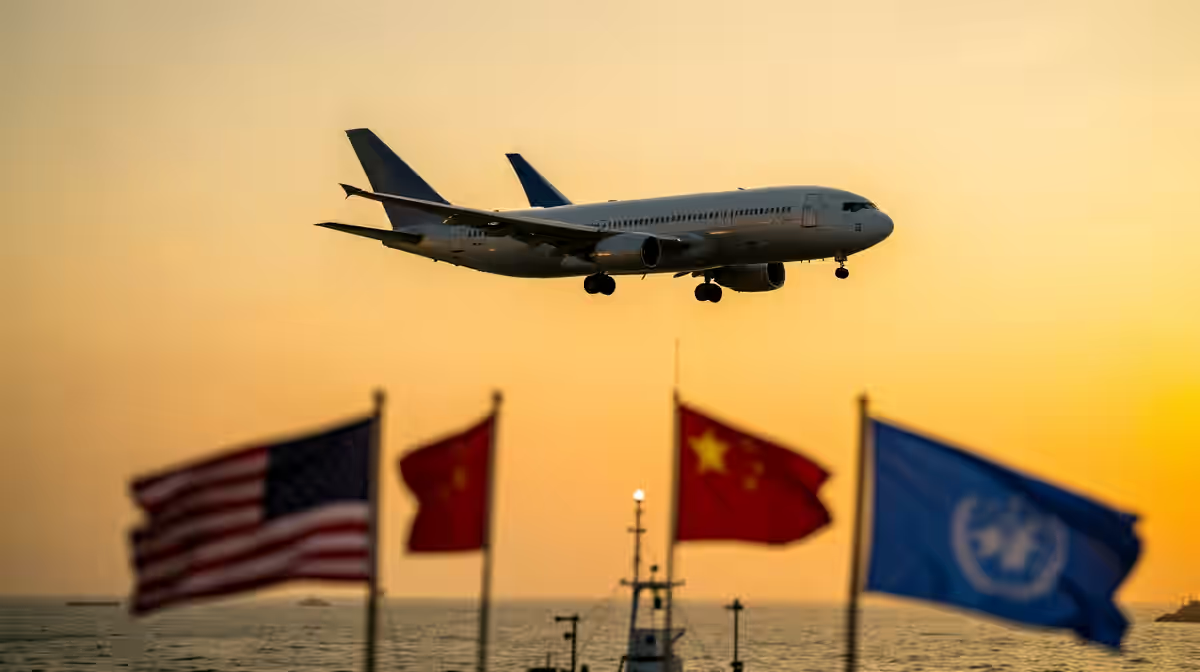
The invisible boundaries of international airspace have become the latest front in a high-stakes diplomatic confrontation that threatens to redraw the rules of Asian aviation. Recent friction has intensified as the US presses UN over Taiwan flight restrictions, a move that has drawn a sharp rebuke from Beijing and underscored the volatility of cross-strait relations in an era of heightened military posturing.
This latest escalation transcends mere procedural disputes at a specialized agency; it represents a fundamental clash between Washington’s push for international aviation safety and Beijing’s rigid enforcement of its sovereignty claims. As global powers maneuver through the halls of the United Nations, the practical realities of flight paths and air defense zones are being leveraged as instruments of political legitimacy, impacting everything from commercial logistics to regional security frameworks.
The convergence of diplomatic pressure at the UN and coordinated military displays in the Pacific suggests that technical aviation standards are being weaponized as a primary tool in the ongoing struggle for regional influence.
Diplomatic Maneuvering at the United Nations
The core of the current dispute lies within the specialized corridors of the International Civil Aviation Organization (ICAO), where technical standards meet geopolitical reality. Reports indicate that the United States has initiated a formal diplomatic campaign to pressure the UN aviation agency to address specific flight restrictions surrounding Taiwan. Washington argues that these restrictions are not merely political inconveniences but create unnecessary safety hazards that disrupt international travel routes in one of the world’s most vital commercial regions.
Beijing has wasted no time in responding to this intervention. The Chinese government has hit back with significant diplomatic force, maintaining that airspace management in the region is strictly an internal matter. This pushback highlights a persistent institutional struggle: while Taiwan operates a distinct and sophisticated flight information region, its exclusion from direct participation in UN bodies like the ICAO remains a central pillar of China’s diplomatic strategy. By challenging these restrictions, the U.S. is effectively questioning the status quo of how Taiwan is integrated into global civilian aviation networks.
The ICAO as a Diplomatic Battleground
The ICAO is increasingly serving as an arena for what analysts describe as the weaponization of technical standards. In this environment, the designation of flight routes and the management of Air Defense Identification Zones (ADIZ) are used to assert territorial claims. The U.S. position focuses on the practicalities of aviation: when flight paths are restricted or altered for political reasons, the risk of miscalculation for commercial carriers increases. Beijing, conversely, views any international adjustment to these restrictions as an encroachment on its perceived territorial integrity.
The Security Matrix: Russian Incursions and Nuclear Deterrence
As the diplomatic row simmers at the UN, the physical airspace around Taiwan has become increasingly crowded with military hardware. The security landscape reached a new level of complexity following reports of Russian aircraft and warplanes entering Taiwan’s Air Defense Identification Zone. These incursions coincided with a significant show of force in Asia, featuring Russian nuclear bombers, timed to overlap with high-level diplomatic visits in the region.
The presence of Russian assets in the Taiwan ADIZ adds a layer of trilateral tension to an already strained US-China relationship. This coordinated aerial activity, flagged by both Taiwan and Japan, suggests a strategic alignment between Moscow and Beijing that extends beyond economic cooperation into the realm of military signaling. These movements serve as a reminder that the dispute over Taiwan’s airspace is not occurring in a vacuum but is part of a broader regional security challenge involving multiple global nuclear powers.
| Key Security Developments | Impact Category | Reported Source |
|---|---|---|
| US Pressure on UN Agency | Diplomatic | Reuters |
| Russian ADIZ Incursions | Military | Taipei Times |
| F-16 Fighter Jet Deliveries | Defensive | Axios |
| Nuclear Bomber Deployment | Strategic | The New York Times |
Defense Upgrades Amid Growing Strategic Challenges
Taiwan is not a passive observer in the tightening of its regional airspace. The island has begun receiving new F-16 fighter jets, a critical upgrade to its defensive capabilities as it faces what observers describe as a growing challenge to its security. These deliveries represent a tangible countermeasure to the frequent incursions and the restrictive aviation policies being discussed at the United Nations.
The arrival of these advanced aircraft highlights the dual-track nature of the conflict: while Washington fights a diplomatic battle for Taiwan’s "international space" and aviation safety at the UN, it simultaneously bolsters the island’s physical ability to monitor and defend its ADIZ. This defensive reinforcement is seen as essential for maintaining a balance of power as the frequency of "gray zone" tactics—actions that fall just short of open conflict—continues to rise in the Taiwan Strait.
Aviation Safety as a Geopolitical Lever
The practical impact of this dispute falls heavily on the global aviation industry. Airspace management is critical for the thousands of commercial flights that traverse the East Asian corridor daily. When major powers clash over flight routes, the risks are borne by international travelers and global commercial airlines.
Aviation safety and airspace management are critical for global commerce; when world powers clash over these routes, the risk of operational miscalculation increases significantly.
The current restrictions and the ongoing military incursions create a volatile environment for civilian air traffic controllers. The historical parallel to Cold War-era disputes over transit rights is becoming increasingly apt, as specialized UN bodies are forced to navigate the thin line between technical safety mandates and the hard-line political demands of their member states. For residents of East Asia and international businesses, the stability of these regional corridors is paramount for maintaining supply chains and peaceful diplomatic relations.
Strategic and Economic Implications
The economic angle of this conflict is rooted in the high density of transit in the Asia-Pacific. Disruptions to standard aviation corridors can lead to increased fuel costs, longer flight times, and heightened insurance premiums for carriers operating in the region. If the dispute at the ICAO remains unresolved, the uncertainty could ripple through global supply chains that rely on the timely movement of personnel and high-value goods via air.
From a geopolitical perspective, the root cause of the friction is Beijing's persistent effort to restrict Taiwan's international participation, contrasted with Washington’s use of military deterrence and institutional pushback. This contest over sovereignty is being fought with technical maps and flight charts as much as it is with diplomatic communiqués.
Hidden Maneuvering at Specialized Bodies
Behind the public statements lies a series of complex maneuvers within specialized UN agencies. Technical experts are often caught between the pressure to maintain universal safety standards and the political directives of the nations that fund and lead these organizations. This "hidden angle" of the conflict suggests that the ICAO will remain a primary site of friction for the foreseeable future, as both the US and China view aviation governance as a proxy for broader legitimacy.
Predicting the Diplomatic Trajectory
The immediate future suggests a period of sustained friction. Over the next 24 hours, defense authorities are expected to maintain a heightened state of monitoring regarding regional military movements, while the diplomatic fallout between Washington and Beijing continues to stabilize. Within the next 72 hours, observers are watching for potential statements from UN bodies that might indicate whether the US pressure is yielding any procedural changes.
Expert analysts expect that this dispute will continue to highlight the friction over Taiwan’s international participation. The best-case scenario involves these discussions remaining channeled through diplomatic frameworks without escalating into operational disruptions for commercial airlines. However, the worst-case scenario remains a breakdown in standard communication channels, which could lead to an increased risk of operational miscalculation in the crowded skies around the island.
Frequently Asked Questions
What is the US pressing the UN agency about regarding Taiwan?
The United States has actively pressed a UN agency over ongoing flight restrictions related to Taiwan. This diplomatic push aims to address airspace management and international aviation concerns surrounding the region.
How did China react to the US pressure on Taiwan flight restrictions?
In response to the diplomatic push by the United States, China hit back strongly against the intervention. Beijing maintains its firm stance regarding sovereignty and international engagement involving Taiwan.
Why are Taiwan flight restrictions a significant geopolitical issue?
Flight restrictions around Taiwan matter because they intersect with complex territorial claims, international aviation safety, and escalating regional tensions. Any diplomatic maneuvering at UN agencies over these routes carries heavy strategic implications.
Who is affected by the dispute over Taiwan flight restrictions?
The friction directly impacts diplomatic relations between the US and China, while also affecting regional stability and international commercial aviation pathways near Taiwan. Neighboring governments and global carriers closely monitor these developments.
What background context surrounds recent airspace incursions near Taiwan?
Alongside diplomatic disputes at the UN, the region has seen heightened military activity, including flagged incursions by Russian aircraft entering Taiwan's Air Defense Identification Zone (ADIZ). These events coincide with broader strategic visits and security updates in East Asia.
What happens next regarding US and Chinese actions in the region?
As the US continues to leverage international bodies like UN agencies to challenge flight limitations, Beijing is expected to maintain its countermeasures and diplomatic pushback. Observers will be watching to see if aviation authorities or international bodies adjust their policies.
Conclusion
The confrontation over Taiwan’s flight restrictions marks a significant deepening of the geopolitical divide between the United States and China. By bringing this issue to a UN aviation agency, Washington is attempting to frame the dispute around the universal language of international safety and commerce, while Beijing remains steadfast in treating the matter as a non-negotiable aspect of its national sovereignty. As new F-16s arrive on the island and Russian bombers signal a shifting strategic alignment in the Pacific, the technical management of airspace has become inseparable from the broader struggle for regional stability. The realistic next steps involve a protracted period of institutional maneuvering at the UN, mirrored by continued military surveillance in the skies over East Asia. The world now watches to see if diplomatic frameworks can withstand the pressure of two superpowers clashing over the world’s most contested flight paths.
Sources
- EXCLUSIVE: US presses UN agency over Taiwan flight restrictions, China hits back — Reuters
- China & Taiwan Update, November 17, 2026 — Institute for the Study of War
- Taiwan, Japan flag incursions by Russian aircraft ahead of Putin's arrival in China — Reuters
- Putin Arrives in Asia With a Show of Force: Nuclear Bombers — The New York Times
- Russian warplanes enter Taiwan ADIZ — Taipei Times
- F-16s begin arriving in Taiwan as island faces "a growing challenge" — Axios


