
Xi Putin Trump APEC Summit Meeting Sparks A Massive Geopolitical Shift
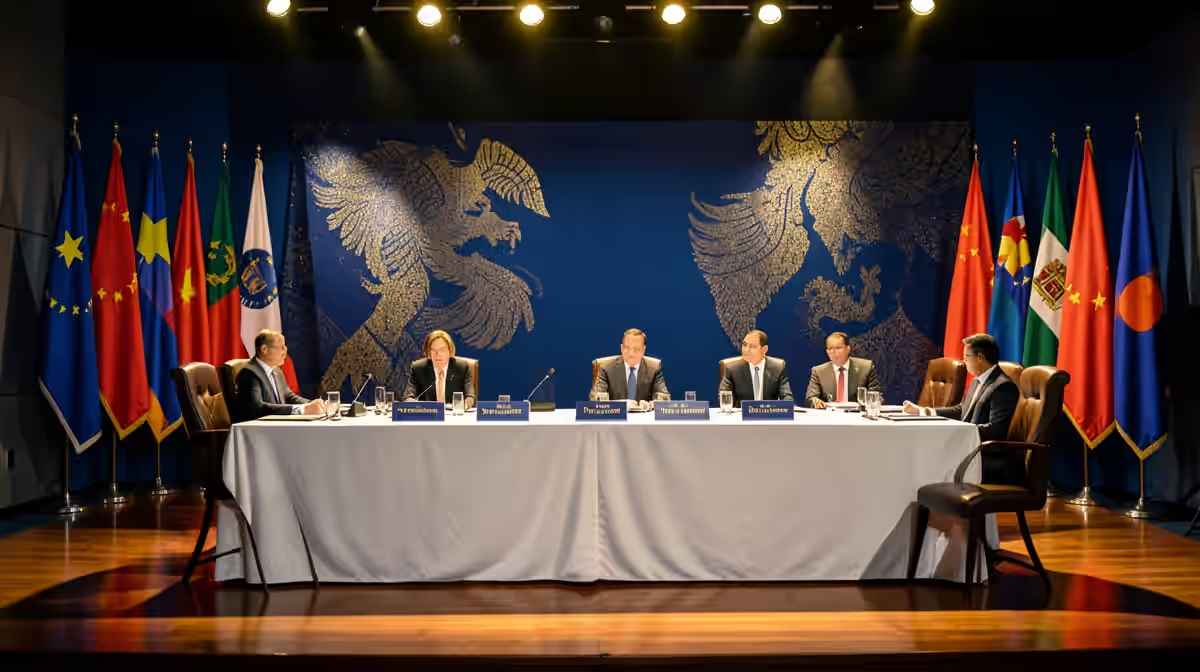
The world’s geopolitical center of gravity has shifted to Beijing, where a meticulously staged diplomatic performance is currently challenging the foundations of the Western economic order. As world leaders gather for the Xi Putin Trump APEC summit, international diplomacy takes center stage amid a sharp, coordinated rebuke of Western economic policies and trade barriers.
The synchronized rhetoric from Beijing and Moscow prior to Trump's arrival may serve as a preemptive psychological barrier, designed to box the U.S. delegation into defensive concessions on tariffs during the trilateral summit.
Diplomatic Defiance on the Eve of Trilateral Talks
Chinese President Xi Jinping and Russian President Vladimir Putin have launched a forceful condemnation of Western economic sanctions and trade barriers, just as U.S. President Donald Trump arrived in China for the 2026 APEC summit. This joint stance highlights a growing alignment between Beijing and Moscow as they face off against sustained Western economic pressures. Ahead of high-stakes trilateral talks at the summit, the leaders in Beijing have utilized their platform to launch sharp criticisms against what they characterize as Western protectionism and unfair trade restrictions.
The coordinated rhetoric serves as more than just a diplomatic grievance; it is a calculated effort to frame the narrative of the summit before formal negotiations even begin. By speaking out against economic barriers, Xi and Putin are signaling a united front, suggesting that the current global trade environment is being stifled by unilateral actions from the West. This proactive messaging has set a tense yet formal tone for the gathering, placing the focus squarely on the friction between established economic powers and those seeking to rewrite the rules of international commerce.
A Warm but Calculated Reception
Despite the pointed criticism leveled at Western policies, President Trump received a warm reception upon his arrival in China. This calculated display of hospitality from Xi and Putin underscores the complexity of the current relationship between the three powers. The optics of the reception suggest a desire to maintain a veneer of diplomatic stability even as the underlying structural tensions remain high.
Analysts note that this reception was likely intended to facilitate a high-stakes environment where personal diplomacy and systemic rivalry coexist. The landing of the U.S. delegation marks the beginning of one of the most significant trilateral engagements in recent history, as the world watches to see if the warmth of the greeting can translate into substantive progress on the issues of tariffs and sanctions.
Structural Friction and the New Trade Architecture
At the heart of this confrontation is a fundamental struggle over the future of the global economy. According to investigative analysis, the root cause of the current tension is the structural friction between Western-led multilateral economic frameworks and the growing consolidation of powers seeking alternative architectures. These alternative systems are specifically being designed to be sanctions-resistant, reducing the leverage of traditional Western economic tools.
The shared opposition to trade barriers and unilateral sanctions by China and Russia highlights a broader effort to bypass dollar-denominated systems. By establishing insulated supply chains, these nations aim to protect their economies from the volatility of Western policy shifts. This economic angle is a critical component of the Beijing summit, as it represents a tangible move toward a multipolar economic world where the United States is no longer the sole arbiter of trade legitimacy.
The Political and Geopolitical Angle
Chinese President Xi Jinping and Russian President Vladimir Putin staged this coordinated diplomatic display to leverage trade protectionism criticisms as a strategic tool. From a geopolitical perspective, the optics of the two leaders offering a warm reception to Trump signal a complex recalibration of great power competition. This alignment has raised concerns among smaller nations, who fear a return to a Sino-Russian-U.S. directorate managing global affairs at the expense of broader international cooperation.
The Xi–Trump–Putin meeting is China’s show and America’s loss, signaling a shift where great powers want to call all the shots.
This sentiment, echoed by analysts at Chatham House, suggests that the summit may be less about mutual cooperation and more about defining the spheres of influence for the coming decade. The historical parallel to the 1945 Yalta Conference is difficult to ignore, though experts note that today’s multipolar reality makes such an overt division of the world far less stable than it was in the post-war era.
Who is Affected by the Shifting Dynamics?
The consequences of this high-level meeting extend far beyond the corridors of power in Beijing. The outcome of the Xi Putin Trump APEC summit will have direct implications for several key groups:
- Global businesses navigating shifting trade regulations and tariff structures.
- International investors seeking stability in a market increasingly defined by geopolitical volatility.
- Workers in export-heavy industries whose livelihoods depend on the flow of goods across borders.
- Citizens of smaller nations who find themselves caught in the middle of great-power economic competition.
As these nations navigate trade barriers and sanctions, the impact on global markets and supply chains can be dramatic. The ability of these three powers to reach even a basic framework for managing their disagreements will determine the level of economic security for millions of people worldwide.
Timeline of the Beijing Engagement
The events surrounding the summit have unfolded in a rapid sequence of diplomatic maneuvers and public statements.
| Event Sequence | Action Taken |
|---|---|
| Phase 1 | Xi and Putin issue joint statements condemning Western sanctions and protectionism. |
| Phase 2 | President Trump arrives in China; receives a calculated, warm reception from Xi and Putin. |
| Phase 3 | High-stakes trilateral talks commence between the U.S., China, and Russia. |
| Phase 4 | Analysts assess market reactions and diplomatic fallout from initial discussions. |
This timeline illustrates a deliberate strategy by the host nation to control the environment and the messaging surrounding the arrival of the U.S. delegation. Every step, from the initial blast against "protectionism" to the formal greetings on the tarmac, has been designed to maximize the leverage of the Sino-Russian alignment.
Strategic Forecast: 72 Hours of Global Volatility
As the summit proceeds, the next few days are expected to be characterized by intense negotiations and market sensitivity. Predictor data suggests that the next 24 hours will see the trilateral talks unfold in detail, following the joint condemnation of Western barriers. The focus will likely shift from public rhetoric to the specifics of trade policy and the potential for a framework to ease ongoing tensions.
The Expert Prediction
Analysts expect these meetings to highlight deep divisions over economic protectionism and sanctions. While the rhetoric has been sharp, the trilateral format provides a unique opportunity for direct communication between the three most powerful men in the world. However, the expert consensus remains cautious, signaling a complex future for multilateral trade negotiations.
Best and Worst Case Scenarios
- Best Case: Constructive dialogue during the summit helps ease trade tensions and establishes a formal framework for managing ongoing disagreements over sanctions and protectionism.
- Worst Case: The summit solidifies adversarial blocs, with escalating rhetoric leading to increased global economic uncertainty and a permanent fragmentation of international trade.
The coming 72 hours will be critical for assessing the diplomatic fallout and the shifting geopolitical alignment between the U.S., China, and Russia. Market reactions will serve as an immediate barometer for the success or failure of these talks.
Frequently Asked Questions
What happened as Trump arrived in China for the APEC summit?
Chinese President Xi Jinping and Russian President Vladimir Putin strongly condemned Western sanctions and trade barriers just as U.S. President Donald Trump arrived in China. The leaders gathered ahead of high-stakes trilateral talks at the APEC summit, setting a tense diplomatic tone for the negotiations.
Why did Xi and Putin condemn sanctions right before the summit?
The joint condemnation highlights a unified front by Beijing and Moscow against Western economic pressures and protectionism. By speaking out ahead of their meeting with Trump, both leaders aimed to challenge U.S. economic dominance and frame trade restrictions as harmful to global stability.
Who is affected by the Xi-Trump-Putin meeting at APEC?
The trilateral summit and growing alignment between major superpowers carry significant implications for the global economy, international trade rules, and smaller nations navigating great-power competition. Observers note that when dominant nations attempt to dictate terms, it creates uncertainty for international cooperation and multilateral institutions.
What happens next following the leaders' gathering in China?
The leaders are slated to engage in high-stakes trilateral talks to address trade, geopolitical tensions, and diplomatic relations. The outcomes of these discussions could shape future U.S. economic policy toward China and Russia, particularly regarding tariffs and sanctions.
What is the background of the Xi, Putin, and Trump meeting at APEC?
The meeting occurs against a backdrop of prolonged trade tensions, geopolitical rivalries, and sweeping Western economic sanctions targeting both Russia and China. Analysts have compared the diplomatic optics of the summit to historic great-power conferences, emphasizing China's central role in hosting the high-profile event.
What specific criticism did Xi and Putin level against Western policies?
Xi and Putin explicitly blasted Western 'protectionism' and unilateral sanctions, characterizing them as unfair barriers that disrupt global markets. Their coordinated messaging underscored a shared frustration with economic measures imposed by the United States and its allies.
Conclusion
The APEC summit in China has become a theater for a fundamental challenge to the Western economic order. By coordinating their condemnation of sanctions and trade barriers, Xi Jinping and Vladimir Putin have established a unified front that complicates Donald Trump's diplomatic mission. While the reception for the U.S. President was warm, it did little to mask the structural frictions that continue to drive these superpowers apart. The world now waits to see if the trilateral talks can produce a framework for stability or if they will further solidify the adversarial blocs that threaten to fragment global trade. The next 72 hours will be a defining period for international diplomacy and the future of the global economic landscape.
Sources
- APEC summit latest: Trump receives warm reception from Xi and Putin in China ahead of high-stakes trilateral talks — CNN
- Xi, Putin Assail Trade Barriers Ahead of Summit With Trump — Bloomberg.com
- Xi, Putin condemn sanctions as Trump arrives in China — The Hill
- Yalta this is not: The Xi–Trump–Putin meeting is China’s show and America’s loss — Chatham House
- Xi, Putin blast Western 'protectionism' and sanctions as Trump lands in China — Reuters
- Xi-Trump-Putin summit: when great powers want to call all the shots, what does it mean for everyone else? — The Conversation


